Codex launches in ChatGPT mobile app
TECH

Codex launches in ChatGPT mobile app

48+
Signals

Strategic Overview

  • 01.
    On May 14, 2026, OpenAI rolled out Codex in preview inside the ChatGPT mobile app on iOS, iPadOS, and Android across every plan including Free and Go in all supported regions.
  • 02.
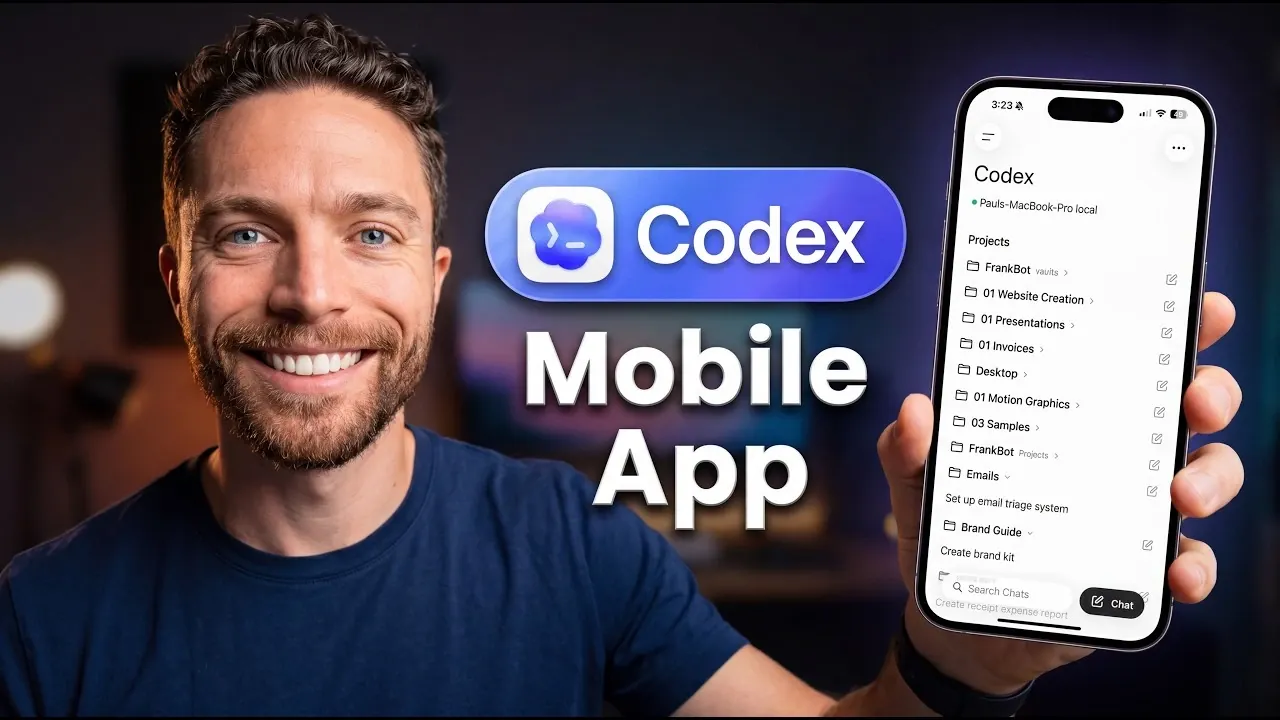
    From the phone, developers can start new tasks, review terminal output, code diffs, test results and screenshots, approve commands, switch models, and steer work across all of their Codex threads.
  • 03.
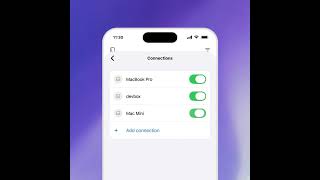
    Pairing routes through a secure relay that keeps trusted machines reachable across devices without exposing them to the public internet, leaving files, credentials, and permissions on the host.
  • 04.
    At launch, mobile pairing only works with the macOS Codex desktop app; Windows support is listed as coming soon.
  • 05.
    Alongside mobile, OpenAI made Codex Hooks generally available, shipped programmatic access tokens for Business and Enterprise CI pipelines, and added HIPAA-compliant Codex for eligible Enterprise workspaces in local environments.
  • 06.
    OpenAI says more than 4 million people now use Codex every week, roughly double the 2 million weekly active users it reported in March 2026.

The Catch-Up Move: A Four-Month Gap With Anthropic

The cleanest read on this launch is that OpenAI is closing a competitive gap, not opening one. Anthropic shipped Remote Control for Claude Code in February 2026, giving developers a way to steer Claude on their Mac from anywhere; OpenAI's mobile Codex preview only arrived on May 14, 2026, roughly four months later [1]. TechCrunch frames the move as OpenAI's direct counter inside a broader race where Codex has been progressively eating into Claude Code's territory [2]. The New Stack's Frederic Lardinois puts the strategic question even more bluntly, asking why developers are not yet convinced by Anthropic's Claude Code agent dashboard despite it being the better tool on paper [3]. The distinction that matters is architectural: BuildFastWithAI notes Codex isolates tasks in cloud sandboxes while Claude Code integrates with the local environment, so Codex mobile is naturally tilted toward fire-and-forget delegation rather than the tight, local steering loop Claude Code prefers [1]. OpenAI is not winning the timing battle here; it is betting that distribution and a different execution model will outweigh Anthropic's head start.
What You Are Actually Doing on Your Phone

The pitch is not 'code on your phone'; it is 'supervise an agent that is already coding somewhere else.' TechCrunch describes the workflow as starting on a desktop or remote host and then, from the phone, working across all threads, reviewing outputs, approving commands, switching models, or starting something new [2]. The wire across that gap is a secure relay layer that keeps trusted machines reachable across devices without ever exposing them directly to the public internet [4]. iClarified summarizes what actually streams down to the phone screen: terminal output, code diffs, test results, and screenshots, while files, permissions, and local credentials stay on the desktop [5]. Reddit and YouTube reaction lands in the same place: vibe-coding creators and r/codex regulars converged on the view that the real value is triage, approval, and unblocking a stuck agent, not typing code on a 6-inch screen. Greg Brockman called it 'a huge step forward for universal usage of agents,' and the framing fits: this is a control surface, not an IDE.

Who Gets Left Out: macOS-Only Hosts and Quiet Linux

The most underweighted part of the launch is who cannot use it yet. Gadgetbridge flags upfront that the phone-to-Codex desktop connection currently only works with the macOS version of the desktop app, with Windows listed as coming soon [4]. That is a strange gap for a tool aimed at developers: enterprise IT shops are still dominated by Windows, and How2Shout notes the rollout came alongside HIPAA-compliant Codex and CI tokens explicitly aimed at Business and Enterprise plans [6]. Linux receives no mention in any of the launch coverage. Inside the macOS path itself, Geeky Gadgets reports some users have hit connectivity challenges with specific devices such as Mac mini systems, hinting that the relay and pairing surface is still fragile [7]. Reddit users have surfaced their own workarounds, including re-signing in to both apps to break a 'Waiting for desktop' loop, and Windows-side users have circulated a feature-flag edit to ~/.codex/config.toml to enable remote control before official support lands. Net effect: the launch tier is mostly Mac-using individual developers and small teams, with regulated Windows enterprises waiting in line.

The Free-Tier Funnel and a Doubling User Base

Putting Codex inside the ChatGPT mobile app, in preview, across Free and Go plans in all supported regions is the most aggressive distribution decision in this launch [8]. The numbers around it explain why. OpenAI told the press at launch that more than 4 million people now use Codex every week [6], roughly double the 2 million weekly active users Codex reported in March 2026 [9]. That implies weekly users roughly doubled in about two months heading into the mobile rollout. Mobile is the next obvious lever: every ChatGPT mobile user, including non-paying ones, is now one tap away from trying a coding agent without a paywall trial. iClarified emphasizes that approval and redirection are available across all subscription tiers, not gated behind Pro or Enterprise [5]. Combined with concurrent enterprise plumbing — Hooks GA, programmatic access tokens for CI pipelines, and HIPAA-compliant Codex for eligible Enterprise workspaces [6]— the launch is best read as a two-front funnel: free-tier breadth on the consumer side, compliance-grade tokens on the enterprise side, both feeding the same Codex engine.

The Trust Boundary Security Teams Now Have to Vet

The relay is convenient and it is also a new trust object. Gadgetbridge describes the architecture as a relay layer that keeps trusted machines reachable across devices without ever exposing them directly to the public internet [4]. iClarified reinforces that local files, permissions, and credentials stay on the desktop while only terminal output, diffs, test results, and screenshots stream to the phone [5]. The good news for security teams is that this is materially less exposure than opening SSH or a port-forwarded tunnel to the open internet. The harder question is governance: streamed diffs and terminal output may contain secrets, customer data, or pre-release code, and they now traverse an OpenAI-operated relay. The Codex desktop app also auto-detects hosts from existing SSH configurations to create projects and run development threads inside remote machines [4], which makes onboarding fast and also means existing dev hosts can become Codex-reachable without an explicit IT change-management step. Combined with HIPAA-eligible deployments in local environments only [6], the message to security teams is clear: the secure relay reduces network exposure but adds a vendor trust boundary that needs its own review before mobile pairing rolls out broadly.

Historical Context

2025-04
OpenAI released Codex CLI as its first dedicated agentic coding tool.
2025-05-16
Codex Cloud research preview launched, powered by codex-1, an o3 variant tuned for software engineering.
2026-02-05
OpenAI shipped the Codex desktop app and released GPT-5.3-Codex, followed by the lower-latency GPT-5.3-Codex-Spark.
2026-02
Anthropic launched Remote Control for Claude Code, letting users steer Claude on their Mac or desktop from afar, four months before OpenAI's mobile move.
2026-03-05
OpenAI released GPT-5.4 for Codex and reported more than 2 million weekly active Codex users.
2026-04-16
Codex gained the ability to operate any desktop app via cursor control, sharpening competition with Claude Code.
2026-05-14
Codex launched in preview inside the ChatGPT mobile app on iOS and Android across all plans, with macOS-only desktop pairing and Windows coming soon.

Power Map

Key Players
Subject

Codex launches in ChatGPT mobile app

OP

OpenAI

Vendor launching mobile Codex; turns the ChatGPT app into a phone-side control panel for its agentic coding agent and deepens its developer footprint.

AN

Anthropic

Primary competitor; shipped Remote Control for Claude Code in February 2026, four months before OpenAI's mobile move, leaving it ahead on mobile-first agentic coding.

DE

Developers on ChatGPT Free, Go, Plus, Pro, Business, and Enterprise plans

End users gaining mobile approval, steering, and monitoring of long-running coding agents from iOS and Android phones.

AP

Apple (iOS/macOS) and Google (Android)

App-distribution platforms; macOS is the only desktop host supported at launch, making Apple's ecosystem the initial beneficiary while Windows pairing is delayed.

BU

Business and Enterprise IT and compliance teams

Gain programmatic access tokens for CI pipelines and HIPAA-compliant local Codex for regulated workspaces, lowering enterprise adoption friction.

Fact Check

9 cited
  1. [1] OpenAI Codex Mobile in ChatGPT App
  2. [2] OpenAI says Codex is coming to your phone
  3. [3] OpenAI Codex ChatGPT Mobile
  4. [4] OpenAI Codex Lands on ChatGPT Mobile App for iOS and Android with Remote SSH Support
  5. [5] OpenAI Brings Codex Control to iPhone With ChatGPT App Update
  6. [6] OpenAI Codex ChatGPT Mobile App iOS Android
  7. [7] OpenAI Codex iOS Android Preview
  8. [8] OpenAI Releases Codex on Mobile in Preview
  9. [9] Codex (AI agent)

Source Articles

Top 5

THE SIGNAL.

Analysts

"Pitches mobile Codex as a way to stay engaged with long-running agent work outside the desk, including approving outputs from a coffee shop."

OpenAI (corporate framing)
Company statement, OpenAI

"Frames Codex and Claude Code as architecturally distinct: Codex isolates tasks in cloud sandboxes while Claude Code integrates locally, positioning Codex mobile for fire-and-forget delegation rather than active local steering."

BuildFastWithAI analysis
Independent developer publication

"Characterizes the update as turning the phone into a remote-approval surface where developers can review trade-offs, approve terminal executions, or redirect a project remotely across all subscription tiers."

iClarified
Apple-focused tech publication

"Flags early connectivity issues with specific hosts such as Mac mini systems, suggesting the preview is not yet polished for every Mac configuration."

Geeky Gadgets
Consumer tech analysis outlet

"Frames the launch inside a broader competitive narrative where developer skepticism about Anthropic's Claude Code dashboard creates room for OpenAI's mobile play."

Frederic Lardinois
Reporter, The New Stack
The Crowd

"You can now use Codex, wherever you have it running, from the ChatGPT app. Huge step forward for universal usage of agents."

@@gdb0

"OpenAI Codex mobile spotted. Looks like OpenAI is preparing a mobile experience for Codex inside the ChatGPT app."

@@ai_for_success0

"Codex mobile"

@u/drnms541

"Now in preview: Codex mobile in the ChatGPT mobile app."

@u/OpenAI213
Broadcast
Now in preview: Codex in the ChatGPT mobile app.

Now in preview: Codex in the ChatGPT mobile app.

Codex Mobile Released and It's Insane

Codex Mobile Released and It's Insane

OpenAI Codex Now Works from Anywhere (Dispatch Killer?)

OpenAI Codex Now Works from Anywhere (Dispatch Killer?)