Unitree Robotics' Shanghai stock market debut
TECH

Unitree Robotics' Shanghai stock market debut

28+
Signals

Strategic Overview

  • 01.
    Unitree Robotics priced its Shanghai STAR Market IPO at 150.80 yuan a share, raising about 6.1 billion yuan (US$904 million) and becoming the first humanoid robot maker listed on a mainland Chinese exchange.
  • 02.
    Shares opened at 1,100 yuan, up as much as 629% from the IPO price and briefly valuing the company near 445 billion yuan (roughly US$66 billion), before paring back to close up 460% at 845 yuan.
  • 03.
    The retail tranche of the offering was oversubscribed more than 8,000 times, and pre-IPO backers included Chinese AI lab DeepSeek alongside existing investors Tencent, Alibaba, Ant Group and Meituan.
  • 04.
    The debut coincided with the opening of the 2026 World Robot Conference in Beijing on August 19; separately, founder Wang Xingxing used an online investor meeting tied to the IPO to lay out the company's AI and hardware roadmap.

Deep Analysis

The Mechanics of a 629% Pop: How Extreme Retail Demand Broke the Opening Print

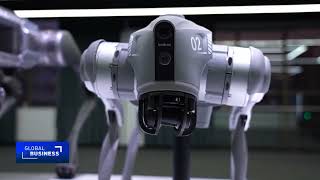
Unitree priced its Shanghai STAR Market IPO at 150.80 yuan a share, raising about 6.1 billion yuan (US$904 million) in China's first mainland listing of a humanoid robot maker [1]. When trading opened, shares gapped straight to 1,100 yuan, up 629% from the offer price and briefly valuing the company near 445 billion yuan, or roughly US$66 billion, before the rally cooled through the session and the stock closed up 460% at 845 yuan [1]. The scale of the pop traces back to the order book: the retail tranche of the offering was oversubscribed more than 8,000 times, a level of demand that all but guaranteed the opening trade would blow far past the IPO price before any price discovery could happen [1]. CGTN reported that the institutional side of the book was just as telling, with allocations to AI lab DeepSeek and Tencent alongside state-owned China National Petroleum Corporation, China Southern Power Grid and China Telecom - a mix of private AI money and state capital lining up next to the retail crowd. That dynamic also helps explain the intraday pullback - a market that opens on pure scarcity-driven euphoria typically gives some of it back once actual sellers show up, which is consistent with the gap between the 629% open and the 460% close.
A Rare Profitable Humanoid Maker Meets a Market Pricing in Everything

What separates Unitree from most of the crowded humanoid robotics field is that it already makes money: 2025 revenue came in around 1.7 billion yuan (roughly $250 million) with adjusted profit near 591 to 600 million yuan [4]. As Humanoid Analytics founder Rinat Mirzaitov put it, that combination makes Unitree one of the few companies in the category with genuine revenue, profitability and production volume, in a sector still dominated by pre-revenue players [8]. But the post-IPO valuation appears to be pricing in far more than that track record justifies. Omdia chief analyst Lianne Jia Su, speaking to CGTN Europe, put it plainly: the valuation implies investors are 'betting on growth over near-term earnings,' and she cautioned against judging Unitree solely on one robot form factor. The numbers back up her caution: Q1 2026 results showed revenue up 68% year over year, yet adjusted net profit fell 52% as R&D and sales costs climbed, prompting the observation that the valuation is running ahead of the business [5]. HSBC analysts have gone further, warning that the industry-wide surge in reported robot shipment numbers - the kind of figures used to justify these valuations - could be illusionary rather than a signal of durable demand [4]. The tension is that Unitree is simultaneously the best-positioned company in its category and a stock now trading on assumptions about a market that does not yet exist at scale.

Physical AI as National Strategy, and Washington's Answer

Unitree's debut was not scheduled in isolation - it landed on the same day the 2026 World Robot Conference opened in Beijing [2]. Separately, at an online investor meeting tied to the IPO, Wang Xingxing outlined plans to keep advancing embodied AI foundation models, scenario-based data collection, reinforcement learning, in-house core components and high-performance actuators across humanoid, quadruped and mecha robot forms [6]. He described the embodied AI industry as still at an early stage, comparable to the early days of home appliances and personal computers - a framing that positions Unitree's IPO less as a single company event and more as a marker of China's broader 'physical AI' industrial push [6]. DW News reported that China produced roughly 90% of the humanoid robots sold globally last year, a scale advantage that helps explain why a single Chinese listing could move markets the way Unitree's did. That push now runs directly into U.S. policy: the Trump administration banned imports of new foreign-made humanoid and quadruped robots in July 2026 on national security grounds, a restriction that bears directly on Unitree since roughly 13 to 18% of its revenue has come from the U.S. market [7]. With overseas sales making up 40 to 45% of revenue [4], the standoff over U.S. market access is less a footnote than a structural risk to the growth story investors just paid a 629% premium for.

The Skeptics' Case: Demos Are Not Deployments

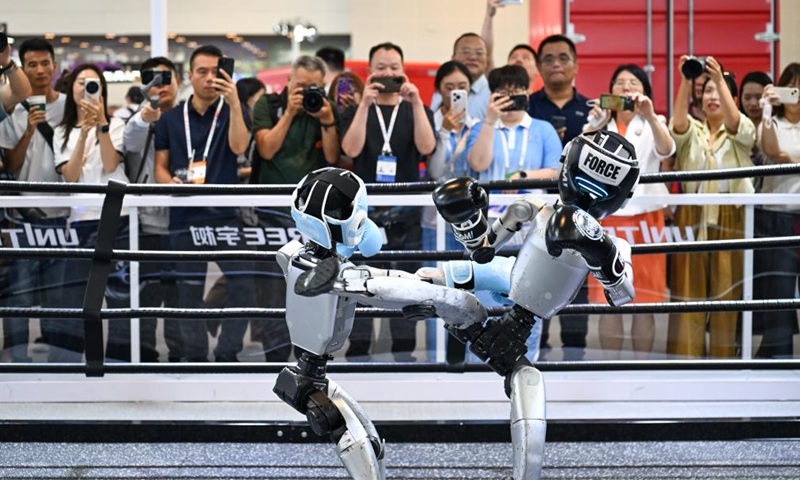
Beneath the valuation headlines sits an unresolved question about what these robots actually do commercially. Unitree's own prospectus flagged that its robotic hands are not yet precise or durable enough for sustained commercial use, and observers note that many humanoid robots, including Unitree's, remain mainly used for demonstrations, performances and research rather than reliable large-scale industrial or commercial deployment [3]. Morningstar's Kangyuxiao Li frames this as the real competitive test ahead: whether companies, Chinese or American, can achieve reliable performance and attractive returns on investment in large-scale industrial and commercial deployments, not just in showcase settings [9]. That skepticism looks different depending on where you look online. X.com's finance and markets accounts - Coin Bureau, Wall St Engine and CNBC's own account - treated the 600%-plus pop as straightforward validation of China's humanoid and physical-AI boom, dwelling on the raw percentage and dollar valuation with little pushback. Reddit told a much less uniform story: threads on r/wallstreetbets and r/StockMarket debated whether humanoid robots have proven real commercial utility or are still closer to spectacle - 'clown show' was one recurring label - and flagged a price-to-earnings multiple above 100x as hard to square with Unitree's modest reported profit. Elsewhere on the platform, r/stocks threads raised a more practical complaint: foreign retail investors can't easily buy in at all, since STAR Market listings require a mainland brokerage account and aren't immediately eligible for southbound trading. That gap between platforms is itself the story: the same 629% number reads as vindication on one feed and as a red flag on another. Even Ethan Qi's read of the IPO as an industry benchmark cuts both ways: if Unitree's valuation becomes the reference point for the next wave of humanoid IPOs, the gap between demonstration-stage capability and commercial reliability becomes everyone's problem, not just Unitree's [3].

Historical Context

2016
Wang Xingxing founded Unitree in Hangzhou, initially known for four-legged robotic dogs before expanding into humanoid robots.
2026-07
The U.S. imposed a ban on imports of new foreign-made humanoid and quadruped robots on national security grounds, ahead of Unitree's IPO.
2026-08-19
Unitree listed on the Shanghai Stock Exchange's STAR Market, becoming mainland China's first publicly listed humanoid robot maker, with shares surging up to 629% before closing up 460%.
2026-08-19
The 2026 World Robot Conference opened in Beijing the same day as Unitree's debut, featuring roughly 3,000 products on display and a speech from Wang Xingxing.

Power Map

Key Players
Subject

Unitree Robotics' Shanghai stock market debut

WA

Wang Xingxing (Founder, CEO, CTO)

Owns roughly a fifth of Unitree (about 121.4 million shares); his paper wealth rose to more than $12 billion after the debut, and he used the IPO investor meeting to set the company's AI and hardware roadmap.

DE

DeepSeek

Chinese AI lab that invested about 140.8 million yuan pre-IPO, signaling the AI industry's alignment with Unitree's embodied AI ambitions.

ME

Meituan

Largest outside shareholder pre-IPO; its 8.7% post-IPO stake was valued at roughly 30 billion yuan, about a 70x return on its original investment.

TE

Tencent, Alibaba, Ant Group

Existing strategic investors in Unitree prior to listing, part of the syndicate of major Chinese tech firms betting on humanoid robotics.

U.

U.S. Trump administration / FCC

Banned imports of new foreign-made humanoid and quadruped robots in July 2026 on national-security grounds, a headwind for the roughly 13-18% of Unitree revenue tied to the U.S.

Fact Check

9 cited
  1. [1] Unitree Robotics surges 629% to US$66 billion valuation in Shanghai share debut
  2. [2] Unitree Robotics Set to Debut After $904 Million Shanghai IPO
  3. [3] China's robot maker Unitree debuts on the stock market amid the AI humanoid boom
  4. [4] Unitree, the Chinese firm behind dancing and backflipping robots, sees shares surge in trading debut
  5. [5] Unitree stock surged 629% on debut: is China's robot boom already overvalued?
  6. [6] Unitree founder outlines company's AI roadmap after Shanghai listing
  7. [7] Shares in Chinese humanoid robot maker Unitree soar in its Shanghai trading debut
  8. [8] China's Unitree soars in market debut as investors bet on humanoid robots
  9. [9] China's humanoid robots: Unitree IPO puts spotlight on Tesla's Optimus rival

Source Articles

Top 4

THE SIGNAL.

Analysts

Views the IPO as a milestone that could set a valuation benchmark for other humanoid robotics companies going public.

Ethan Qi
Associate Director, Counterpoint Research

Cautions that the real test for Unitree and its peers is whether they can achieve reliable performance and returns at large industrial and commercial scale, and flags that losing U.S. market access could meaningfully hit revenue.

Kangyuxiao Li
Analyst, Morningstar

Argues Unitree stands out among humanoid robotics firms for having genuine revenue, profitability and production volume, distinguishing it from peers that remain pre-revenue.

Rinat Mirzaitov
Founder, Humanoid Analytics

Attributes Unitree's market position to rapid product iteration and continuous innovation, giving it a first-mover advantage in humanoid robotics.

Nomura analyst
Nomura

Warn that the recent surge in reported robot-maker shipment numbers across the industry may be illusionary and not reflect sustainable demand.

HSBC analysts
HSBC
The Crowd

🇨🇳BREAKING: Chinese humanoid robot maker Unitree surges over 600% in its Shanghai market debut. Unitree opened at 1,100 yuan ($163) per share versus an IPO price of around 150 yuan ($22). This briefly pushed its market capitalization to nearly 445 billion yuan ($66 billion).

@@coinbureau399

UNITREE SOARS 629% IN SHANGHAI DEBUT TO A ~$66B MARKET CAP

@@wallstengine386

Unitree Robotics shares rose 542% in early trading Wednesday as the Chinese humanoid robot maker made its stock market debut in Shanghai. The Hangzhou-based robot maker, whose backflipping and dancing machines have drawn global attention, raised about 6.1 billion yuan ($905 million).

@@CNBC239

China's backflipping robot maker Unitree pops 542% in Shanghai debut

@u/Lisaismyfav674
Broadcast
Chinese robot maker Unitree set to become China's first humanoid robot stock | DW News

Chinese robot maker Unitree set to become China's first humanoid robot stock | DW News

Unitree Surges, Baidu Plummets, Xiaomi Rises | Stock Movers

Unitree Surges, Baidu Plummets, Xiaomi Rises | Stock Movers

Unitree IPO: Is China's robot boom just beginning?

Unitree IPO: Is China's robot boom just beginning?