The engineering trick behind the price tag
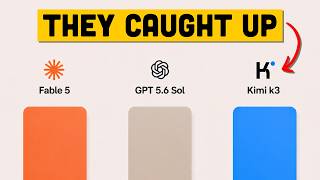
K3's headline number is 2.8 trillion parameters, but the model is built as a sparse mixture-of-experts, so only a fraction of that mass activates on any given request [1]. Moonshot paired that with two new mechanisms, Kimi Delta Attention (a hybrid linear-attention design) and Attention Residuals, and the combination let K3 use 21% fewer output tokens than its predecessor K2.6 on equivalent tasks [2]. The payoff shows up on Artificial Analysis's composite leaderboard, where K3 posted an Elo of 1,547, a 732-point jump over K2.6, trailing only Claude Fable 5 [3]. That is the real story under the market noise: a lab operating under three years of escalating U.S. export controls on advanced chips and lithography equipment closing most of the gap to frontier U.S. models through architecture rather than raw compute [2].