Microsoft Build 2026: Scout agent, MAI models, and RTX Spark hardware
TECH

Microsoft Build 2026: Scout agent, MAI models, and RTX Spark hardware

52+
Signals

Strategic Overview

  • 01.
    At Build 2026 in San Francisco, Microsoft unveiled seven in-house MAI models trained from scratch, led by MAI-Thinking-1 (reasoning) and MAI-Code-1-Flash (coding), positioned as cheaper, customer-tunable alternatives to OpenAI's GPT tier.
  • 02.
    Microsoft Scout, an always-on personal AI agent embedded in Microsoft 365 (Teams, Outlook), proactively handles meeting prep, scheduling conflicts, and routine tasks; available to Frontier customers in early experimental release.
  • 03.
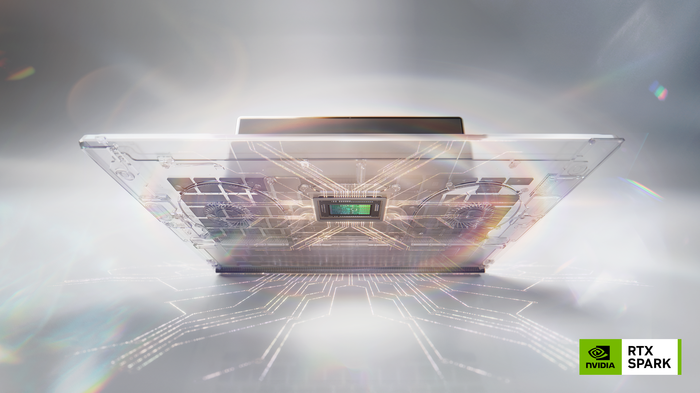
    NVIDIA and Microsoft jointly launched the RTX Spark-powered Surface Laptop Ultra and Surface RTX Spark Dev Box - 1 petaflop of AI compute and 128GB unified memory, capable of running 120B-parameter models locally with a 1M-token context.
  • 04.
    Microsoft also announced Majorana 2 (an 8-qubit topological quantum chip with claimed 1,000x reliability gain), Project Solara (an agent-first device platform running the MDEP OS), and a Windows 11 developer push including Coreutils, Intelligent Terminal, and the Microsoft Execution Containers SDK.

Deep Analysis

From AI consumer to AI producer: what the McKinsey 10x claim actually does

The load-bearing brick of the entire Build 2026 narrative is one number: 10x. Mustafa Suleyman told the keynote that MAI models tuned for McKinsey beat OpenAI's GPT-5.5 on quality at roughly ten times better cost efficiency [1]. That single data point converts what would otherwise look like a defensive in-house hedge into an offensive repositioning. Microsoft is not announcing seven MAI models because it lacks an OpenAI partnership; it is announcing them because, on its own benchmarks, it can now offer enterprise customers a parity-quality, order-of-magnitude-cheaper substitute for the GPT-5.5 tier [1]. Nadella's framing - 'every company should move from consuming a frontier model to fully participating at the frontier' [1]- is the strategic envelope around that economic argument.

The mechanism is Frontier Tuning, the customer-specific fine-tuning path that produced the McKinsey case, paired with a deliberate zero-distillation stance: MAI-Thinking-1 is trained from scratch on commercially licensed data [2], which both differentiates the IP story from open-weight imitators and removes a class of OpenAI-tied legal exposure. The competitive geometry that results is asymmetric in Microsoft's favor - OpenAI continues to receive Azure revenue while Microsoft also captures the higher-margin MAI tier whenever a customer chooses the cheaper option [3]. Morgan Stanley reads exactly this dynamic into a $650 MSFT price target, roughly 44% above the current price [4].
The hardware moat: why 1 petaflop on the desk changes the Mac-vs-Windows AI calculus

Software pivots can be matched in a quarter; silicon moats take years. The Surface Laptop Ultra and the new Surface RTX Spark Dev Box ship the same NVIDIA RTX Spark superchip with 1 petaflop of AI compute and 128GB of unified memory, capable of running 120B-parameter models locally with a 1M-token context window [5]. That specification matters because, for the first time in the current AI cycle, a mainstream Windows developer machine credibly out-specs the Mac Studio configurations that have been the default local-inference workstation for the past two years.

Jensen Huang's on-stage framing - 'the PC is being reinvented... you ask - and the PC does the work' [5]- is marketing, but the underlying silicon partnership is real: a Blackwell GPU and Grace CPU co-designed into a desktop-class envelope and shipped through the Microsoft channel [5]. The strategic effect is to create a hardware-resident default for agent workloads - Scout and the MAI family can run privately, on-device, on machines Microsoft sells directly. The Dev Box is announced as US-only via Microsoft.com later in 2026 [6], which is a meaningful constraint, but the platform thesis - that the next billion AI queries should happen on a developer's desk rather than on someone else's API endpoint - is the longest-tenured competitive position in the entire keynote.

The governance gap the keynote glossed over

The most interesting dissent at Build 2026 is not on X (where sentiment is broadly bullish) but on Reddit, where a widely-discussed developer thread argues that the agent capability layer is shipping faster than the audit, permission-scoping, and rollback infrastructure to govern it. The substance of the critique: Scout is described as 'always-on' and proactively handling meeting prep, scheduling conflicts, and routine tasks across Teams and Outlook without being asked [7], which means it reads email, calendar, and Teams content continuously, and acts on them.

Microsoft's answer arrives in the same keynote envelope. Microsoft Execution Containers (MXC), shipped as an SDK in early preview, is a policy-driven execution layer that lets developers declare exactly which files, networks, and applications an agent can access, with dynamic containment based on risk and intent [8]. The gap the Reddit critique surfaces is the one between capability shipping in early experimental release and governance shipping in preview - and it is real. The contrarian read worth taking seriously: the parts of Build 2026 most likely to break in production are not the models or the silicon, but the policy primitives that have not yet caught up to what the models are now allowed to do.

Majorana 2 and Project Solara: the long-dated bets that anchor credibility

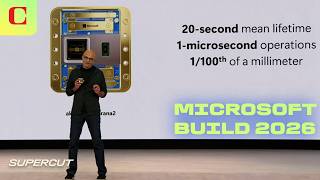
Two announcements at Build 2026 are not about 2026 at all. Majorana 2 is an 8-qubit topological quantum chip with an average qubit lifetime of 20 seconds (up to a minute), which Microsoft claims is a 1,000x reliability gain over the predecessor by swapping aluminum for lead in the material stack [9]. The strategic envelope around that figure is Zulfi Alam's commitment to a commercially useful quantum machine by 2029 [1]- a hard date that materially compresses the timeline narrative against IBM and Google's superconducting-qubit roadmaps.

Project Solara is the other long-dated bet: a hardware-plus-software platform for agent-first specialized devices running the MDEP operating system instead of apps, demoed with a desk AI assistant featuring facial recognition and a wearable AI badge [10]. Read together, these are not product announcements; they are positioning bets. Majorana 2 stakes a claim to the post-classical compute generation. Project Solara stakes a claim to the post-app interaction model - devices where the OS dispatches to agents rather than launching applications, with MDEP as the substrate [10]. Both will be judged on milestones years out, but their inclusion alongside the shippable MAI and RTX Spark announcements is the architecture of the keynote: near-term economic pressure on OpenAI, medium-term hardware lock-in, long-term platform definition.

Historical Context

2019-07-22
Microsoft's initial $1B investment in OpenAI established the Azure-exclusive partnership that Build 2026 now partially unwinds by introducing MAI as a co-equal model family.
2025-02-19
First-generation Majorana 1 topological qubit chip launched with millisecond-scale qubit lifetimes - the baseline the new 20-second Majorana 2 figure improves on.
2025-08-01
Earlier MAI-1 and MAI-Voice generations shipped under Mustafa Suleyman, establishing the in-house track that becomes a full seven-model family at Build 2026.
2026-05-31
Surface Laptop Ultra was pre-announced two days before Build, framing the on-device AI hardware story that the Dev Box and Project Solara extend.
2026-06-02
Build 2026 Day 1 keynote: seven MAI models, Scout, RTX Spark Dev Box, Majorana 2, Project Solara, Coreutils, Intelligent Terminal, and the MXC SDK shipped in a single announcement window.

Power Map

Key Players
Subject

Microsoft Build 2026: Scout agent, MAI models, and RTX Spark hardware

MI

Microsoft / Satya Nadella (CEO)

Architect of the agent-first strategy and the pivot from AI consumer to AI producer; Build 2026 Day 1 keynote speaker.

MU

Mustafa Suleyman (CEO, Microsoft AI)

Leads MAI in-house model development; positions MAI as a higher-quality, lower-cost alternative to OpenAI's GPT for enterprise workloads.

NV

NVIDIA / Jensen Huang (CEO)

Co-designed the RTX Spark superchip powering Surface Laptop Ultra and the Dev Box; on-stage keynote partner supplying CUDA, Blackwell GPU, and Grace CPU silicon.

OP

OpenAI

Existing Microsoft AI partner (~$13B invested) now repositioned as one option rather than the default orchestrator, with MAI models competing directly on enterprise reasoning and code workloads.

AN

Anthropic

Microsoft's second frontier-model partner (up to $5B invested) and a secondary competitive target of the MAI rollout.

MC

McKinsey

Reference Frontier Tuning customer used to substantiate the headline claim that tuned MAI beats GPT-5.5 on quality at roughly 10x better cost efficiency.

MI

Microsoft Quantum / Zulfi Alam

Corporate VP driving the Majorana topological-qubit roadmap, with Majorana 2 positioned as the chip behind a 2029 commercial quantum target.

Fact Check

10 cited
  1. [1] Microsoft launches its own AI models to take on OpenAI and Anthropic
  2. [2] Microsoft launches seven MAI models trained from scratch
  3. [3] Microsoft unveils new AI models to lessen reliance on OpenAI and lower costs for developers
  4. [4] Microsoft Stock (MSFT) Surges After Build 2026 as Morgan Stanley Eyes 52% Azure Upside
  5. [5] NVIDIA and Microsoft Reveal AI-First Windows PCs and Agents Powered by RTX Spark
  6. [6] Building the next generation of devices for developers: Surface RTX Spark Dev Box
  7. [7] Microsoft Build 2026: Be yourself at work
  8. [8] Build 2026: Furthering Windows as the trusted platform for development
  9. [9] Majorana 2 quantum chip revealed at Microsoft Build 2026: Features and specs explained
  10. [10] Six updates from Microsoft Build 2026

Source Articles

Top 5

THE SIGNAL.

Analysts

"Frames the strategic pivot as graduating from AI consumer to AI producer: 'We believe the time has come for every company to move from consuming a frontier model to fully participating at the frontier.'"

Satya Nadella
CEO, Microsoft

"Argues MAI tuned for a single enterprise (McKinsey) can outperform OpenAI's GPT-5.5 on quality at roughly an order of magnitude better unit economics, making model-swap a financial decision, not a capability one."

Mustafa Suleyman
CEO, Microsoft AI

"Casts the RTX Spark Windows PC as a generational reinvention away from app-launching toward intent-driven computing: 'The PC is being reinvented. For forty years, you launched apps. Click. Type. With RTX Spark and Microsoft Windows, you ask - and the PC does the work.'"

Jensen Huang
CEO, NVIDIA

"Holds to a 2029 target for a commercially useful quantum machine, anchored on Majorana 2 as the linchpin chip behind a claimed 1,000x reliability gain: 'We will have a quantum machine in 2029 that can solve commercially viable, reasonable problems.'"

Zulfi Alam
Corporate VP, Microsoft Quantum

"Maintains Overweight on MSFT with a $650 price target (~44% upside), arguing Street revenue estimates lag the capex-implied AI datacenter opportunity."

Keith Weiss
Analyst, Morgan Stanley
The Crowd

"Building a frontier intelligence ecosystem together. Highlights from my keynote at Microsoft Build this morning."

@@satyanadella1087

"BREAKING: Microsoft just dropped 7 in house AI models built from scratch with zero distillation MAI-Thinking-1 matches Sonnet 4.6 on human preference MAI-Image-2.5 beats Nano Banana Pro on Arena trained on their own Maia silicon, fully self sufficient the sleeping giant"

@@Ubermenscchh15

"Microsoft just dropped Scout at Build 2026. It's not another chatbot. It's an always-on AI agent that works for you - even when you're not asking it anything. Connects to Teams, Outlook, OneDrive, Calendar. Learns how you work over time. Acts autonomously with its own governed"

@@saj_adib0

"Build 2026 - Wow"

@u/oldmagicstudios99
Broadcast
Microsoft Build 2026 | Opening Keynote

Microsoft Build 2026 | Opening Keynote

Microsoft Build event in 25 minutes

Microsoft Build event in 25 minutes

Microsoft Build 2026: See All the Highlights in 15 Minutes

Microsoft Build 2026: See All the Highlights in 15 Minutes