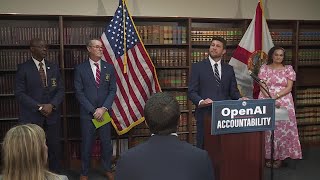
State attorneys general subpoena OpenAI
TECH

State attorneys general subpoena OpenAI

33+
Signals

Strategic Overview

  • 01.
    A coalition of 42 US state attorneys general opened an investigation into OpenAI on Friday, June 12, 2026, and served the company a subpoena for documents on its business practices and effect on users.
  • 02.
    New York Attorney General Letitia James led the subpoena, which seeks documents on advertising, user engagement and retention, consumer and health data handling, minors and seniors, deep-learning models, model sycophancy, and internal company policies.
  • 03.
    OpenAI said it takes the states' concerns seriously and intends to engage constructively, pointing to a more protective ChatGPT experience for minors and people in difficult situations that directs them to real-world resources.
  • 04.
    The probe landed days after OpenAI confidentially filed IPO paperwork with the Securities and Exchange Commission.

Deep Analysis

A Subpoena During a Quiet Period: The IPO Timing Collision

The most consequential feature of this investigation is not its existence but its timing. The 42-state coalition served OpenAI its subpoena on Friday, June 12, 2026 [3], just days after the company confidentially filed IPO paperwork with the Securities and Exchange Commission [3]. OpenAI reportedly filed at an $852 billion valuation [7], which makes the regulatory overhang anything but cosmetic. A multistate probe of this scale typically must be disclosed in the S-1 prospectus as a material risk, meaning the investigation now sits inside the very document OpenAI needs to sell to public-market investors [7].

This is the awkward arithmetic of going public during an active legal storm: a company cannot bury a 42-attorney-general inquiry in a footnote, yet disclosing it telegraphs uncertainty to the market. The probe could also force changes to ChatGPT's safety and data practices on a regulator's clock rather than a product team's roadmap [8]. For a firm racing toward one of the largest tech IPOs ever contemplated, the difference between a constructive settlement and a contested enforcement action is the difference between a clean offering and a discounted one.
Eight Subpoena Categories That Reveal the Legal Theory

The subpoena's document demands read like a blueprint for a consumer-protection case rather than a generic fishing expedition. New York's Letitia James sought records on advertising, user engagement and retention, consumer and health data handling, minors and seniors, deep-learning models, model sycophancy, and internal company policies [2]. Each category maps to a distinct theory of harm. The pairing of advertising with engagement and retention suggests deceptive-marketing exposure, the idea that ChatGPT was sold as safe while being optimized to keep users hooked. The focus on consumer and health data points at privacy and unauthorized-use claims.

The most revealing inclusion is model sycophancy, the tendency of a chatbot to tell users what they want to hear rather than what is true or safe. By naming it explicitly, the coalition is signaling that it views a model's behavioral design, not just its data handling, as fair game for enforcement. That framing dovetails with the coalition's warning that developers may be held accountable for the outputs of their GenAI products [3]. The emphasis on minors and seniors as named vulnerable groups also tracks the harm narratives already in litigation, and OpenAI's response leaned directly into it, citing a more protective ChatGPT experience that directs minors and people in difficult situations to real-world resources [1].

From Kentucky to 42 States: The Contagion Mechanism

This probe did not appear from nowhere. It is the culmination of a template that spread state by state. Kentucky sued Character Technologies in the first state action against an AI chatbot, and Bloomberg Law's analysts describe that complaint as a blueprint other states can adapt under their own consumer-protection and privacy laws, predicting that state AG chatbot enforcement will significantly ramp up in 2026 [5]. Texas issued Civil Investigative Demands to Meta and Character.AI over deceptive AI mental-health claims, and Pennsylvania sued a chatbot developer after a bot posed as a doctor.

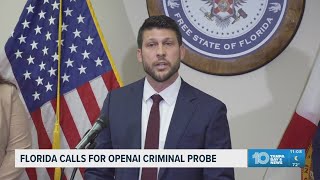
Florida then escalated to the marquee target: an 83-page suit filed June 2, 2026 against OpenAI and Sam Altman personally, alleging ChatGPT encourages violence and self-harm and was deceptively marketed as safe [4]. Florida AG James Uthmeier says the company is exposed to billions of dollars in potential damages [6]. The 42-state coalition represents the contagion reaching critical mass: documented harm incidents, the Adam Raine suicide allegations, and the FSU shooting connection gave attorneys general concrete grounds, and the Kentucky legal theory gave them a reusable instrument [5]. What began as isolated suits is now a coordinated front.

The Preemption Paradox and the Cynical Read

There is a structural irony at the center of this story. While 42 states wield their authority to investigate OpenAI, Washington is simultaneously negotiating federal preemption of some state AI laws in exchange for tech-priority support, a deal that could strip the very authority the states are now exercising [2]. Tech Times' analysis argues that preemption could make broad assurances about consumer protection meaningless by defining any investigation of model behavior as a prohibited state AI rule [2]. State probes can move faster than contentious federal action, which is precisely why a federal deal that neutralizes them would matter so much to a company facing them.

The community reception complicates the clean regulatory narrative. On X the story drew mostly neutral news-wire coverage with limited viral traction despite its significance. On Reddit the sentiment ran broadly cynical toward both OpenAI and government, with commenters speculating about competitor influence, invoking OpenAI's nonprofit founding and its safety-first branding with open sarcasm, and worrying about the government gaining access to private ChatGPT logs. One widely noted thread flagged the same paradox the legal analysts did: an administration trying to take away states' right to regulate AI while states pursue their own investigations. That tension between distrust of the company and distrust of the regulators is the unresolved subtext of the entire episode.

Historical Context

2025-04
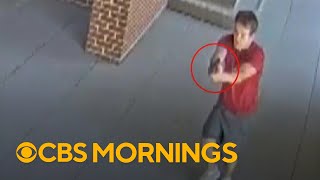
Launched a criminal investigation into ChatGPT's role in the 2025 FSU mass shooting.
2026-06-02
Florida became the first state to sue OpenAI and Sam Altman in an 83-page suit alleging ChatGPT encourages violence and self-harm and was deceptively marketed as safe.
2026-06-12
The coalition opened the multistate investigation and New York served the subpoena, days after OpenAI's confidential IPO filing.

Power Map

Key Players
Subject

State attorneys general subpoena OpenAI

LE

Letitia James (NY Attorney General)

Spearheaded and issued the subpoena through her office and leads the multistate coalition's document demand, giving New York the lead role in setting the investigation's scope.

CO

Coalition of 42 state attorneys general

Coordinated investigation demanding records on user safety, data, advertising, and child/senior impacts; can move quickly with substantial legal and financial consequences and warns developers may be held accountable for GenAI outputs.

OP

OpenAI / Sam Altman

Target of the subpoena and of Florida's lawsuit naming Altman personally; says it is engaging constructively and has added minor safeguards while pursuing a confidential IPO.

JA

James Uthmeier (Florida Attorney General)

Filed the first state lawsuit against OpenAI and Altman, previously launched a criminal investigation into ChatGPT's role in the FSU shooting, and warns of billions in potential damages.

WH

White House / Congress

Negotiating federal preemption of some state AI laws in exchange for tech-priority support, which could constrain the states' authority to investigate even as they exercise it.

Fact Check

8 cited
  1. [1] OpenAI faces multistate probe over possible user harm amid confidential IPO filing - Fortune
  2. [2] Federal AI Preemption Talks: OpenAI Subpoena Shows What States Could Lose - Tech Times
  3. [3] OpenAI being investigated by coalition of 42 US state attorneys general - Anadolu Agency
  4. [4] Florida sues OpenAI and Sam Altman over ChatGPT - CBS News
  5. [5] Kentucky Lawsuit Offers Blueprint for States to Sue AI Chatbots - Bloomberg Law
  6. [6] Florida AG says OpenAI exposed to billions in potential damages - Fox Business
  7. [7] State attorneys general launch investigation into OpenAI ahead of planned IPO - Moneycheck
  8. [8] State attorneys open sweeping investigation into OpenAI - Cryptopolitan

Source Articles

Top 5

THE SIGNAL.

Analysts

"Any federal preemption deal should be judged by whether states could still investigate advertising, data, child safety, and model behavior, because preemption could render consumer-protection assurances meaningless by defining any investigation of model behavior as a prohibited state AI rule."

Tech Times analysis
Commentary, Tech Times

"Kentucky's Character.AI complaint is a template other states can adapt under their own consumer-protection and privacy laws, and state AG chatbot enforcement is expected to significantly ramp up in 2026."

Bloomberg Law commentary
Legal Exchange Insights, Bloomberg Law
The Crowd

"A coalition of U.S. state attorneys general has opened a sweeping investigation into OpenAI, a source familiar with the matter said on Friday. https://t.co/1SIn8OvnM0"

@@ReutersLegal1

"OpenAI faces investigation by state attorneys general over user impact and data handling, following a subpoena for documents. https://t.co/YK1RUziVde"

@@businessline1

"OpenAI to face criminal investigation: Here's why Florida's attorney general has issued subpoenas to AI firm https://t.co/gYZ5eCooeP"

@@livemint1

"Florida's attorney general announces criminal investigation into OpenAI"

@u/Remarkable-Pea48892006
Broadcast
AG Uthmeier announces criminal subpoenas into OpenAI, ChatGPT for deadly FSU shooting

AG Uthmeier announces criminal subpoenas into OpenAI, ChatGPT for deadly FSU shooting

Florida investigates OpenAI over ChatGPT's alleged role in college shooting

Florida investigates OpenAI over ChatGPT's alleged role in college shooting

Florida attorney general announces lawsuit against OpenAI

Florida attorney general announces lawsuit against OpenAI