From Depreciating Chip to Bankable Asset
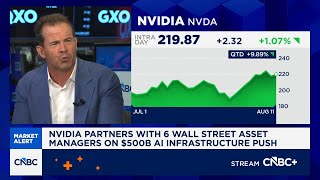
Nvidia's announcement reframes GPU compute itself as collateral. The six-firm platform - Apollo, BlackRock, Blackstone, Brookfield, Goldman Sachs, and KKR - aims to mobilize over $500 billion in third-party capital, with Nvidia framing this as extending its business from chipmaker to enabler of "a new class of productive, investable infrastructure: AI factories" [1]. Crucially, these are memorandums of understanding, not binding contracts - the $500 billion is a target "over time," with no specific projects, tenors, or pricing yet attached [2].
The mechanism that makes this work is a capped guarantee: Nvidia will backstop up to 25% of a qualifying deal's residual hardware value if resale value falls short, reviewed project-by-project, without replacing lenders' own credit underwriting [3]. To justify treating a chip that used to be written off in a few years as a multi-year financeable asset, Jensen Huang points to H100 rental prices climbing from $1.70 per GPU-hour in October 2025 to $2.35 in March 2026 as evidence that CUDA-driven software lock-in extends a GPU's economic life well past its accounting depreciation schedule [3].