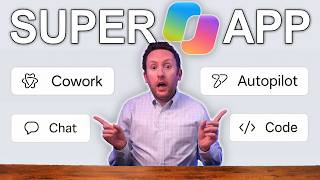
An Operating System, Not a Chatbot: Copilot Borrows Office's Old Playbook
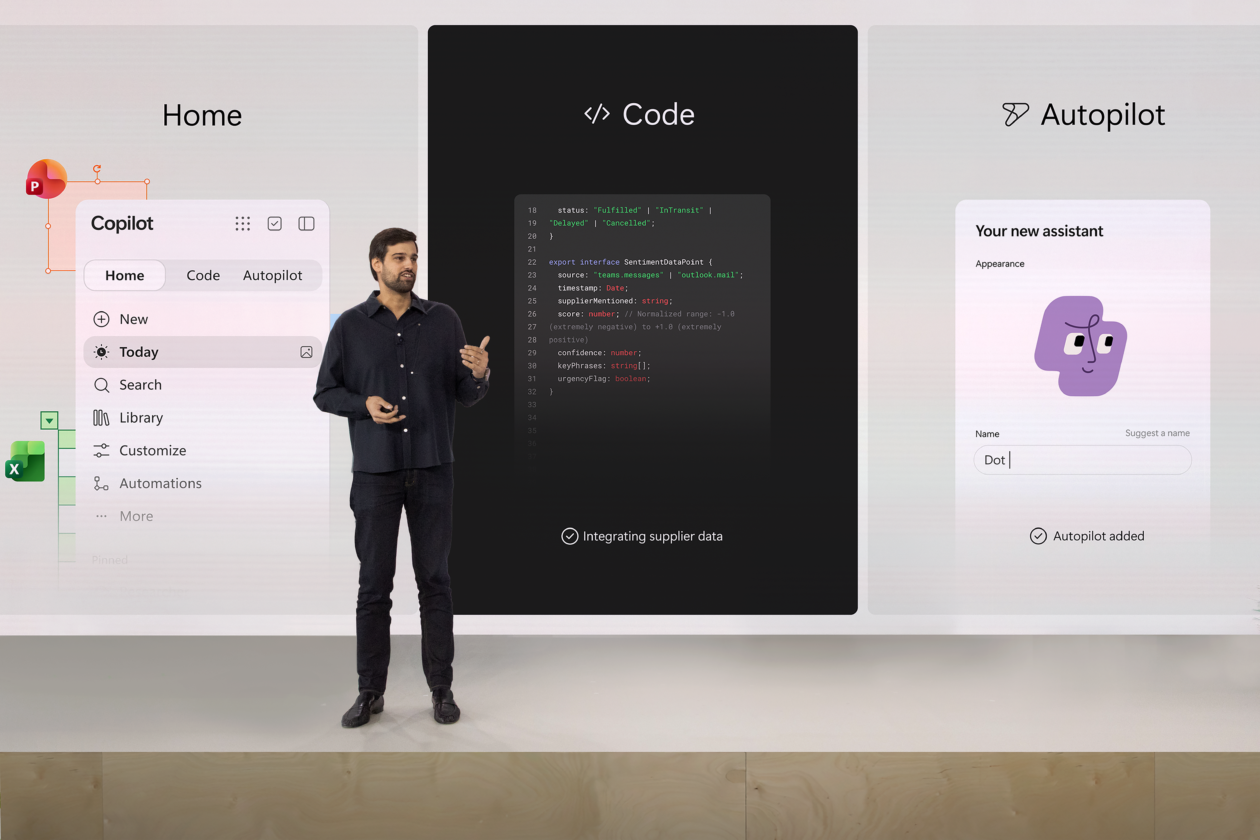
On September 25, 2026, Microsoft announced a redesigned Copilot app built around three new areas: Home, Code, and Autopilot [1]. Executives positioned the redesign as a new operating system for AI-era work, drawing a direct analogy to Office's role in defining work for the PC era [2]. That framing is not incidental marketing language - it sets up the strategic logic that makes the relaunch more than a UI refresh. Rather than compete head-on as a fourth or fifth standalone AI chatbot, Microsoft is embedding chat, coding, and autonomous-agent capability directly into a platform that already sits on hundreds of millions of desktops - a battle it can only win by leveraging distribution it already owns, not by out-modeling OpenAI or Anthropic. That is also why the underlying models are treated as interchangeable parts rather than a moat: Cowork runs on Anthropic's Opus 4.8 and Sonnet 4.6, and Frontier-tier customers get access to OpenAI's GPT-5.5, all inside the same Copilot shell [3]. The Code tab extends the same logic to software creation itself - it lets any employee describe an app, tracker, dashboard, or automation in plain language and have Copilot build and host it as a shareable internal tool, using the same underlying technology that powers GitHub Copilot for professional developers [4]. Nadella has framed the model-agnostic design as insurance against depending on any single AI lab, saying real independence means having a private evaluation suite strong enough to swap in a different model whenever a better or cheaper one appears [5]. Put together, the pitch is that Copilot's actual product is not any one model - it is the orchestration layer, the enterprise data connections, and the identity and governance plumbing wrapped around whichever model is winning that quarter.