Unitree's $50 Billion Shanghai IPO and China's Humanoid Robotics Boom
TECH

Unitree's $50 Billion Shanghai IPO and China's Humanoid Robotics Boom

32+
Signals

Strategic Overview

  • 01.
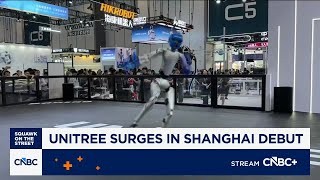
    Unitree Robotics debuted on Shanghai's STAR Market on August 19, 2026, becoming mainland China's first publicly traded humanoid robot maker; shares closed up 460% after briefly surging as much as 620-630% intraday.
  • 02.
    The IPO raised about 6.1 billion yuan (roughly $904 million) by pricing shares at 150.8 yuan each, selling around 40.4 million shares - about 10% of Unitree's enlarged share capital.
  • 03.
    Unitree's market value reached roughly $50 billion at the close of its debut session, after the retail portion of the offering was oversubscribed more than 5,500 times, a STAR Market record.
  • 04.
    Mech-Mind Robotics, a Meituan-backed maker of industrial 3D cameras and AI perception software, cleared its Hong Kong listing hearing on August 16, 2026 and is targeting about $300 million in an IPO expected to debut in early September 2026.

Deep Analysis

A $50 Billion Bet on 1.7 Billion Yuan of Revenue

Unitree's August 19 debut on Shanghai's STAR Market turned into a retail feeding frenzy. Priced at 150.8 yuan a share, the stock briefly spiked as much as 620-630% intraday before settling into a 460% gain, closing its first session at 845 yuan [1]. That pushed Unitree's market value to roughly $50 billion by the close of trading [2].

That price tag sits on top of 2025 revenue of just 1.70-1.71 billion yuan (roughly $240 million) and net profit of 278 million yuan [1]- real numbers by humanoid-robotics standards, but nowhere close to justifying a valuation running into the hundreds of times trailing sales on their own.

The demand behind that price was almost entirely retail. The IPO raised about $904 million by selling roughly 40.4 million shares - about 10% of the company - and individual investors submitted an estimated 8.1 trillion yuan (about $1.2 trillion) in orders [3], a STAR Market record confirmed at 5,526 times subscribed [4]. The froth cooled almost as fast as it built: Unitree shares fell nearly 19% the very next trading day, giving back a meaningful chunk of the debut-day pop [5].
Beijing's Own Planners Called the Bubble Before It Inflated

Nine months before Unitree's Shanghai debut, China's National Development and Reform Commission - the country's top economic planning agency - issued a rare public warning that the humanoid robotics sector was showing classic frontier-industry bubble symptoms. Spokeswoman Li Chao noted that frontier industries have long grappled with balancing growth speed against bubble risk, and that more than 150 humanoid robot makers were already operating in China, with the number still rising and threatening a flood of highly similar models [6].

Goldman Sachs raised a related but distinct concern from the investment-banking side: that China's humanoid robot sector risks overcapacity as production scales up quickly without matching real orders [5]. The unusual part of this story isn't that skeptics exist - it's that the warning came from inside China's own economic-planning apparatus, months ahead of the wave of retail enthusiasm that would eventually send Unitree up 460% in a single session.

Unitree's Profits Are Real - Its Followers' Aren't

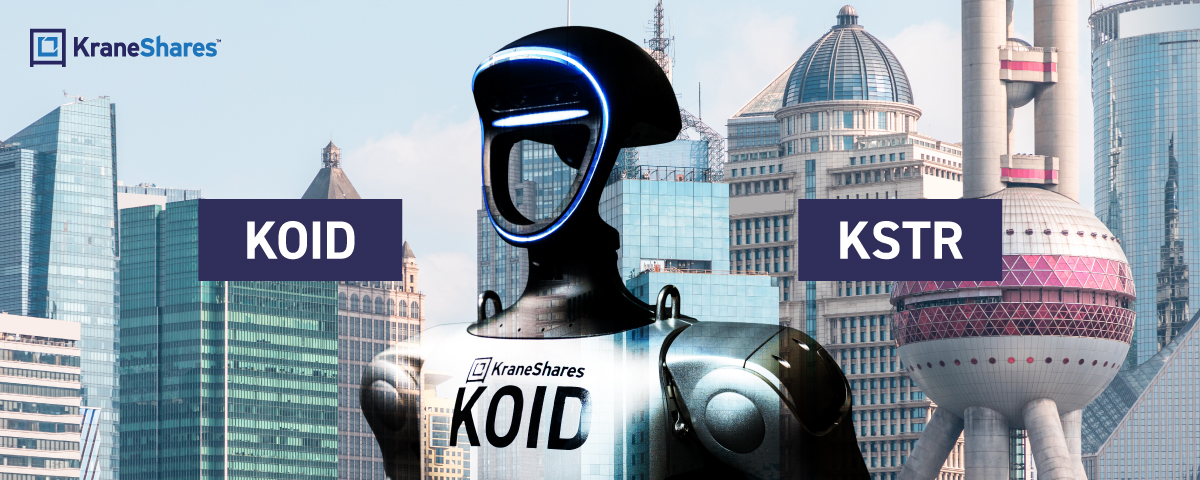
What separates Unitree from the rest of the field is that its numbers are directionally real. 2025 revenue rose to about 1.7 billion yuan from 392.77 million yuan in 2024 - roughly 335% growth - alongside a 278 million yuan net profit [1], and founder Wang Xingxing, who built the company from its 2016 founding and retains about a third of it post-IPO, assembled that revenue base years before the IPO frenzy arrived [7]. The IPO itself drew backing from Chinese AI company DeepSeek, which invested about 140.8 million yuan, on top of earlier stakes from Tencent and Meituan [8]- a sign of how tightly China's AI-model makers and its robotics hardware boom are now intertwined.

Mech-Mind Robotics, the industrial 3D-camera and AI-perception maker chasing its own roughly $300 million Hong Kong listing, tells a different story. Its 2025 adjusted net loss was 109 million yuan - improved from a 214 million yuan loss the year before, but still red ink - and it's expected to stay unprofitable through 2026 as it keeps spending on R&D and sales [9]. Independent analyst Rinat Mirzaitov of Humanoid Analytics frames Unitree's position bluntly: it is "one of the few companies in humanoid robotics with genuine revenue, profitability and meaningful production volume" [10]- the open question is whether it can convert that hardware and manufacturing lead into leadership on the application and workflow side, where the durable margins are likely to sit.

Behind the Demos: Malfunctions on Stage and a 'World' Conference With Almost No Foreign Faces

The same week Unitree went public, the 2026 World Robot Conference opened in Beijing's E-Town district, showcasing roughly 3,000 products and setting up the World Humanoid Robot Games, where more than 2,000 robots were set to compete in athletic events starting August 22 [11]. The showcase didn't go entirely smoothly - several humanoid robots publicly malfunctioned during opening-day demonstrations, a reminder that the industry's marketing cadence is still outrunning its reliability [12].

China shipped more than 40,000 humanoid robots in the first half of 2026, representing 97% of global shipments [13]- the deployment-at-scale story the government wants told. But community reaction split along familiar lines. On X, the highest-engagement commentary on the conference noted that despite the 'World' branding, the exhibition floor was overwhelmingly Chinese with almost no foreign firms present, a gap tied to US export controls that makes the ecosystem look increasingly self-contained rather than globally integrated. On Reddit, the skepticism ran more toward the robots themselves - commenters questioned how much of the conference-floor choreography is remote-controlled or pre-scripted rather than autonomous, and noted that a large share of Unitree's units still ship to universities and research labs rather than paying commercial customers, a distinction that matters for how much of that headline shipment figure has actually translated into industrial deployment rather than research demos.

Historical Context

2016
Founded by Wang Xingxing in Hangzhou.
2016
Founded in Xiongan New Area, Hebei province.
2025-06
Closed a Series C round at a 12.7 billion yuan post-money valuation, co-led by Alibaba, Tencent, China Mobile Capital, Ant Group, Geely Capital and Jinqiu Capital.
2025-11-27
China's top economic planner issued a rare official warning about bubble risk in the humanoid robotics sector.
2026-06-12
Confidentially filed for a Hong Kong IPO as investor interest in China's robotics sector grew.
2026-08-06
Announced plans to raise $904 million in its Shanghai STAR Market IPO as China's first mainland-listed humanoid robot maker.
2026-08-16
Cleared its Hong Kong Stock Exchange listing hearing, moving toward its roughly $300 million IPO.
2026-08-19
Unitree debuted on the Shanghai STAR Market, surging over 460%, the same week the World Robot Conference opened in Beijing.

Power Map

Key Players
Subject

Unitree's $50 Billion Shanghai IPO and China's Humanoid Robotics Boom

UN

Unitree Robotics

Hangzhou-based humanoid and quadruped robot maker that became the first mainland Chinese humanoid robotics firm to go public, raising about $904 million on the Shanghai STAR Market and reaching a roughly $50 billion valuation on debut day.

WA

Wang Xingxing

Founder and CEO of Unitree, who retains roughly one-third ownership of the company after the IPO, giving him continued control over its strategic direction.

DE

DeepSeek

Chinese AI company that invested about 140.8 million yuan in Unitree's IPO as a strategic backer, signaling the overlap between China's AI-model makers and its robotics hardware boom.

ME

Mech-Mind Robotics

Meituan-backed industrial robotics and AI-perception software maker pursuing its own roughly $300 million Hong Kong listing, testing whether investor appetite extends to a still-unprofitable player in the sector.

NA

National Development and Reform Commission (NDRC)

China's top economic planning agency, which publicly warned of bubble risk in the humanoid robotics sector months before Unitree's IPO, shaping the regulatory backdrop the boom is unfolding against.

EN

EngineAI and AgiBot

Other Chinese humanoid robot makers following Unitree into the IPO pipeline - EngineAI has confidentially filed for a Hong Kong listing, and AgiBot is planning one next year at a targeted valuation of HK$40-50 billion - extending the boom beyond a single company.

Fact Check

13 cited
  1. [1] Unitree Robotics Stock Soars 460% in First Trading Session on Shanghai's STAR Market
  2. [2] Unitree Robotics IPO: Shanghai Stock Market Debut
  3. [3] Unitree IPO: Why Investors Are Betting Big on China's Humanoid Robots
  4. [4] Unitree's Shanghai IPO 5,526 Times Subscribed by Retail Buyers
  5. [5] China Bubble Concerns Grow in Humanoid Robots Market
  6. [6] China Warns of Bubble Risk in Booming Humanoid Robotics Industry
  7. [7] A Complete Guide to Unitree Robotics' 2026 IPO: Why It Matters for STAR Market ETF (KSTR) & Humanoid Robotics ETF (KOID)
  8. [8] China's Backflipping Robot Maker Unitree Jumps in Shanghai IPO
  9. [9] China's Mech-Mind Robotics Set to Open Order Book for US$300 Million IPO, Sources Say
  10. [10] China's Unitree Soars in Market Debut as Investors Bet on Humanoid Robots
  11. [11] 2026 World Robot Conference Opens in Beijing E-Town
  12. [12] Humanoid Robots Malfunction at Beijing's 2026 World Robot Conference
  13. [13] China's Humanoid Robot Shipments Surge as Industry Moves From Demos to Deployment

Source Articles

Top 5

THE SIGNAL.

Analysts

Says Unitree is one of the few humanoid robotics companies with genuine revenue, profitability, and meaningful production volume, but argues its real challenge is turning hardware leadership into application and workflow leadership: "It is one of the few companies in humanoid robotics with genuine revenue, profitability and meaningful production volume."

Rinat Mirzaitov
Founder, Humanoid Analytics

Warned that humanoid robotics is now confronting the classic frontier-industry tension between fast growth and bubble risk: "frontier industries have long grappled with the challenge of balancing the speed of growth against the risk of bubbles - an issue now confronting the humanoid robot sector as well."

Li Chao
Spokeswoman, National Development and Reform Commission (NDRC)
The Crowd

China's humanoids have made their stock market debut. Unitree Robotics has just become China's first publicly traded humanoid robot maker, adding investor firepower to the country's AI ambitions. Winnie Hsu explains.

@@business110

China: Almost no foreign faces at Beijing's World Robot Conference this week. Hundreds of Chinese firms packed the halls with humanoids, sorting robots, and new hardware. Officially, it's global. On the floor, it feels much more self-contained. U.S. export controls, FCC restrictions on imports, and geopolitical friction loom over the show.

@@MarioNawfal275

Hangzhou-based Unitree Robotics exploded 460% higher during its Shanghai IPO, briefly rising more than 600%. The humanoid-robot manufacturer finished its first session valued at roughly US$48 billion despite generating only RMB1.7 billion in revenue last year. Investors are betting on future potential over current fundamentals.

@@tonychinaupdate5

China's backflipping robot maker Unitree pops 542% in Shanghai debut

@u/Lisaismyfav730
Broadcast
Chinese robot maker Unitree set to become China's first humanoid robot stock | DW News

Chinese robot maker Unitree set to become China's first humanoid robot stock | DW News

This Chinese Humanoid Company Cleared For $6 Billion IPO | Why Unitree Can't Be Ignored | FP Video

This Chinese Humanoid Company Cleared For $6 Billion IPO | Why Unitree Can't Be Ignored | FP Video

Chinese robot makers surges in IPO

Chinese robot makers surges in IPO