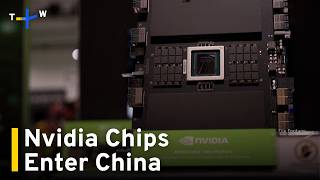
Nvidia H200 Shipments Resume to ByteDance and Tencent Amid China Export Limits
TECH

Nvidia H200 Shipments Resume to ByteDance and Tencent Amid China Export Limits

25+
Signals

Strategic Overview

  • 01.
    ByteDance and Tencent each received approximately 10,000 Nvidia H200 AI accelerators in August 2026, the first reported China deliveries since export licenses were issued, though the shipments have not been publicly confirmed by Nvidia, ByteDance, or Tencent.
  • 02.
    The delivered volume represents about 13% of the 75,000-unit ceiling each approved Chinese customer is permitted to purchase under current U.S. export licensing terms.
  • 03.
    The shipments follow a roughly seven-month halt, during which Nvidia stopped China-bound H200 production and redirected TSMC manufacturing capacity to its Vera Rubin line.
  • 04.
    Chinese regulators have told companies to route most of the licensed H200 hardware to Hong Kong rather than deploy it on the mainland, even though ByteDance and Tencent do not currently operate data centers there.

Deep Analysis

The 13 Percent Problem: How Small Is 'Resumed'?

ByteDance and Tencent each received about 10,000 H200 units in August 2026, delivered against a license ceiling that lets each approved Chinese customer buy up to 75,000 chips [1]. Some reporting puts the real ceiling even higher, at up to 100,000 units per customer [2]. Either way, what has landed so far is a rounding error against what is technically permitted. The shipments follow roughly seven months during which nothing moved at all: Nvidia halted China-bound H200 production entirely after licenses were first issued in January 2026, and redirected the freed-up TSMC manufacturing capacity to its Vera Rubin line instead [1].

That gap between 'resumed' and 'resumed at what volume' is exactly where Wall Street and Washington disagree. Citi's Atif Malik kept his Buy rating and $300 price target on Nvidia, framing the deliveries as symbolically significant even if small [3]. Wedbush went further in downplaying it, calling the China shipments only a 'minimal' positive for the stock [4]. On Reddit, investors in r/NVDA_Stock were openly skeptical of the framing itself, pointing out that a U.S. official had separately told Congress the volume shipped to China and Hong Kong so far was 'trivial' - a description that sits awkwardly next to headlines describing a halt now ended. The tension boils down to definitions: technically, yes, chips are moving again. Materially, the number moving looks closer to a test batch than a resumption of trade.
Beijing's Hong Kong Trap

Even the chips that have shipped come with a catch that has nothing to do with Washington. Chinese regulators have told ByteDance, Tencent, and other approved buyers that they can, and largely should, route the newly licensed H200 hardware to Hong Kong rather than deploy it on the mainland, since the city operates outside mainland China's customs border [5]. The instruction is widely read as Beijing protecting its own chipmakers - keeping imported Nvidia silicon at arm's length from mainland AI infrastructure while domestic alternatives scale up.

The problem is that ByteDance and Tencent do not currently run data centers in Hong Kong [6], and the city's infrastructure was not obviously built to absorb this kind of load. Hong Kong's entire installed data-center capacity is estimated at roughly 581 megawatts, while a single H200 draws about 700 watts, and companies are effectively being asked to warehouse thousands of them there [7]. China's National Development and Reform Commission still has to approve every server order tied to these chips on a case-by-case basis, which stacks a second layer of friction on top of the power problem [7]. One person close to the situation summed up the resulting standoff plainly: everyone needs the chips but struggles to find a way to use them in Hong Kong [7]. On X, the framing from Financial Times reporter Zijing Wu, whose scoop broke the story, centered on exactly this mismatch - chips arriving, with nowhere sanctioned to plug them in.

Why Beijing Keeps Buying Nvidia Anyway

The deeper reason any of this is happening is that China's own chip industry, for all its progress, still cannot fully substitute for Nvidia on the workloads that matter most. Industry analysts describe a 'bipolarisation' in Chinese AI demand: low-value, low-monetization inference can increasingly run on domestic silicon, but the highest-quality tokens, especially for coding tasks, still require Nvidia-class hardware to serve reliably [8]. That is not a small niche - China's daily AI token volume passed 140 trillion in March 2026, more than 1,000 times where it stood in early 2024 [8], and coding is one of the workloads driving that growth hardest.

Huawei's newest accelerators, like the Ascend 950PR, are increasingly competitive for inference [9], and Beijing's Hong Kong routing rule is partly an attempt to buy Huawei and its peers more runway. But Chinese developers building at the frontier are still leaning on Nvidia's Hopper architecture, the H200's own lineage, for training and for the kind of high-fidelity inference domestic chips have not yet matched, largely due to gaps in memory subsystem performance [9]. Coverage on YouTube reflects the same split, with one widely-discussed analysis examining why China's domestic chip alternatives still lag Nvidia hardware for the most demanding AI workloads.

What Wall Street, and Beijing's Own Engineers, Are Actually Watching

For Nvidia, the financial stakes of this story are smaller than the headlines imply. The company's own fiscal Q2 revenue guidance of $91 billion assumed zero China data-center compute revenue [4], which means these shipments represent pure upside optionality rather than something already baked into forecasts. U.S. Under Secretary of Commerce Jeffrey Kessler has noted that roughly $10 billion worth of H200 export licenses for China have been approved, even as actual shipped volumes stayed negligible until this recent batch [3]- underscoring how much of Nvidia's China opportunity still exists only on paper.

Analysts are also flagging a narrower risk: this first wave of shipments is concentrated in just two customers, ByteDance and Tencent, which puts customer concentration on the radar for anyone tracking Nvidia's China exposure [10]. Community reaction mirrors that caution. Reddit's investor crowd stayed largely unimpressed pending confirmation in an actual earnings report, and several commenters argued that H200-class hardware had already been reaching China through gray-market channels well before this official shipment, pointing to reports of aging A100 servers tripling in price amid a parallel smuggling crackdown. Separately, Chinese officials reportedly convened ByteDance, Tencent, and Alibaba for emergency meetings to assess the chip once the export terms shifted - a sign that even inside China, how to actually use this hardware is still being worked out in real time.

Historical Context

2025-12
Trump administration approved export of H200 chips to vetted Chinese companies, with ByteDance and Tencent reportedly among about 10 authorized firms.
2026-01
Formal licensing framework issued, permitting each approved Chinese customer to buy up to 75,000 H200 units (some reports cite up to 100,000).
2026-03
Nvidia halted China-bound H200 production entirely and redirected TSMC manufacturing capacity to its Vera Rubin chip line.
2026-07
Nvidia CEO Jensen Huang said the company would resume H200 sales in China after receiving purchase orders and restarting manufacturing.
2026-08
First actual H200 deliveries reached China, with ByteDance and Tencent each receiving roughly 10,000 units about seven months after licenses were first issued.

Power Map

Key Players
Subject

Nvidia H200 Shipments Resume to ByteDance and Tencent Amid China Export Limits

NV

Nvidia

Chip manufacturer resuming H200 shipments to China under strict U.S. export licenses; decides production allocation between China-bound H200s and next-gen Vera Rubin hardware.

BY

ByteDance

One of two confirmed recipients of the ~10,000-unit H200 delivery, and a buyer now required to navigate Beijing's Hong Kong warehousing rule.

TE

Tencent

One of two confirmed recipients of the ~10,000-unit H200 delivery, facing the same deployment mismatch as ByteDance.

U.

U.S. Department of Commerce / Bureau of Industry and Security

Issues export licenses, sets the 75,000-unit quota, and imposes inventory-certification and revenue-sharing conditions that gate how many chips actually ship.

CH

China's National Development and Reform Commission (NDRC)

Approves every server order tied to licensed H200 chips inside China on a case-by-case basis, giving Beijing a second gate on deployment beyond U.S. licensing.

HU

Huawei

Leading domestic AI chip maker (e.g. Ascend 950PR) that is increasingly competitive for inference, though Chinese developers building at the frontier still lean on Nvidia's Hopper architecture for training and high-fidelity inference.

Fact Check

10 cited
  1. [1] Nvidia H200 China Shipments Below Licence Ceiling
  2. [2] Nvidia H200 Chips Approved for Limited Shipments to China
  3. [3] Nvidia H200 Chips Enter China: 13% of Quota, Beijing Not Washington Controls the Rest
  4. [4] Nvidia in Focus as Wedbush Says H200 GPUs Shipping to China Are a 'Minimal' Positive
  5. [5] Nvidia H200 Chips Reach China in Small Shipments, FT Reports
  6. [6] First Nvidia H200 Shipments Reach ByteDance and Tencent as Beijing Loosens Its Import Block
  7. [7] ByteDance, Tencent Nvidia H200 China Shipments
  8. [8] Chinese AI Chips Fall Short in Coding, Forcing Firms to Stretch Scarce Nvidia Supply
  9. [9] As the H200 Waits at the Door, China's AI Chip Dilemma
  10. [10] Nvidia's First China H200 Shipments Put Customer Concentration in Focus

Source Articles

Top 4

THE SIGNAL.

Analysts

Says Chinese AI token demand is splitting into a bipolarisation: domestic chips can handle low-quality, low-monetization workloads, but the highest-quality tokens, especially for coding, still require Nvidia-class chips.

Guan Jiawei, VP of Approaching.AI
Industry analyst on China's AI chip and token demand split

Characterizes the H200 shipments to China as only a minimal positive for Nvidia's business.

Wedbush
Sell-side equity analyst firm covering Nvidia

Maintained a Buy rating and $300 price target on Nvidia, framing the China deliveries as symbolically significant but small relative to potential demand.

Atif Malik
Sell-side equity analyst, Citi

Noted that despite roughly $10 billion in approved H200 export licenses for China, actual shipped volumes remained negligible until the recent small batch deliveries.

Jeffrey Kessler
Under Secretary of Commerce for Industry and Security
The Crowd

Scoop: China eases limits on Nvidia H200 chips * ByteDance & Tencent received ~10K H200s; more shipments of similar size expected * Beijing tells cos to keep majority in HK (total H200 stock ~500k) but city lacks capacity to support use

@@zijing_wu339

JUST IN: China eases restrictions on Nvidia's H200 chips, allowing ByteDance and Tencent to receive 10,000 each as Beijing races to close the AI gap. Beijing has reportedly approved small batches of H200s for mainland China, even though the chip is at least two generations behind...

@@coinbureau129

SITUATION DETECTED: Nvidia H200 chips have begun reaching Chinese firms in small shipments, with ByteDance and Tencent each receiving about 10,000 processors in recent weeks, according to the Financial Times. The U.S. has cleared each company to buy up to 100,000.

@@MTSlive144

First Nvidia H200 shipments reach China, ByteDance and Tencent take deliveries

@u/tomshardware0
Broadcast
Inside China's Emergency Meetings on Nvidia's H200 Chip

Inside China's Emergency Meetings on Nvidia's H200 Chip

China's Answer to the Nvidia Ban Isn't a Better Chip

China's Answer to the Nvidia Ban Isn't a Better Chip

Report: Nvidia's H200 Chips Begin Reaching Chinese Tech Giants

Report: Nvidia's H200 Chips Begin Reaching Chinese Tech Giants

Nvidia H200 Shipments Resume to ByteDance and Tencent Amid China Export Limits — AI News | Agentic Brew