Compaction Preserves the Rot: Why Anthropic's Own Techniques Disagree
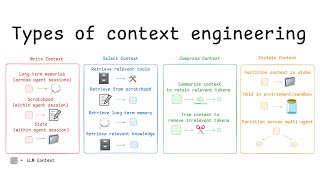
Anthropic's Applied AI team formalized three techniques for combating context pollution in long-running agents: compaction, which summarizes a conversation nearing its window limit and reinitiates a new window with that summary; structured note-taking, which writes persistent notes outside the context window that can be reloaded later; and sub-agent architectures, which delegate focused tasks to specialized agents that return clean summaries [1]. The team backed the framework with matching product the same day, September 29, 2025, shipping a beta context editing API and a memory tool on the Claude API [2], with the combination cutting token usage by 84 percent on long-running tasks, and a separate report of a 39 percent performance improvement on a 100-turn task [3].
But Anthropic's own workshop material complicates its tidy taxonomy: the Applied AI team's own presentation on building agents that run for hours states plainly that compaction alone does not cure coherence drift, and that structured handoffs between phases or sub-agents matter more than compression itself. That concession lines up closely with a contrarian critique circulating in the Claude Code community's five-part 'SCRUB' framework, which treats compaction with suspicion because a compressed summary preserves errors as faithfully as it preserves facts - the model doesn't compact away being wrong, just being verbose. The practical response power users describe is to disable auto-compaction, spawn sub-agents for isolation, cut or rewind proactively, and treat compaction as a last resort rather than a default. Chroma's Context Rot research supplies the empirical backbone for why any of this matters: across 18 frontier models spanning GPT-4.1, Claude 4, Gemini 2.5 and Qwen3, output reliability degrades well before the stated context window fills up, meaning teams that watch only for hard overflow errors are missing the dominant failure mode [4].