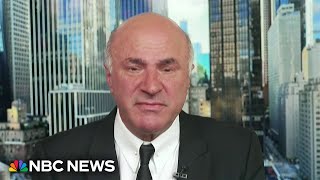
O'Leary Utah AI Data Center Downsized
TECH

O'Leary Utah AI Data Center Downsized

44+
Signals

Strategic Overview

  • 01.
    Kevin O'Leary agreed to remove 19,430 acres from the original 40,000-acre Stratos Project data center site in Box Elder County, Utah, plus an additional 620-acre parcel in the northeast, after Utah Senate President J. Stuart Adams demanded a 75% reduction in a June 1 letter.
  • 02.
    The carved-out acres sit south of the campus and align with the Locomotive Springs Waterfowl Management Area, while O'Leary committed to industry-leading water-use technology, dedicating any excess treated water to the Great Salt Lake, and entering an MOU with the Utah Department of Natural Resources.
  • 03.
    Box Elder County commissioners had unanimously approved the original 40,000-acre Stratos Project on May 4, 2026, in Hansel Valley over loud public opposition, before Governor Spencer Cox issued a statewide data-center evaluation framework on May 29 and Adams sent the reduction letter days later.
  • 04.
    Gensler designed the Stratos master plan with 60 data center buildings clustered in groups of 10 across six sites plus a 3,000-acre solar array; Phase 1 is projected at $4+ billion and full build-out at $100 billion over roughly a decade.

Deep Analysis

The MIDA chokehold: why O'Leary said he had 'no choice'

The reason O'Leary blinked has nothing to do with persuasion and everything to do with structure. The 40,000-acre Hansel Valley parcel was not entitled by Box Elder County alone — it was designated for development by the Military Installation Development Authority, a state entity Adams chairs [4]. MIDA designation is what let Stratos sidestep standard county zoning processes and accelerated approval [5], which is precisely why the May 4 commissioner vote could land unanimously over a thousand protesters in the room [6]. Pull MIDA's blessing and the project loses its expedited pathway; the entire entitlement stack collapses back into a slower, contested local review.

Adams's June 1 letter, then, was not a request. It was an offer to keep MIDA support in exchange for a 75% footprint cut and an MOU with the Utah Department of Natural Resources [2]. O'Leary's own framing to NBC News — 'I have no choice' — concedes the leverage publicly [3]. The state's own Stratos FAQ confirms the MIDA-designation path that gave Adams this leverage in the first place [12]. The lesson for every other hyperscale AI developer chasing a state-designated zone: the same mechanism that delivers fast-track entitlement also delivers a single legislator with one-shot kill power. Treat the chair of your enabling authority as the actual approver, not the county commission downstream.


Anchor high, settle low: did 40,000 acres ever mean 40,000 acres?

The Reddit and skeptical-press read on the downsizing is unflattering to both sides: 40,000 acres may have been the opening anchor and ~20,000 acres the destination O'Leary always lived with. Stakeholders are pointing at the geometry — 60 data center buildings in six clusters of 10, plus a 3,000-acre solar array [9]— and noting that a campus of that program does not need anything close to twice the size of Manhattan to operate. The removed land sits south of the campus around the Locomotive Springs Waterfowl Management Area [1], which reads less like a painful concession and more like buffer that was never going to host buildings.

If the anchor-high theory is right, both principals win politically. Adams gets a 75%-headline he can run on against the two GOP primary challengers (Stephanie Hollist and Braden Hess) campaigning explicitly on the data center issue [4], and his X-anchored letter [13]reinforced the framing in real time. O'Leary keeps the buildable core, the Gensler master plan, and the $100B build-out narrative intact while looking responsive. The grassroots Box Elder Accountability Referendum group — still working to collect 5,422 signatures in 45 days [8]— is the only party that doesn't get a face-saving exit, because acreage was never their real concern.

What did not shrink: 9 GW of power and 30 million tons of CO2

The physical envelope of Stratos collapsed by half. The physical demand did not. Power requirement is still 7.5-9 gigawatts — more than the entire state of Utah currently uses [4][8]— and the project's plan is to build its own ~9 GW gas plant tied to the Ruby Pipeline rather than draw from Utah's grid [14]. Estimated annual emissions remain around 30.2 million tons of CO2, a 55-64% increase to Utah's total emissions [8]. Water draw is still 3,000 acre-feet from Hansel Valley plus 10,000 acre-feet from Snowville, roughly the basic needs of 20,000 Utah households [8].

Reddit's r/SaltLakeCity technical thread put the bluntest version of this on the record: a 9 GW campus is roughly five times the capacity of Utah's largest existing power plant, and the proposed gas pipeline tap can't actually deliver that fuel volume. That is the gap the downsizing does not close. Utah State physicist Robert Davies's '23 atom bombs worth of energy' line and BYU ecologist Ben Abbott's warning that nighttime temperature rises 'would absolutely change the landscape' [8]describe load, not land. The political settlement bought Adams and O'Leary cover. It did not buy a single megawatt of grid headroom or a single acre-foot of unallocated water.

Great Salt Lake politics now veto any hyperscale water draw

The decisive context — and the reason this fight ended in days rather than years — is that the Great Salt Lake water crisis has reshaped Utah's political economy. The U.S. Interior Department allocated $1B in FY2027 for restoration against estimates of $3-5B actually needed [2], and refilling the lake is now a multi-year bipartisan project that no incumbent wants to be seen draining for a data center. Stratos's water plan — 13,000 acre-feet across Hansel Valley and Snowville — landed on top of that politics. Conservation group Great Salt Lake Rising, led by Josh Romney, became a credible counterweight [2]; Cox's May 29 executive order codified water as the first criterion any new data center has to clear [1].

That is why O'Leary's concession package was almost entirely water-coded: industry-leading water-use technology, an MOU with Utah DNR, and a pledge to dedicate any excess treated water to the Great Salt Lake [11]. Acreage was the deliverable; water-rights symbolism was the substance. Every hyperscale developer evaluating a Western siting decision should now assume that 'we'll be net-positive on the dominant water body' is a precondition to entitlement, not a PR talking point bolted on at the end.

A national signal: the bipartisan veto on AI infrastructure has arrived

Stratos is being read nationally because it is the cleanest case yet of organized, cross-partisan resistance forcing a hyperscale AI buildout to retreat. Utah polling cited by KSL shows 53% of residents oppose the project versus 30% in support [4], and resident Stephen Otterstrom's line — 'Most people feel betrayed, and that's bipartisan' — was echoed by Governor Cox conceding people 'are right to push back' [7]. Joe Rogan's clip on Stratos's energy consumption pulled the story out of Utah media and into national awareness, and r/technology's coverage drew a wave of skepticism about the substance of the concession.

O'Leary's countermove on X — framing opposition as a 'coordinated' foreign-influenced campaign tied to China competition [7][10]— drew massive engagement but did not change the political math in Utah. That is the takeaway for the AI infrastructure thesis: the national-security framing is now insufficient on its own to neutralize local water, power, and ratepayer concerns. Developers should expect that every gigawatt-class campus from here will require a transparent water plan, a ratepayer-isolation story, and early legislative buy-in — and that any one of those failing can compress a multi-year siting plan into a 30-day public renegotiation.

Historical Context

2026-01
O'Leary says he held early Stratos discussions with Governor Cox, Senate President Adams, and House Speaker Mike Schultz; Schultz disputes attending, foreshadowing the legislative-relations gap that later cost the project.
2026-02
Stratos Project publicly announced as a $100B, 60-building hyperscale AI campus across 40,000 acres in Hansel Valley, with West GenCo as energy partner.
2026-04-23
Public comment period opens; many residents say this is when they first learned of the proposal, seeding the bipartisan backlash that follows.
2026-05-04
Commissioners Tyler Vincent, Becky Meyer, and Lee Perry unanimously approved the 40,000-acre Stratos Project despite over a thousand residents protesting at the vote.
2026-05-15
First Gensler renderings of the Stratos Hyperscale Data Center are released, showing 60 buildings clustered across six sites plus a 3,000-acre solar array.
2026-05-29
Cox signs an executive order establishing a statewide framework to evaluate large data center projects, covering water use, ratepayer protections, air quality, and wildlife.
2026-06-01
Adams sends a letter to O'Leary demanding a 75% footprint reduction (40,000 to about 10,000 acres) and stronger environmental safeguards, publicly anchored on his X account.
2026-06-04
O'Leary responds with a formal proposal removing 19,430 acres plus a 620-acre northeast parcel, water-saving technology commitments, and Great Salt Lake water dedication via an MOU with Utah DNR.

Power Map

Key Players
Subject

O'Leary Utah AI Data Center Downsized

KE

Kevin O'Leary

Chairman of O'Leary Ventures and O'Leary Digital, lead investor and public face of the Stratos Project; agreed to the footprint reduction after Adams's letter and told NBC News he had 'no choice' but to comply.

J.

J. Stuart Adams

Utah Senate President (R-Layton) and chair of the Military Installation Development Authority (MIDA); authored the June 1 letter demanding the 75% footprint reduction and stronger environmental safeguards.

GO

Governor Spencer Cox

Utah Governor; signed a May 29 executive order creating a statewide framework for evaluating large data centers covering water, ratepayer, air, and wildlife protections, and publicly acknowledged residents are right to push back.

MI

Military Installation Development Authority (MIDA)

State entity that designated the 40,000-acre Hansel Valley parcel for development, enabling Stratos to bypass standard county zoning; Adams chairs MIDA, giving him structural leverage over the project.

BO

Box Elder County Commission

Commissioners Tyler Vincent, Becky Meyer, and Lee Perry unanimously approved the original 40,000-acre Stratos Project on May 4, 2026, despite over a thousand residents protesting at the vote.

BO

Box Elder Accountability Referendum group

Grassroots opposition collecting 5,422 signatures within 45 days to force a referendum on the project; represented publicly by Brenna Williams.

Fact Check

14 cited
  1. [1] O'Leary agrees to dramatically reduce Stratos Project data center footprint
  2. [2] Stuart Adams asks O'Leary to shrink data center 75 percent
  3. [3] Kevin O'Leary says Utah AI data center project will shrink after lawmakers demand cuts
  4. [4] Utah Senate president calls for drastic reduction to Box Elder County data center
  5. [5] Everything about Utah's Stratos Project data center
  6. [6] Box Elder County approves hyperscale data center project
  7. [7] Kevin O'Leary's Utah AI Data Center Faces Bipartisan Backlash
  8. [8] Proposed Utah data center could dump heat equivalent to 23 atom bombs daily
  9. [9] Gensler reveals designs for Stratos data center in Utah
  10. [10] Kevin O'Leary's Stratos data center in Utah
  11. [11] Utah Senate president calls on Kevin O'Leary to scale back data center
  12. [12] FAQ on Stratos Project
  13. [13] Utah Senate president sends letter demanding 75% reduction to proposed data center
  14. [14] What to know about Kevin O'Leary's data center plans in Utah

Source Articles

Top 5

THE SIGNAL.

Analysts

"Frames Stratos's projected thermal output as unprecedented in scale for the local environment, calling it 'the equivalent of about 23 atom bombs worth of energy dumped into this local environment every single day.'"

Robert Davies
Physics Professor, Utah State University

"Warns the modeled temperature jumps from the data center would re-zone Utah's climate, saying it is 'the difference between Utah's semi-arid climate and the Sahara Desert. This would absolutely change the landscape.'"

Ben Abbott
Ecology Professor, Brigham Young University

"Casts the reduction as a transparency and conservation move rather than a project killer, demanding 'greater transparency, stronger conservation commitments and enhanced protections for Utah's natural resources as this project moves through the review process.'"

J. Stuart Adams
Utah Senate President and MIDA Chair

"Frames U.S. AI infrastructure buildout as a national-security imperative against China and accuses critics of organized disinformation, asking 'Why are they getting it from a false initiative? Who is spending all this money to put out all these falsehoods and straight-out misinformation and lies and agitate these people?'"

Kevin O'Leary
Chairman, O'Leary Ventures and O'Leary Digital

"Characterizes the local opposition as crossing party lines, saying 'Most people feel betrayed, and that's bipartisan,' echoing Governor Cox's own observation that 'people are right to push back.'"

Stephen Otterstrom
Box Elder County resident
The Crowd

"I've sent a letter directly to @kevinolearytv calling for a 75% reduction in the proposed data center project area, from 40,000 acres to approximately 10,000 acres. I am also requiring that any excess water be treated and dedicated to the Great Salt Lake, even though none of the..."

@@JStuartAdams39

"We uncovered something far bigger than I ever expected. After seeing coordinated false attacks against the Utah data center project, we brought in an advanced data science team to trace where the content was coming from and the results were shocking. What we found led back to..."

@@kevinolearytv47123

"Why is there suddenly such an aggressive push against American data centers and AI infrastructure? After seeing a major spike in coordinated opposition campaigns around our Utah projects, we conducted a digital audit and traced a large amount of the activity back to an..."

@@kevinolearytv10517

"Kevin O'Leary says he will shrink his Utah AI data center project after political backlash / The "Shark Tank" mogul said he would cut the 40,000-acre project by roughly half in a letter sent Thursday to Utah's Senate President."

@u/MarvelsGrantMan1364300
Broadcast
Full interview: Utah data center developer Kevin O'Leary reacts to 75% reduction demand

Full interview: Utah data center developer Kevin O'Leary reacts to 75% reduction demand

Controversy Around Kevin O'Leary's Data Center Plans and Energy Consumption

Controversy Around Kevin O'Leary's Data Center Plans and Energy Consumption

Kevin O'Leary addresses 'misinformation' on Utah data center project

Kevin O'Leary addresses 'misinformation' on Utah data center project