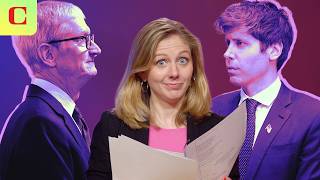
Apple v. OpenAI Trade Secrets Lawsuit
TECH

Apple v. OpenAI Trade Secrets Lawsuit

37+
Signals

Strategic Overview

  • 01.
    Apple sued OpenAI on July 10, 2026, accusing former Apple employees of systematically stealing Apple trade secrets to benefit OpenAI's hardware ambitions.
  • 02.
    Apple alleges OpenAI directed job candidates still employed at Apple to bring actual hardware components, CAD designs, and prototypes to interviews for 'show and tell' sessions.
  • 03.
    On August 3-4, 2026, Apple filed a motion for a preliminary injunction and expedited discovery, naming additional individuals and expanding the case to at least 13 former employees.
  • 04.
    On August 6, 2026, OpenAI filed a 31-page motion to dismiss, arguing Apple failed to identify a protectable trade secret or plausibly allege misappropriation.
  • 05.
    OpenAI counters that Apple's own security practices, including allowing personal iCloud accounts on work devices, explain leftover access, not coordinated theft, and accuses Apple of using the suit to mask its own AI shortcomings.
  • 06.
    A hearing on Apple's preliminary injunction motion is scheduled for October 1, 2026, with OpenAI's formal response due August 17, 2026.

Deep Analysis

Inside the 'Show and Tell' Playbook: What Apple Says Actually Happened

Apple's complaint doesn't describe a single leaked file - it describes a system. Recruiters allegedly told job candidates who were still employed at Apple to bring actual hardware components, CAD designs, and prototypes into interviews for what the filing calls 'show and tell' sessions [1]. Bloomberg's coverage of the case traces that pattern back to OpenAI's roughly $6.5 billion acquisition of Jony Ive's io team, framing Apple's core claim as a 'coordinated' recruiting campaign in which staff departing or interviewing at OpenAI were allegedly told to bring actual parts, drawings, and supplier information for unreleased Apple hardware. Tang Yew Tan, a 24-year Apple veteran who left in February 2024 to become OpenAI's Chief Hardware Officer, is accused of using his own insider knowledge to draw confidential details out of candidates [3]. Separately, former systems engineer Chang Liu is accused of exploiting a leftover authentication vulnerability to keep downloading Apple's confidential engineering files after he had already left the company [1]. By early August, Apple's internal investigation had widened the case to at least 13 named or implicated former employees [4], a small slice of the roughly 400 former Apple employees Apple's complaint says now work at OpenAI in total [1][2], and the company has now asked the court for a preliminary injunction and expedited discovery to freeze any use of its information while the case is litigated [3].
OpenAI's Rebuttal: 'Apple's Own Shortcomings,' Not a Conspiracy

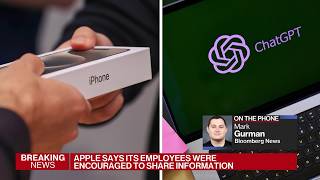
OpenAI's August 6 motion to dismiss doesn't just deny the allegations - it goes on offense. The 31-page filing argues Apple's complaint fails to identify a protectable trade secret or plausibly allege misappropriation, and accuses Apple of trying to paper over its own competitive weaknesses: 'Apple should not be permitted to use a baseless and pretextual lawsuit to make up for its shortcomings in the market for talent and retaining its employees, and its failures to integrate AI into its products' [5]. The rhetoric is relentless throughout the filing: across those 31 pages, variations of the word 'fail' appear nearly 50 times [5]. OpenAI's specific counter is that Apple's own security practices - including letting staff use personal iCloud accounts for work - are what left former employees with leftover system access, not evidence of a coordinated theft ring [6]. That dueling framing has split public reaction along similar lines: Reddit's read on the case has skewed heavily toward crediting Apple's version, even inside OpenAI's own community, while the highest-engagement post on X - a widely shared report from Bloomberg's Mark Gurman - simply relayed the motion's own language, quoting OpenAI's characterization of the suit as a 'baseless and pretextual lawsuit' and carrying that framing to an audience well beyond the court filing itself. Beyond the courtroom, that dueling narrative carries its own cost: with Apple alleging systemic, leadership-endorsed misconduct and OpenAI countering that Apple's own lax security and talent retention are to blame, both companies risk reputational and recruiting fallout that could dent trust with employees, recruits, and partners on either side [5].

Why the $6.5B io Acquisition Is the Real Trigger

The lawsuit only makes sense against the backdrop of OpenAI's hardware push. OpenAI's $6.5 billion acquisition of Jony Ive's design firm io signaled a serious move into consumer AI devices, and it's specifically implicated in Apple's claims that OpenAI drew on Apple's manufacturing and battery design knowledge [1]. Notably, Ive himself is not named as a defendant, a gap that has drawn its own scrutiny given how central the io deal is to the underlying dispute [7]. Read together with Apple's own pivot away from OpenAI - ending its ChatGPT-in-Siri arrangement in favor of a custom Gemini-powered Siri built with Google [8]- the lawsuit looks less like an isolated legal dispute and more like the fallout from two companies' hardware and AI roadmaps colliding head-on.

The Legal Stakes: An Injunction That Could Freeze OpenAI's Hardware Roadmap

The immediate practical question isn't whether Apple ultimately wins the case - it's whether Apple can get a preliminary injunction before then. Apple's motion, filed August 3-4, asks the court to bar OpenAI and the named former employees from using or acquiring Apple's confidential information while the case proceeds [3]. A hearing on that motion is set for October 1, 2026, with OpenAI's formal response due August 17 [5]. If granted, an injunction could delay or constrain OpenAI's consumer hardware development directly; if denied, it would hand OpenAI an early momentum win and undercut the urgency behind Apple's 'irreparable harm' argument. Either outcome will likely shape how aggressively both companies litigate the rest of the case.

Historical Context

2024-02
Tang Yew Tan departed Apple after serving as VP of product design; he later became OpenAI's Chief Hardware Officer.
2026-01
Chang Liu left Apple for OpenAI shortly before Apple filed suit.
2026-02
Apple says it raised concerns directly with OpenAI in February 2026 but received no response; OpenAI disputes this characterization of events.
2026-07-10
Apple filed its original trade secrets lawsuit against OpenAI and former employees.
2026-08-03
Apple filed a motion for a preliminary injunction and expedited discovery, naming additional former employees.
2026-08-06
OpenAI filed a motion to dismiss Apple's lawsuit.

Power Map

Key Players
Subject

Apple v. OpenAI Trade Secrets Lawsuit

AP

Apple Inc.

Plaintiff; alleges systematic theft of trade secrets by former employees now at OpenAI, seeking a preliminary injunction, expedited discovery, and depositions to stop OpenAI's hardware development using its confidential information.

OP

OpenAI / io Products

Defendant; denies wrongdoing, filed a motion to dismiss calling the suit meritless and pretextual, and argues it has no need for Apple's trade secrets because it is building fundamentally different hardware.

TA

Tang Yew Tan

Former Apple VP of product design for iPhone and Apple Watch (24 years at Apple), now OpenAI's Chief Hardware Officer; central defendant accused of using insider knowledge to solicit confidential information from job candidates.

CH

Chang Liu

Former Apple senior systems electrical engineer, now at OpenAI; accused of exploiting a security/authentication vulnerability to download confidential engineering files after leaving Apple.

JO

Jony Ive / io Products

OpenAI's $6.5 billion acquisition of Ive's hardware design firm io is implicated in Apple's allegations that OpenAI used Apple's metal-finishing techniques and battery design knowledge; Ive himself is not named as a defendant.

Fact Check

8 cited
  1. [1] The Wildest Allegations in Apple's Trade Secrets Lawsuit Against OpenAI
  2. [2] Apple Sues OpenAI Over Trade Secret Theft
  3. [3] Apple Demands OpenAI Injunction, Discovery, Testimony Now to Prevent More Harm
  4. [4] Apple Accuses More Ex-Employees in OpenAI Lawsuit
  5. [5] OpenAI Asks Judge to Dismiss Apple Lawsuit
  6. [6] Apple Lawsuit Against OpenAI Says iCloud Mess Didn't Play a Role
  7. [7] Why Apple's OpenAI Lawsuit Doesn't Mention Jony Ive
  8. [8] Apple Sues Over Network Breach, Parts Smuggling; OpenAI Says Timeline Holds

Source Articles

Top 5

THE SIGNAL.

Analysts

Frames the case as signaling that the next phase of AI competition will be fought over consumer devices, not just underlying models. Quote: "This case underlines that the next phase of the AI battle will be fought in factories and living rooms, not just in data centers."

Paolo Pescatore
Tech analyst

Says OpenAI's io acquisition has made it "a lot more competitive" against Apple in consumer hardware.

Dan Ives
Tech analyst

Rejects Apple's account of pre-suit contact and disputes factual claims in the complaint. Quote: "They now admit that their outside lawyers emailed the wrong person after confusing two Asian last names - only after we brought this to their attention."

OpenAI
Defendant, company statement
The Crowd

NEW: OpenAI files for court to dismiss Apple's lawsuit against it: "Apple should not be permitted to use a baseless and pretextual lawsuit to make up for its shortcomings in the market for talent and retaining its employees, and its failures to integrate AI into its products."

@@markgurman1123

Apple says OpenAI stole its secrets. It has the texts. Here are the 11 craziest facts from the new filing:

@@federicodonaton29

OpenAI just turned Apple's trade-secret lawsuit into a public credibility fight. Apple alleges that former employees Chang Liu and Tang Tan brought confidential hardware information to OpenAI as it builds its first consumer devices. Apple is seeking a preliminary injunction and more

@@WesRoth20

Apple sues OpenAI alleging trade secret theft, says scheme was 'at every level'

@u/Efficient-Session64417000
Broadcast
Apple is Suing OpenAI!

Apple is Suing OpenAI!

Apple Sues OpenAI for Trade Secret Theft

Apple Sues OpenAI for Trade Secret Theft

Apple v. OpenAI: All the Juicy Details of Their Legal Battle

Apple v. OpenAI: All the Juicy Details of Their Legal Battle