Nvidia-Powered ARM Windows PCs with Local AI Agents
TECH

Nvidia-Powered ARM Windows PCs with Local AI Agents

30+
Signals

Strategic Overview

  • 01.
    Nvidia and Microsoft will unveil the first Windows PCs powered by Nvidia's N1X SoC the week of June 1, 2026, with debut devices coming from Microsoft Surface and Dell at Computex Taipei and Microsoft Build.
  • 02.
    The N1X pairs a 20-core ARM CPU (Cortex-X925 + Cortex-A725) with a Blackwell integrated GPU carrying 6,144 CUDA cores — the same shader count as the desktop RTX 5070 — and supports up to 128GB of LPDDR5X unified memory.
  • 03.
    Alongside the hardware, Microsoft is expected to debut new software that makes it easier for AI agents to run tasks locally on Nvidia-powered Windows PCs — the agentic OS layer rumored for Build 2026.
  • 04.
    Jensen Huang's GTC Taipei keynote on June 1 at 11:00 a.m. local time will be the formal unveil, one day before Computex opens, after Nvidia and Microsoft posted coordinated 'a new era of PC' teasers on May 29 with geo-coordinates pointing to the Taipei Music Center venue.

Why N1X is a category step-change, not another Copilot+ refresh

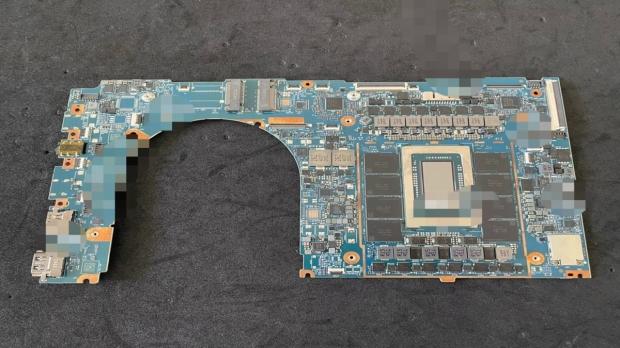
Every Windows-on-ARM machine shipped to date has been built around an NPU-first thesis: ship a CPU with a 40-80 TOPS neural accelerator, let the integrated GPU handle display, and route AI workloads through a constrained NPU runtime. Qualcomm's Snapdragon X2 Elite tops out at 80 TOPS on its NPU [1], and that's the bar Microsoft built Copilot+ around. The N1X breaks the thesis entirely. Leaked engineering board photos show a Blackwell integrated GPU with 6,144 CUDA cores — the same shader count as a desktop RTX 5070 — paired with a 20-core ARM CPU (Cortex-X925 performance plus Cortex-A725 efficiency clusters) and up to 128GB of LPDDR5X unified memory at roughly 273 GB/s of bandwidth [2].

The practical consequence is that the full CUDA stack runs natively on a laptop-class ARM chip for the first time. Every PyTorch model, every llama.cpp CUDA backend, every Ollama GGUF runner, every Stable Diffusion fine-tune, every cuDNN-accelerated inference path that today requires a discrete RTX GPU will run on a fanless or thin-and-light ARM device [3]. PCWorld's editorial framing is that this is what Qualcomm and Apple cannot match: 'CUDA is the key differentiator that neither Qualcomm's Snapdragon X series nor Apple Silicon can offer on Windows' [3]. For a developer audience that has spent two years watching MacBook Pros lead local-LLM benchmarks because of unified memory, the N1X delivers unified memory plus CUDA — a combination that didn't previously exist in a single shipping product.

The corollary that matters for the rest of the launch: Microsoft's expected agent software stack can target a real GPU, not a fixed-function NPU. That changes what 'local agent' means — instead of small distilled models constrained to an NPU budget like Qualcomm's 80-TOPS Snapdragon X2 Elite, agents can plausibly load 30B-class quantized models into 128GB of unified memory and call them as tools.


The Surface RT shadow and Ming-Chi Kuo's warning

This is Microsoft's third swing at ARM Windows, and the prior two are instructive. Surface RT in 2012 shipped with a Tegra 3, a sealed app ecosystem, and ended in a roughly $900M inventory write-down [4]. Surface Pro X in 2019 fixed the app-compatibility theory by adding x86 emulation but couldn't outperform Intel's mainstream silicon at the price point [5]. The 2024 Copilot+ PC launch with Qualcomm Snapdragon X Elite was meant to be the breakout — instead, as M.G. Siegler at Spyglass observed, 'while not as big of a bellyflop as the Surface RT, clearly the Copilot+ PC movement hasn't lit the world on fire either' [6]. The pattern: each generation fixed the previous generation's stated problem and still failed to drive a mainstream upgrade cycle.

Ming-Chi Kuo, whose supply-chain access has anchored every major device forecast of the past decade, projects roughly 10 million N1/N1X units over two years and characterizes them as a serious on-device-AI alternative to the Mac for power users running LLMs locally [7]. But his core warning is the one investors keep glossing over: 'If the goal is a real upgrade cycle, then beyond price, OS support (Windows) is still what matters' [7]. Hardware specs don't move enterprise PC fleets — application compatibility does. The Prism emulation layer that lets x86 Windows software run on ARM was tuned specifically for Qualcomm silicon, including 'some performance features that only work on a Snapdragon SoC' according to PCWorld [1]. Nvidia and Microsoft need either a Prism re-tune for Nvidia's CPU cores or a parallel emulation path — and there is no public evidence which one Build will deliver.

The Goofish leak of an N1 engineering motherboard for roughly $1,400 in China is the other tell [2]. Engineering samples don't escape into gray-market resale until devices are weeks from public reveal, which fits the June 1 timeline. But $1,400 for a bare motherboard signals that finished laptops will land at Surface Pro and XPS price points — premium territory, not the volume mid-market where ARM Windows actually needs to win.

The local-AI-agent gap Microsoft has to fill at Build

The Axios reporting is specific: alongside the hardware launch, 'Microsoft is also expected to debut software that makes it easier for people to have AI agents do work locally on their Windows computer' [8]. This is the part of the story that consumer discourse has not picked up — Reddit's r/technology threads have been dominated by SoC consolidation and right-to-repair complaints, and r/StockMarket has been focused on Intel's existential exposure, with almost no chatter on the local-agent software thesis. That signals an unmet bar Microsoft has to clear at Build to make the hardware story land.

The shape of what's needed is roughly: a system-level orchestration layer that exposes filesystem, browser DOM, application APIs, and shell to a locally-hosted agent, with sandboxing, undo, and audit logging. Today, on Copilot+ PCs, the Recall feature is the closest thing — and Recall's privacy reception was poor enough that Microsoft delayed its broad rollout. To make N1X-class hardware feel like a category change rather than a faster Copilot+ PC, the software has to do what cloud agents like Claude's computer use or OpenAI's Operator do, but on-device, with the latency and privacy properties that only local execution provides. The 128GB unified-memory ceiling and CUDA-accessible GPU are the right hardware substrate for that [2], but Microsoft has historically struggled to ship developer-friendly system APIs on ARM Windows.

The second open question is whether the agent stack will be Windows-on-ARM-exclusive or cross-architecture. If Microsoft restricts it to N1X devices to drive Copilot+ refresh-style segmentation, the agent thesis becomes a Surface RT-style ecosystem lock-in problem. If it ships everywhere, the N1X hardware advantage compresses to CUDA-on-ARM performance for the relatively narrow audience that runs local LLM workloads — closer to Kuo's 'power users' framing than to a billion-PC market disruption.

Competitive ripples — Intel, AMD, Apple, and the billion-PC stakes

Bull-case framing on X has Nvidia 'walking in the front door' of the billion-Windows-PC market with a chip that competes on AI throughput where Intel and AMD have spent two product cycles falling behind. The stakeholder ripple is asymmetric. Intel is the most exposed: consumer client silicon is the majority of its remaining revenue, and Snapdragon X Elite already eroded its premium-thin-and-light volume share. An Nvidia chip with RTX 5070-class graphics in an ARM laptop attacks both the consumer Core Ultra lineup and the discrete-GPU laptop category Intel never had a strong story in. AMD remains the x86 alternative and will likely respond with its own AI APU roadmap, but the partnership pairing for Microsoft's new local-agent push is Nvidia, not AMD [8].

Qualcomm's position is the most directly contested. Snapdragon X2 Elite has a stronger NPU at 80 TOPS than the N1X is rumored to offer on its NPU block, and the Prism emulation advantage is real [1]. Qualcomm's path forward is to compete on the agent-software story with a tightly integrated Snapdragon NPU runtime and on battery life — areas where ARM CPU efficiency still favors Qualcomm over Nvidia's first-generation client design. Apple is the philosophical comparison the analyst class keeps reaching for: Kuo's framing of N1X as 'a solid alternative to the Mac' for on-device AI is the first time a Windows-on-ARM device has been credibly compared to MacBook Pro on the LLM-power-user axis [7].

The contrarian view circulating on r/BetterOffline questioned whether the Nvidia pivot to client silicon hedges against AI datacenter overcapacity — if hyperscaler GPU demand softens through 2027, having a consumer revenue channel that can absorb Blackwell die volume becomes strategically valuable. That argument doesn't show up in mainstream tech-press coverage, but it explains why Nvidia is committing to a laptop SoC after walking away from the consumer CPU market once in the 2010s and being blocked from acquiring ARM outright in 2022.

Historical Context

2012-10-26
Microsoft's first ARM Windows attempt (Surface RT / Windows RT) flopped commercially and triggered a roughly $900M inventory write-down the following year.
2016-12-01
Windows 10 on ARM announced, introducing an x86 emulation layer to avoid the app-compatibility failures of Windows RT and re-opening the ARM laptop category.
2019-11-05
Microsoft's first modern ARM Windows device, powered by the Qualcomm-derived SQ1 SoC — performance was uneven but the platform stayed alive.
2024-06-18
Microsoft launched the Copilot+ PC category exclusively on Qualcomm Snapdragon X Elite/Plus ARM silicon, with on-device AI features like Recall — adoption underwhelmed expectations.
2026-05-29
Coordinated 'a new era of PC' teasers posted on the same day with geo-coordinates pointing to the Taipei keynote venue, broadly read as pre-announcing the N1X.
2026-06-01
Jensen Huang keynote expected to formally unveil the N1X and the first Nvidia-powered Windows-on-ARM PCs at the Taipei Music Center, one day before Computex opens.

Power Map

Key Players
Subject

Nvidia-Powered ARM Windows PCs with Local AI Agents

NV

Nvidia

Designs the N1/N1X ARM SoC pairing Cortex-X925/A725 cores with a Blackwell-class iGPU and the full CUDA software stack. Enters the Windows client CPU market at scale for the first time after prior failed attempts.

MI

Microsoft

Windows-on-ARM platform owner, launch hardware partner via Surface, and the party expected to ship the new local-AI-agent software that defines the user-facing value of the launch.

ME

MediaTek

Co-development partner on the N1/N1X SoC, contributing ARM CPU engineering that lets Nvidia ship a competitive client-class CPU on its first attempt.

DE

Dell, Lenovo, Asus, MSI

Launch and follow-on OEMs preparing N1/N1X Windows-on-ARM laptops for the late-2026 wave, with Dell confirmed alongside Surface for the initial reveal.

QU

Qualcomm

Incumbent Windows-on-ARM CPU supplier whose Snapdragon X Elite/X2 Elite exclusivity over Copilot+ — and the Prism x86 emulation tuning advantage — is directly challenged by Nvidia's entry.

AR

ARM Holdings

Underlying CPU architecture licensor explicitly included in the coordinated 'new era of PC' teaser alongside Nvidia, Microsoft, and MediaTek, marking the broadest ARM-on-Windows coalition to date.

Fact Check

8 cited
  1. [1] Nvidia's N1X could be the jolt Windows laptops need, with one big catch
  2. [2] Nvidia's N1 SoC pictured on an engineering board with 128GB of memory for local AI
  3. [3] NVIDIA ARM Laptop Chip N1X Confirmed for Computex: CUDA and RTX 5070-class GPU Onboard
  4. [4] Then and Now, Part 1: RT
  5. [5] Microsoft and ARM: a rocky romance
  6. [6] Nvidia CPU, Microsoft Surface, AI
  7. [7] Nvidia N1X AI PC to Ship 10 Million Units, but Windows is the Real Test, Says Ming-Chi Kuo
  8. [8] Microsoft and Nvidia to unveil first Windows PCs powered by Nvidia chips

Source Articles

Top 4

THE SIGNAL.

Analysts

"Projects roughly 10 million N1/N1X devices shipping over the next two years, positioning them as a credible on-device-AI alternative to Mac for power users running LLMs locally. 'For power users running LLMs on-device, an N1X device is a solid alternative to the Mac when it comes to capable on-device AI compute and large memory.'"

Ming-Chi Kuo
Analyst, TF International Securities

"Warns that the silicon alone won't drive a mainstream PC upgrade cycle — pricing and Windows software support will. 'But if the goal is a real upgrade cycle, then beyond price, OS support (Windows) is still what matters.'"

Ming-Chi Kuo
Analyst, TF International Securities

"Sees the N1X as potentially category-defining if Nvidia and MediaTek shipped a competent single-chip CPU+GPU, but flags that Windows-on-ARM's x86 emulation layer is tuned for Qualcomm. 'Prism is specifically tuned for Qualcomm's chips, with some performance features that only work on a Snapdragon SoC.'"

PCWorld editorial
PCWorld

"Frames the partnership as Microsoft's chance to simultaneously redo Surface RT and Copilot+ by leveraging Nvidia's AI brand strength. 'While not as big of a bellyflop as the Surface RT, clearly the Copilot+ PC movement hasn't lit the world on fire either.'"

M.G. Siegler
Writer, Spyglass
The Crowd

"Nvidia's Much-Anticipated, Reportedly Upcoming N1X / Windows PC Processor: Supply Chain Checks and Key Takeaways ▌Supply chain checks point to around 10M shipments of N1X-based devices over the next two years. ➡ Still a niche market, aimed at power users who need on-device AI"

@@mingchikuo372

"NVIDIA dropped a tweet. Just coordinates and four words. 25.0528, 121.5990. "A new era of PC." That's the Computex 2026 venue. June 2. GTC Taipei keynote on June 1. Microsoft's Windows account posted the same thing simultaneously. The N1X. NVIDIA's first ARM-based PC chip."

@@BluechipsAI29

"...the PC market just opened up. Nvidia has dominated AI infrastructure. Data centers. The cloud buildout. Every major hyperscaler writing billion-dollar checks. But there are over a billion Windows PCs in the world. And Nvidia just walked in the front door. Intel and AMD"

@@FrankCurzio7

"First Windows PCs powered by Nvidia chips to debut next week"

@u/joe4942342
Broadcast
NVIDIA N1X CPU is coming! What does this mean for gamers?

NVIDIA N1X CPU is coming! What does this mean for gamers?

HW News - NVIDIA "N1x" CPU Leak, ASUS Xbox ROG Ally, More Intel Dual GPUs

HW News - NVIDIA "N1x" CPU Leak, ASUS Xbox ROG Ally, More Intel Dual GPUs

Nvidia confirms ARM CPU for Windows!

Nvidia confirms ARM CPU for Windows!