Claude Code Auto Mode becomes the default permission mode for Pro, Max, and Team users on August 14, 2026, replacing manual approval prompts with a classifier that Anthropic says catches 89% of dangerous commands versus 13.6% for human reviewers - a claim independent researchers dispute.
TECH

Claude Code Auto Mode becomes the default permission mode for Pro, Max, and Team users on August 14, 2026, replacing manual approval prompts with a classifier that Anthropic says catches 89% of dangerous commands versus 13.6% for human reviewers - a claim independent researchers dispute.

31+
Signals

Strategic Overview

  • 01.
    Starting August 14, 2026, new Claude Code sessions for Pro, Max, and Team plan users will default to auto mode, replacing repeated manual approval prompts with a classifier that screens each tool call for irreversible, destructive, or out-of-bounds actions.
  • 02.
    Users who have already set a different default permission mode will be asked before anything changes, and can switch modes at any time with Shift+Tab.
  • 03.
    Enterprise customers and users accessing Claude Code through the Claude API, AWS Bedrock, Google Cloud's Agent Platform, or Microsoft Foundry remain opt-in for now, with Anthropic planning to make auto mode the default there within about a month.
  • 04.
    Anthropic is absorbing the extra token cost the classifier adds to every tool call, so Pro, Max, and Team users are not charged for the classifier's overhead.

Deep Analysis

The Study Behind the Switch

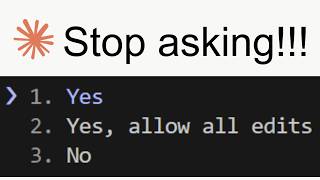
Anthropic's case for flipping the default rests on a controlled study of 1,053 paid professional testers: human reviewers caught only 13.6% of dangerous commands, while auto mode's classifier caught 89% [1]. Head-to-head, auto mode blocked 800 commands that humans had approved, while humans blocked only 6 commands auto mode had allowed [1]. The underlying failure mode isn't laziness so much as fatigue: Anthropic's own production data shows users approve 93% of permission prompts regardless of actual risk [2]. That matters most for long-running autonomous sessions, where manual review gets leaned on hardest exactly as fatigue sets in - the moment oversight is weakest is the moment agents are doing the most unsupervised work. Anthropic frames this less as a UX upgrade and more as a correction: constant approval prompts were producing an illusion of oversight rather than real oversight.

How the Classifier Actually Works

Auto mode runs a two-layer defense: an input-layer probe screens tool outputs for prompt injection, and a separate output-layer transcript classifier, built on Sonnet 4.6, evaluates each action before execution [2]. That evaluation itself is staged - a fast single-token filter tuned to err toward blocking runs first, and only escalates to full chain-of-thought reasoning when the fast pass flags something [2]. Critically, the classifier is architecturally separate from the Claude session doing the work: it only sees the tool calls being requested, not the model's own reasoning trail, which is designed to prevent Claude's own output from talking the classifier into an unsafe approval. Anthropic also reports internal near-misses it credits to this design, including stopping an attempted upload of confidential data to a public page and halting roughly 2,000 processes that would have disrupted an active GPU training run [4].

The Contested 81 Percent

The sharpest disagreement in this rollout isn't about whether auto mode helps - it's about how much. Anthropic characterizes its production false-negative rate at 17% [3], but an independent adversarial benchmark from researchers at Hong Kong University of Science and Technology and ETH Zurich found an end-to-end false negative rate of 81.0% (95% CI: 73.8%-87.4%), and 92.9% specifically on artifact-cleanup tasks [3]. Part of the gap is structural: the researchers found that 36.8% of state-changing actions, largely direct file edits, bypass the classifier entirely rather than being misjudged by it [3]. They also describe the classifier as leaning on scope-based heuristics that catch broad, sweeping violations far more reliably than precise, single-target unauthorized operations - the kind of narrow but consequential action a real attacker or a subtly-drifting agent is more likely to attempt. Anthropic's counter-evidence, a third-party audit from Trajectory Labs running 720 adversarial attempts with zero successful breaches, addresses a different threat model (external attack scenarios) than the academic paper's benchmark of everyday state-changing agent actions [4], so the two studies aren't strictly contradictory - but they leave a wide, unresolved range on how much real-world protection auto mode delivers.

What Auto Mode Still Doesn't Cover

Even setting the accuracy dispute aside, auto mode narrows one risk surface while leaving others open. Simon Willison points out that the default allow list still permits actions like unpinned dependency installs, meaning supply-chain attacks through a compromised package are untouched by a classifier that evaluates commands rather than provenance [5]. Anthropic itself concedes the limits, cautioning that classifiers cannot eliminate risk and recommending human review for high-stakes production infrastructure changes even under auto mode [4]. There's also an organizational gap: because the classifier now functions as the de facto approver rather than a human, governance and security documentation at many companies still names a human reviewer who, in practice, is no longer in the loop [6]. None of this negates the headline safety improvement, but it reframes auto mode as a narrower fix, aimed at catching obviously destructive single actions, rather than a general solution to autonomous-agent risk.

Historical Context

n/a (prior baseline)
Before auto mode existed, Anthropic's only fully non-interactive option was bypassPermissions mode, designed for CI/CD and Docker contexts, which disabled the entire permission system; auto mode is positioned as a safer replacement for that flag rather than for full manual review.
2026-03-24
Auto mode was first introduced, opt-in, as a middle ground between constant manual permission prompts and the fully unsupervised bypass flag, drawing early skeptical commentary from Simon Willison.
2026-05
InfoQ profiled Claude Code Auto Mode as an autonomous coding system with human approval gates, describing the prior approval-fatigue problem and the classifier's two-layer architecture ahead of the later default rollout.
2026-08-07
9to5Mac published a PSA ahead of the switch, confirming the August 14 default date and summarizing the 1,053-tester study results and the pricing change.
2026-08-08
Anthropic published the announcement blog post confirming auto mode as default for Pro, Max, and Team plans, alongside a companion engineering post detailing how the classifier was built and tested.

Power Map

Key Players
Subject

Claude Code Auto Mode becomes the default permission mode for Pro, Max, and Team users on August 14, 2026, replacing manual approval prompts with a classifier that Anthropic says catches 89% of dangerous commands versus 13.6% for human reviewers - a claim independent researchers dispute.

AN

Anthropic

Builder and operator of Claude Code and the auto mode classifier; sets the default rollout policy, absorbs the classifier's token cost for Pro/Max/Team, and commissions the safety studies used to justify the change.

PR

Pro, Max, and Team plan subscribers

Default population switched to auto mode on August 14, 2026 unless they had already pinned a different permission mode; gain fewer interruptions and, per Anthropic, more shipped output, but inherit reliance on a non-deterministic classifier.

EN

Enterprise, Claude API, and cloud-platform customers (AWS Bedrock, Google Cloud Agent Platform, Microsoft Foundry)

Remain opt-in for now, giving large or regulated customers extra time before the default flips, expected within about a month.

SI

Simon Willison

Prominent independent skeptic who argues AI-based classifiers are non-deterministic and inferior to OS-level sandboxing, publicly pressuring Anthropic's safety framing.

TR

Trajectory Labs

Third-party security auditor cited by Anthropic; ran 720 adversarial attack attempts against Claude in auto mode with zero successful breaches, a data point Anthropic uses to bolster its safety claims.

HK

HKUST / ETH Zurich researchers (Zimo Ji, Zongjie Li, Wenyuan Jiang, Yudong Gao, Shuai Wang)

Independent academic stress-testers whose benchmark found a far higher failure rate than Anthropic's own numbers, functioning as the main counterweight to Anthropic's safety claims.

Fact Check

6 cited
  1. [1] Auto mode is now the default in Claude Code for Pro, Max, and Team plans
  2. [2] How we built Claude Code's auto mode
  3. [3] Stress-testing Claude Code auto mode's classifier (HKUST / ETH Zurich)
  4. [4] Anthropic sets Claude Code to auto mode by default to protect developers from bad approvals
  5. [5] Auto mode for Claude Code
  6. [6] Anthropic's Claude Code Auto Mode

Source Articles

Top 5

THE SIGNAL.

Analysts

Remains unconvinced by AI-based permission protections because they are non-deterministic and would rather trust OS-level sandboxing; also notes the default allow list permits unpinned dependency installs, leaving supply-chain attack surface open.

Simon Willison
Independent software and security researcher/blogger

Their adversarial benchmark found an end-to-end false negative rate of 81.0% for the auto mode classifier, far above Anthropic's reported production figure, and identified a coverage gap where a large share of state-changing actions bypass the classifier entirely via direct file edits, with the classifier relying on scope-based heuristics that miss precise, single-target unauthorized operations more than broad ones.

Zimo Ji, Zongjie Li, Wenyuan Jiang, Yudong Gao, Shuai Wang
Researchers, Hong Kong University of Science and Technology and ETH Zurich

Argues auto mode's classifier is a safety net built from the same material as the risk it's meant to catch, and that permission prompts were already theater before auto mode since developers routinely skipped them; identifies the classifier's real weak point as misjudging whether an approved action's scope actually covers what Claude did.

Paddo
Independent developer and AI tooling commentator (paddo.dev)

Notes that auto mode shifts approval authority from human to AI, but organizational governance documentation hasn't caught up to that shift.

Mykola Kondratiuk
Director, Playtika

Positive on the productivity and autonomy benefit of auto mode letting developers step away from active supervision.

Sid Chaudhary
Head of Product, Intempt
The Crowd

Starting August 14, auto mode will be the default permission mode in Claude Code for Pro, Max, and Team users. Auto mode reviews shell commands and actions with a separate classifier. In testing, it caught 89% of dangerous commands. Manual approval caught 14%.

@@ClaudeDevs12888

People often ask what my biggest tip is for getting the most out of Claude Code. These days my #1 tip is: use auto mode Auto mode means no more permission prompts. It is the key building block for multi-clauding: start a session, then while it runs, work on another session in

@@bcherny5014

Auto mode is a step change improvement in the Claude Code UX, balancing autonomy and safety. Almost everyone on our team uses this as a daily driver. Now available to Claude for Team users! `claude --enable-auto-mode` to turn on, then Shift + Tab to enter the mode

@@_catwu418

Does auto mode drain tokens faster?

@u/throwaway737281096
Broadcast
How auto mode works with Claude Code

How auto mode works with Claude Code

Auto Claude: NEW Claude Auto-Mode is INSANE!

Auto Claude: NEW Claude Auto-Mode is INSANE!

Claude Code Keeps Asking for Permission? Turn On Auto Mode

Claude Code Keeps Asking for Permission? Turn On Auto Mode

Claude Code Auto Mode becomes the default permission mode for Pro, Max, and Team users on August 14, 2026, replacing manual approval prompts with a classifier that Anthropic says catches 89% of dangerous commands versus 13.6% for human reviewers - a claim independent researchers dispute. — AI News | Agentic Brew