Platforms crack down on AI slop as LinkedIn and Snap roll out new moderation tools
TECH

Platforms crack down on AI slop as LinkedIn and Snap roll out new moderation tools

30+
Signals

Strategic Overview

  • 01.
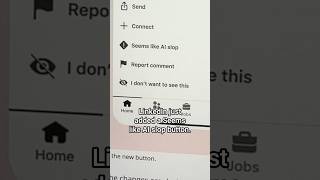
    LinkedIn introduced a 'Seems like AI slop' button in the three-dot menu on every post and ad, letting users flag content they believe is low-quality or AI-overreliant; flagged posts get reduced algorithmic reach and the poster receives a private notice.
  • 02.
    LinkedIn discontinued its 'Enhance Post' AI writing tool that used to appear in the Compose box, replacing it with a proofreading tool intended to preserve a user's own voice.
  • 03.
    Snap will stop recommending wholly AI-generated videos on its Spotlight feed starting this month, while content merely edited or enhanced using Snapchat's own AI creative tools remains eligible for recommendation.
  • 04.
    Snap says AI-edited content that stays recommendable must carry transparency indicators, and the company acknowledges its detection system is imperfect.

Deep Analysis

The Button That Admits the Platform Built the Problem

LinkedIn's July 30, 2026 rollout put a 'Seems like AI slop' option in the three-dot menu on every post and ad; flagged posts lose algorithmic reach similar to being marked 'not interested,' while the original poster gets a private notice in their analytics dashboard [1]. The same rollout quietly retired LinkedIn's 'Enhance Post' AI writing tool, replacing it with a proofreading assistant pitched as preserving a user's own voice [2]. That timing is the real story: LinkedIn spent recent years pushing an in-house AI writing button, then built a separate button to punish the output that tool helped generate. Pangram Labs, the AI-detection startup whose research underpins much of the current alarm, called this out directly: 'LinkedIn's problem is structural: the platform openly promotes AI writing through a built-in 'Enhance Post' button, then turns around and suppresses the AI-generated content it helped create.' [3]Even the choice of words drew scrutiny - 404 Media noted it's notable that LinkedIn's own product copy uses the informal, pejorative term 'AI slop' rather than neutral phrasing like 'this seems AI-generated,' a sign of how thoroughly a once-fringe insult has been absorbed into corporate UI [4].


Why LinkedIn Became Ground Zero

The scale explains why LinkedIn moved first. Pangram Labs scanned nearly a million posts across platforms over two months and found more than 40% of LinkedIn's long-form posts (250+ words) were fully AI-generated, with roughly 30% of short-form posts showing the same pattern [3]. LinkedIn supplied only about a third of the posts in that sample, yet accounted for nearly two-thirds - 62% - of all AI-generated content flagged across every platform studied [3]. Compare that to X, where about 23.9% of long articles were fully AI-generated and another 22.9% AI-assisted, leaving 53.2% fully human-authored, or Substack, whose combined AI rate came in lowest among long-form platforms at 21.9% [3]. LinkedIn also says it blocks hundreds of thousands of automated 'slop' comment attempts every day and has stopped billions of other automation attempts - mass posting, coordinated spam - in just the last couple of months [5].

A Coordinated, Not Coincidental, Industry Response

LinkedIn and Snap didn't act in a vacuum. Meta has labeled AI-generated content across Facebook, Instagram, and Threads since 2024 [6]. YouTube moved earlier this year, deleting roughly 16 major AI slop channels in a crackdown that reportedly wiped out a combined 4.7 billion views, 35 million subscribers, and nearly $10 million in annual revenue [7], while clarifying its 'inauthentic content' policy to reward creators who 'enhance original storytelling, as opposed to those who mass-produce generic content' [8]. Snap's move, effective this month, pulls wholly AI-generated videos out of Spotlight's recommendation pipeline entirely, while content merely edited with Snapchat's own AI creative tools stays recommendable but must now carry transparency labels [9]. The mechanisms vary by platform but the shape is consistent: TikTok requires creators to label AI content and appends an invisible watermark while letting users dial down how much AI content they see; Substack lets readers scan a post to estimate its AI share through a Pangram partnership; Pinterest lets creators label AI-modified or AI-generated content and gives users a feed control to limit it [6].

The Trust Deficit Driving the Crackdown

Behind the policy language is a business problem: audiences say they're losing trust. Survey data shows 88% of respondents believe AI video-generation tools have decreased their trust in news they see on social media, 56% report seeing AI slop often or very often, and 66% say they've become more selective about what they engage with than they were a year ago; half of surveyed Gen Z users say they've muted or blocked a brand or creator whose content felt like AI slop [10]. That erosion is already showing up in how communities self-police ahead of platform action - moderators on large subreddits describe a large share of what gets posted as AI-touched in some way, and warn the pattern becomes self-defeating once AI-generated posts get scraped to train the next round of AI systems. The same community is openly skeptical that platforms are acting out of principle rather than necessity, given how much engagement-optimized recommendation systems have historically rewarded high-volume, repetitive content in the first place [9].

Detection Is Imperfect, and Everyone Knows It

None of this is presented as a solved problem. Snap acknowledges the limits outright: 'No detection system is perfect, but our goal is simple: keep Spotlight a place where authentic creativity has the best opportunity to be discovered.' [9]LinkedIn Chief Product Officer Hari Srinivasan frames the reporting button the same way - not a filter but a training signal, because 'slop is hard to define and the definition changes; this lets us tune our models and make better feeds.' [5]YouTube has leaned furthest into treating the problem as detectable, expanding AI-powered moderation to catch AI-generated spam, but the approach has drawn its own skepticism online: some commentary framed it as fighting fire with more fire, warning that heavier AI moderation risks false-positive bans against legitimate creators who use AI as one tool among many rather than as a content mill. On LinkedIn specifically, some creators worry the new button cuts both ways - a legitimate post can get flagged and lose reach just as easily as an obviously mass-produced one, turning a moderation tool into a potential weapon against a competitor's visibility.

Historical Context

2022
The slang term 'slop' for low-quality AI-generated content began circulating in niche online communities.
2024-05-08
Published a blog post arguing 'slop' should become the standard term for unwanted AI-generated content, analogous to how 'spam' became the term for unwanted email.
2024
Began labeling AI-generated content across Facebook, Instagram, and Threads.
2025
Named 'slop' its Word of the Year, marking the term's mainstream crossover.
2026-01
Removed over a dozen channels for AI-generated spam videos and clarified its 'inauthentic content' enforcement policy.
2026-07-09
Published a study, based on scanning nearly 1 million posts over two months, finding LinkedIn led all platforms with over 40% of long-form posts fully AI-generated.
2026-07-30
Rolled out the 'Seems like AI slop' reporting button and discontinued its AI 'Enhance Post' writing tool.
2026-08
Announced removal of wholly AI-generated videos from Spotlight recommendations, with transparency labels required on AI-edited content going forward.

Power Map

Key Players
Subject

Platforms crack down on AI slop as LinkedIn and Snap roll out new moderation tools

LI

LinkedIn (Microsoft)

Launched the 'Seems like AI slop' reporting button, killed its own AI 'Enhance Post' writing tool, and says it blocks hundreds of thousands of automated slop comment attempts daily - the platform where the crackdown is most consequential given it leads all studied platforms in AI-post share.

SN

Snap Inc.

Removed wholly AI-generated videos from Spotlight recommendations and now requires transparency labels on AI-edited content, directly shaping what gets algorithmic distribution on the app.

PA

Pangram Labs

AI-detection startup whose million-post study quantified the scale of AI content across platforms and publicly framed LinkedIn's crackdown as structurally contradictory, shaping how the story is being told.

YO

YouTube (Google)

Deleted major AI slop channels, clarified its 'inauthentic content' policy, and is expanding AI-powered moderation to catch AI-generated spam at scale.

OT

Other major platforms (TikTok, Substack, Pinterest, Meta)

Rolled out parallel labeling, watermarking, detection-scan, and feed-control measures, turning LinkedIn and Snap's moves into part of an industry-wide response rather than isolated actions.

Fact Check

10 cited
  1. [1] LinkedIn Adds A Button To Report AI-Generated Slop
  2. [2] LinkedIn Now Lets Users Report Suspected AI Slop
  3. [3] AI in Your Feed
  4. [4] LinkedIn Introduces A 'Seems Like AI Slop' Button
  5. [5] LinkedIn's 'Seems Like AI Slop' Button Follows Billions of Automated Comment Attempts
  6. [6] From Substack to YouTube, Here Are the Social Platforms Cracking Down on AI Slop
  7. [7] YouTube AI Slop Crackdown 2026
  8. [8] YouTube Plans to Fight Against AI Slop by Using AI
  9. [9] Rewarding Authentic Creativity on Spotlight
  10. [10] Lack of Trust in AI Slop Could Slow Social Media Growth

Source Articles

Top 3

THE SIGNAL.

Analysts

Argues that 'slop' resists a fixed definition and that user reports function as a training signal to keep tuning LinkedIn's content models rather than a one-time fix: 'Slop is hard to define and the definition changes; this lets us tune our models and make better feeds.'

Hari Srinivasan
Chief Product Officer, LinkedIn

Frames LinkedIn's crackdown as structurally contradictory - the platform openly promoted AI writing through its own 'Enhance Post' button, then built a separate button to suppress the AI-generated content that tool helped create.

Pangram Labs
AI-detection research and product company

Notes it's notable that LinkedIn's own product copy uses the informal, pejorative term 'AI slop' rather than neutral language, a sign of how normalized the term has become even in corporate UI.

404 Media
Technology journalism outlet covering the LinkedIn feature launch
The Crowd

LinkedIn now has a “Seems like AI slop” button as AI-generated posts flood the platform

@@PicturesFoIder327

YouTube purges 130,000 channels in crackdown on 'AI slop' According to a Google research paper, the platform spent six months taking down 50,000 coordinated clusters — totaling 130,000 channels — all churning out AI-generated spam

@@RT_com183

LinkedIn’s “seems like AI slop” button can totally backfire your reach & business. They should have instead given a button to mark the comments as AI or not.

@@takshichopra0

AI Slop Is Ruining Reddit for Everyone

@u/[deleted]17000
Broadcast
YouTube AI is Getting Worse...

YouTube AI is Getting Worse...

LinkedIn's AI Slop Problem Is Worse Than You Think

LinkedIn's AI Slop Problem Is Worse Than You Think

LinkedIn just added a Seems like AI slop button

LinkedIn just added a Seems like AI slop button

Platforms crack down on AI slop as LinkedIn and Snap roll out new moderation tools — AI News | Agentic Brew