NYC Public Schools' AI Moratorium for K-8 Students
TECH

NYC Public Schools' AI Moratorium for K-8 Students

27+
Signals

Strategic Overview

  • 01.
    NYC Public Schools imposed a one-year moratorium on student-facing generative AI tools, including chatbots and AI tutors, for students in pre-K through eighth grade, covering nearly 600,000 students - about two-thirds of the district's total enrollment - starting with the 2026-2027 school year.
  • 02.
    The district is discontinuing or disabling AI features in 38 previously approved citywide ed-tech contracts that do not meet new safety and oversight standards, without publishing the full list of affected programs.
  • 03.
    High school students can still access AI through five approved pilot programs - Quill, Edia, Brisk Teaching, Playlab, and Intel AI-Ready Schools - capped at a maximum of 50,000 students, or roughly 17% of all high schoolers, under direct teacher supervision, alongside twice-yearly AI critical-thinking modules for all high schoolers.
  • 04.
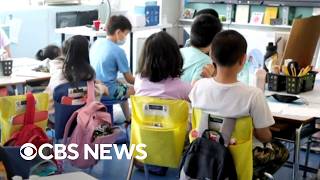
    The policy also sets new device and screen-time limits: restricted one-to-one device access for students in 2nd grade and below, a 30-minute daily cap for grades 3-5, and a 45-minute daily cap for grades 6-8.

Deep Analysis

The Onion Rule: NYC's Theory of When Kids Are Ready for AI

The ban only covers student-facing generative AI - chatbots and tutors that respond to prompts - for pre-K through eighth grade; it does not stop teachers from using AI for their own lesson planning. High schoolers get a narrow, supervised on-ramp instead of a blanket allowance: five vetted programs, direct teacher supervision, and enrollment capped at roughly 17% of all high schoolers[3], alongside mandatory twice-yearly AI critical-thinking instruction. Officials describe the policy as the country's most comprehensive of its kind, explicitly rejecting the idea that AI is an inevitable or necessary part of early education: "the tech industry wants us to believe that A.I.-powered early education is not only inevitable, but necessary. We do not see it that way."[1]That framing - treating a student's age and grade level as the proxy for AI readiness, rather than testing any individual product for harm - is doing more work in this policy than any single safety incident.
The 38 Contracts Nobody Will Name

Beyond the headline ban, NYC is discontinuing or disabling AI features in 38 previously approved citywide ed-tech contracts that regulators say fail new safety and oversight standards[3]- but the district has not published which 38 programs are affected, leaving schools, parents, and vendors to find out case by case. Two have already surfaced: Amira, a reading tutor used in 222 NYC schools, says it is still seeking clarity from the Department of Education about what changes it must make[3]; Houghton Mifflin Harcourt, publisher of "Into Reading" - one of the city's three mandated NYC Reads literacy curricula - disputes that its product even contains student-facing AI[3]. That a mandated, board-approved reading program can land on a banned list its own publisher doesn't recognize suggests the city moved faster than its own contract audit could keep up with.

A Ban Designed to Help the Kids It May End Up Hurting Most

The moratorium applies system-wide to all pre-K-8 students regardless of what AI access they have outside school[6]- which is exactly the equity concern critics have raised: students at wealthier schools, or with private tutors and home devices, will still encounter generative AI on their own time, while students who depend on a school-issued Chromebook for their only tech access lose that exposure entirely. Public discussion of the policy split along a similar line: many framed it as a "learn the fundamentals first" move akin to past debates over calculators or Wikipedia, but a persistent counter-argument held that an AI tutor is exactly the kind of resource an under-resourced student can't otherwise afford, while affluent families' access to human tutors goes untouched by any school policy. The district's promised Technology in Schools Coalition, standing up during the 2026-27 school year to evaluate the moratorium and the high school pilots, is where that tension is supposed to get resolved[1]- but its findings won't arrive until after a full year of the ban has already played out.

NYC Just Joined - and Escalated - a Coast-to-Coast Classroom AI Backlash

NYC's moratorium lands months after Los Angeles Unified restricted student screen time and technology use for the 2026-27 school year, a policy since extended to cover generative AI for roughly 378,000 students[4], and one day after roughly half of Chicago's 45 school board candidates signed a pledge for a three-year AI ban with similar screen-time and privacy provisions[5]. What sets NYC apart is scale - as the country's largest school district, its policy functions as a template other districts can point to - and its explicit ideological framing: officials cast the ban as a direct rejection of tech-industry "inevitability" narratives around AI in classrooms[1], rather than a narrower response to a single safety incident. That framing is also what divides observers: some read a large, well-resourced district refusing to wait for the industry's promised evidence as a meaningful signal, while others see a blanket restriction getting ahead of any actual proof of harm.

Nobody Has Explained How This Gets Enforced

The policy sets concrete screen-time ceilings - no unsupervised one-to-one devices for students in 2nd grade and below, a 30-minute daily cap for grades 3-5, and 45 minutes for grades 6-8[2]- but detecting whether a middle schooler used a banned chatbot for homework is a different problem than metering device time, and the district has not described a compliance mechanism beyond disabling AI features inside the 38 flagged contracts[7]. Public discussion of the rollout kept circling back to that gap, drawing comparisons to the city's existing phone-pouch policy as the closest available enforcement precedent, and noting the awkwardness of restricting students from tools that administrators and teachers are simultaneously permitted to use for their own work. Until the Technology in Schools Coalition publishes its assessment, enforcement looks more like an honor system backed by contract-level kill switches than an auditable classroom rule.

Historical Context

2026-06
LAUSD's school board voted to limit student screen time and technology use by grade level starting in the 2026-27 school year, a policy later extended to cover generative AI and affecting roughly 378,000 students.
2026-09-01
Roughly half of the 45 candidates running for Chicago's school board signed a pledge backing a three-year ban on generative AI in Chicago Public Schools, alongside screen-time limits and privacy protections, one day before NYC's announcement.
2026-09-02
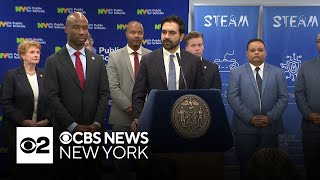
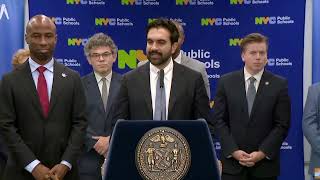
Mayor Zohran Mamdani and Schools Chancellor Kamar Samuels formally announced the generative-AI moratorium and new screen-time restrictions for NYC Public Schools.

Power Map

Key Players
Subject

NYC Public Schools' AI Moratorium for K-8 Students

ZO

Zohran Mamdani

NYC Mayor

KA

Kamar Samuels

NYC Schools Chancellor; co-announced the policy, framing it around protecting students' critical-thinking development

AM

Amira Learning

Ed-tech vendor whose reading-tutor AI (used in 222 NYC schools) is being disabled under the new contract standards

HO

Houghton Mifflin Harcourt

Publisher of "Into Reading," one of NYC's three mandated NYC Reads literacy curricula, named among affected contracts despite disputing it contains student-facing AI

QU

Quill, Edia, Brisk Teaching, Playlab, and Intel AI-Ready Schools

The five vendors approved for NYC's high school AI pilot program, used only under direct teacher supervision with capped enrollment

AI

AI Moratorium Coalition

Advocacy group that argues the one-year, K-8-only policy does not go far enough given documented harms across all age groups

Fact Check

7 cited
  1. [1] Mayor Mamdani and Chancellor Samuels Put Students First
  2. [2] New York City Pauses AI Use for Elementary, Middle School Students
  3. [3] What to Know About NYC Public Schools' Generative AI Ban, Screen Time Limits
  4. [4] LAUSD Generative AI Moratorium 2026
  5. [5] NYC's New School AI Ban, Explained: What's Changing, What's Still Murky
  6. [6] Contrarian take on NYC's generative AI moratorium for 600,000 students and what banning tools does to the equity gap in AI readiness
  7. [7] NYC Schools AI Ban Software Inventory

Source Articles

Top 5

THE SIGNAL.

Analysts

I don't know how you ban AI in tools because it's like asking someone to remove added sugar in your food. It is everywhere. It is pervasive.

Jean-Claude Brizard, CEO, Digital Promise
Critical of the ban's approach

A blanket one-year AI ban, without exceptions, on all uses through middle school is not the right call.

Richard Buery, former NYC Deputy Mayor
Critical of the blanket nature of the ban

I think that's the type of evidence infrastructure that's going to be necessary to ascertain screen value versus screen time.

Erin Mote, CEO, InnovateEDU
Neutral, analytical - calls for better evidence infrastructure

We've spent all year calling for a full AI moratorium because the myriad documented harms of generative AI - to students' cognition, emotional and mental health, privacy, and the planet - affect students of all ages.

AI Moratorium Coalition
Supportive of restrictions but argues they should go further and apply to all ages
The Crowd

New York City Mayor Zohran Mamdani said children need their teachers and human connection in order to learn and grow, as he announced a one-year ban on generative AI for students in preschool through eighth grade starting this school year

@@Reuters2735

NYC public schools to ban AI for teaching students below 9th grade

@@Gothamist435

New York City public schools will ban the use of artificial intelligence from preschool to eighth grade, while placing other limits on screen time.

@@NYMag74

No AI until high school: NYC schools announce major classroom technology overhaul

@u/habichuelacondulce32000
Broadcast
NYC bans generative AI in schools through eighth grade

NYC bans generative AI in schools through eighth grade

New York City teachers union says AI classroom ban "leaves many questions unanswered"

New York City teachers union says AI classroom ban "leaves many questions unanswered"

NYC education officials announce ban on AI for students until high school | Full news conference

NYC education officials announce ban on AI for students until high school | Full news conference

NYC Public Schools' AI Moratorium for K-8 Students — AI News | Agentic Brew