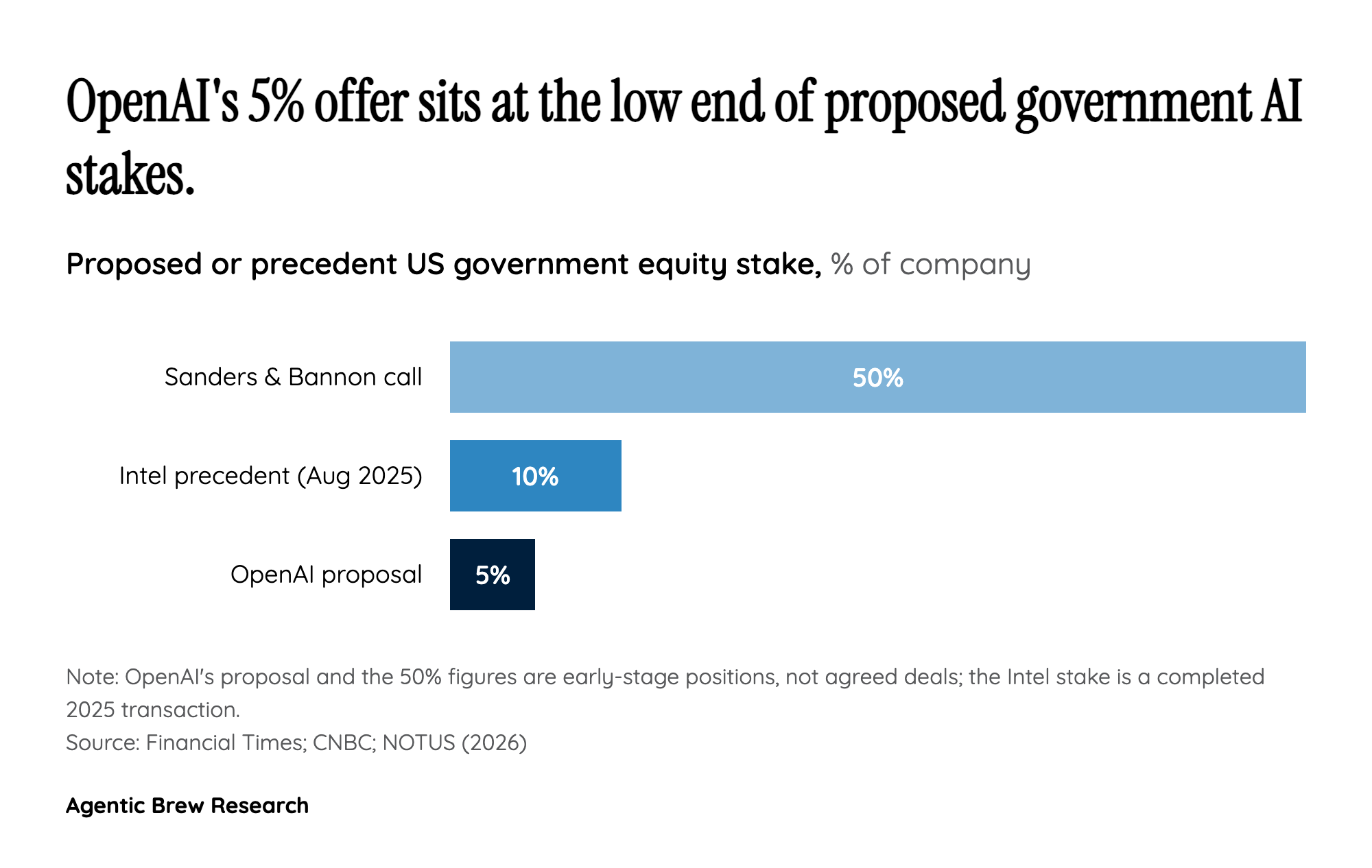
The regulator that owns the regulated
The sharpest objection to OpenAI's pitch is not about the money - it is about who ends up on both sides of the table. If Washington holds equity in OpenAI, the same government that is supposed to write and enforce AI safety rules would also have a direct financial interest in the value of the company it is policing. Jennifer Huddleston of the Cato Institute puts the structural problem plainly: the government would be a shareholder and a regulator at the same time [2].
That conflict is not abstract. Nat Purser of Public Knowledge warns of the exact failure mode it invites: a government that becomes less willing to impose or enforce safety rules because doing so could reduce the value of its own investment [2]. The proposal is explicitly framed by OpenAI as a way to ease political pressure and share AI's upside with the public [3], but the mechanism that buys goodwill is the same one that could quietly dull oversight. The talks are early and any deal would need Congressional approval [4], which means this tension - not the headline dollar figure - is likely to dominate the debate.