Same Weights, New Brain: Why GLM-5.3's Gains Didn't Need a Bigger Model
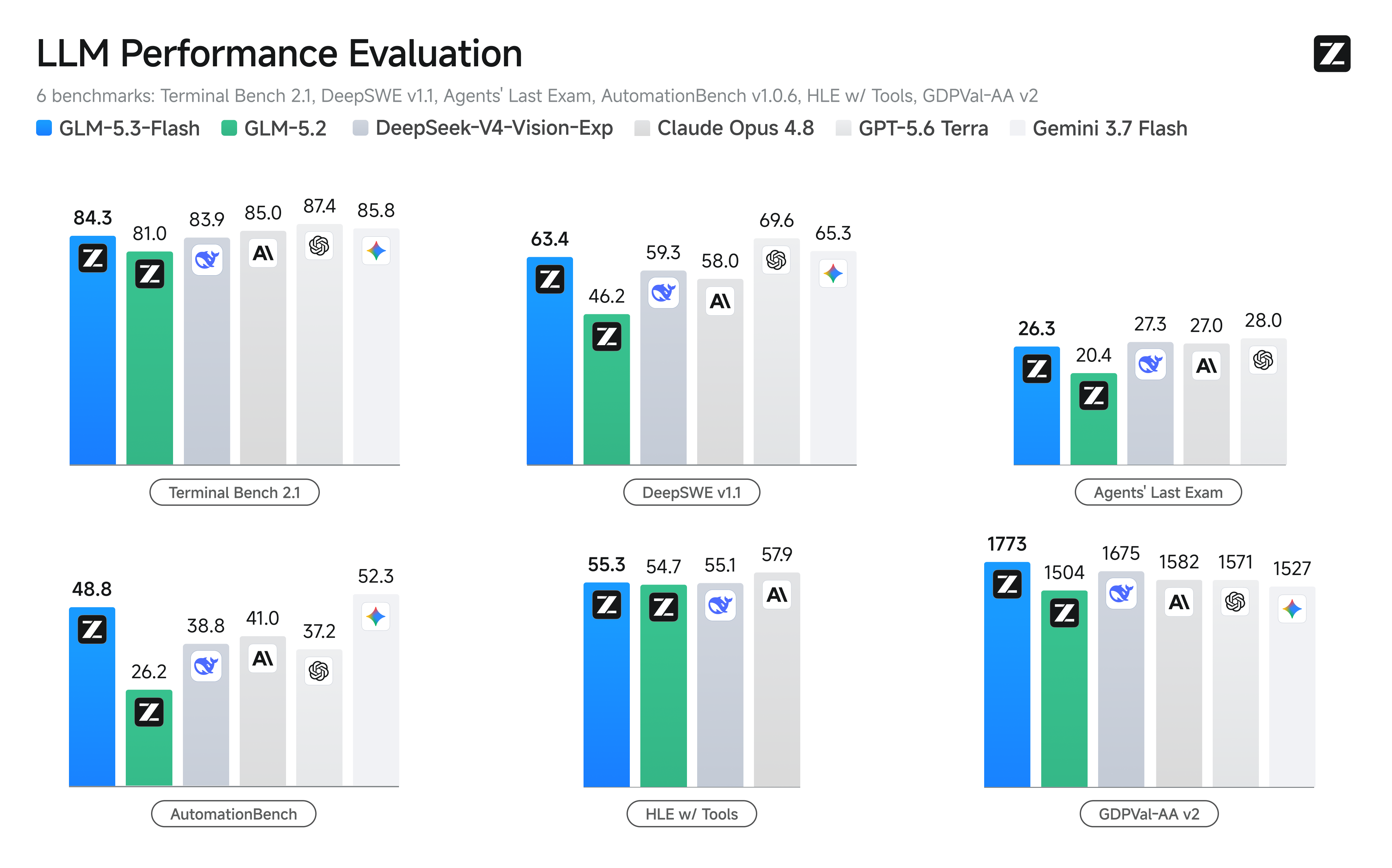
GLM-5.3 launched on August 14, 2026, built on the identical base architecture and parameter count as its predecessor GLM-5.2 - the entirety of its performance jump comes from extended post-training and reinforcement learning, not from a bigger model or more pretraining data [1]. That is a notable break from the industry's default assumption that leapfrogging a benchmark requires scaling up the base model itself.
Z.ai founder and chief scientist Jie Tang has been explicit that he doesn't treat raw parameter count as a meaningful standalone signal of quality, arguing that "parameter count is only meaningful alongside three others - how much data you have, where you intend to spend your compute, and who will run the model, under what conditions" [12]. That philosophy lines up with what Zhipu actually did: rather than retrain a new foundation model, it spent its compute budget pushing an already-trained architecture harder through RL, then wired the result directly into coding agents like ZCode, Claude Code, and OpenCode via the GLM Coding Plan [1]. If post-training-only gains keep landing near frontier benchmark territory, it chips away at the idea that only labs running the biggest pretraining jobs can compete at the top of the leaderboard.