The Real Threat Is to the Business Model, Not to Safety
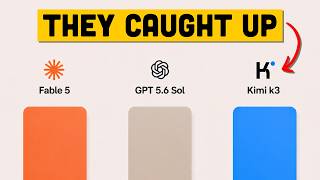
Kimi K3, Moonshot AI's 2.8-trillion-parameter open-weight model, undercuts Claude Fable 5 and GPT-5.6 Sol on price even where it doesn't quite beat them on raw benchmark scores [1], and Alibaba's Qwen 3.8 Max arrived days later chasing the same frontier without publishing a benchmark table or model card [2]. The disruption shows up in the ledger, not the leaderboard: DeepSeek's V4 Pro runs about $3.48 per million output tokens against Anthropic's Fable 5 at $50 - roughly a 14x gap - and Chinese models' share of weekly token processing on OpenRouter has swung from an 11% average to peaks of 46% since February [3]. Hugging Face now sees 41% of its downloads go to Chinese open-weight models, more than US models for the first time, and its top six most-used models on OpenRouter are all Chinese, with Anthropic's Claude Opus 4.7 trailing in seventh [4]. That gap is already moving real workloads - one startup shifted its entire traffic off Claude and onto a Chinese model, expecting to save millions [3]. None of this is abstract for OpenAI and Anthropic, each heading toward IPOs priced near $500 billion and $380 billion respectively on the assumption that frontier capability commands frontier pricing [5]. Squeeze that pricing power and the valuation math gets harder to defend - likely why OpenAI has started publicly lobbying against open-weight proliferation even as it ships its own open models [6].