The Invisible Designation
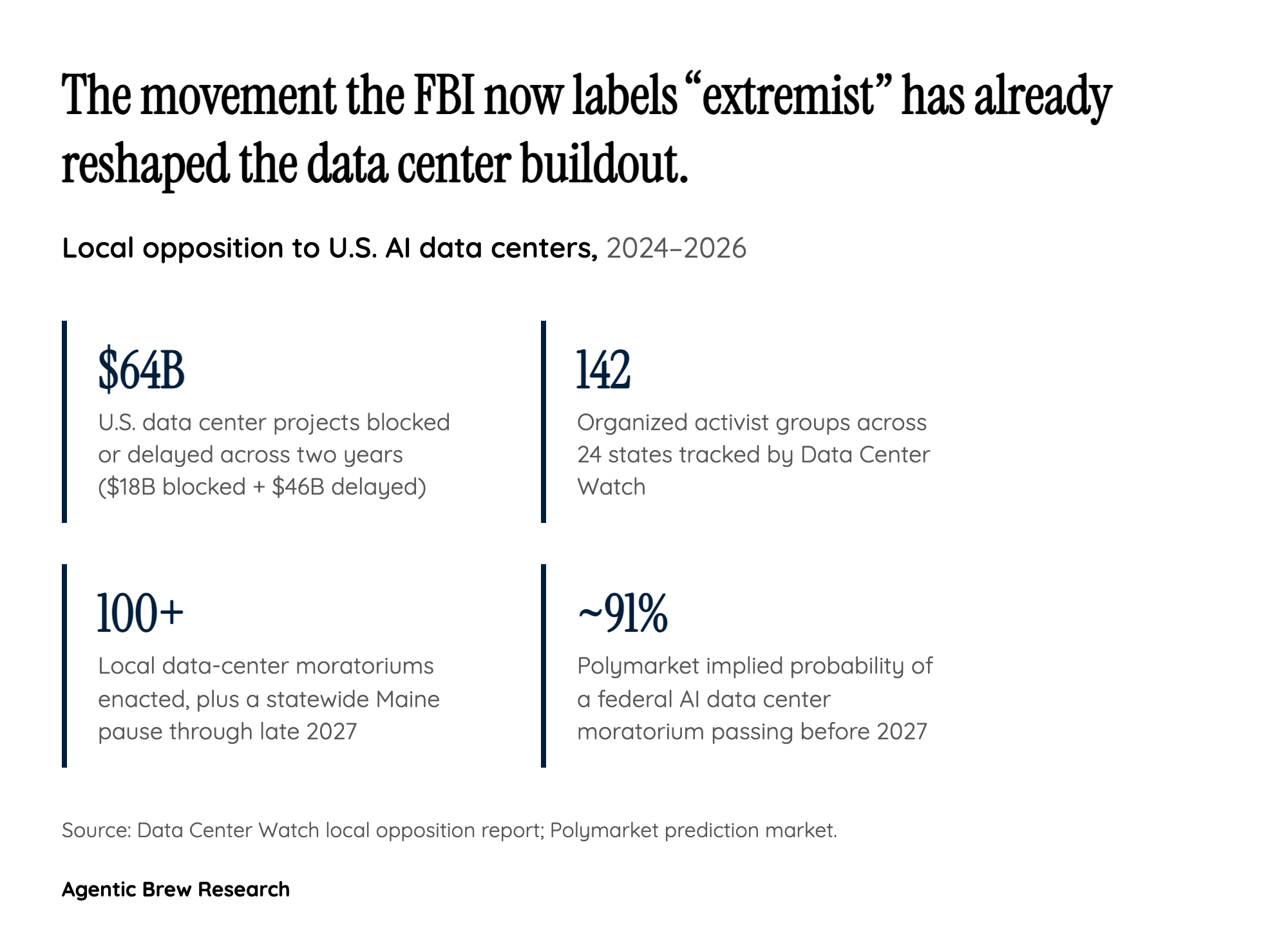
There is no public rulemaking, no Federal Register notice, no congressional briefing on the record. 'Anti-tech violent extremism' simply appears, fully formed, across more than 1,000 pages of internal DHS, FBI, and fusion-center documents obtained by WIRED [3]. It does not appear in any publicly available DHS or FBI domestic extremism report [1]. That absence is the story: a counterterrorism category capable of organizing roughly 80 state and local intelligence hubs has been operationalized without ever being acknowledged to the public it is being used on.
What counts as 'suspicious' under the new framing is the part civil liberties lawyers find most alarming. The Northern Virginia Regional Intelligence Center has flagged behaviors like photography of data-center facilities and on-site observation as reportable activity [2]. Those are exactly the behaviors a peaceful demonstrator, a local journalist, or a homeowner watching a 40-acre construction site across the road would perform. Brennan Center senior counsel Spencer Reynolds argues that fusion-center suspicious activity reports are 'incredibly unreliable, often about vague or innocent behavior, issued under permissive standards' [3]. Layer that on top of a private OSINT contractor, SITE Intelligence, paid to comb the web for 'anti-technology sentiment' [1], and the apparatus starts looking less like counterterrorism and more like sentiment policing.