Why Defenders Finally Got Their Own Frontier AI
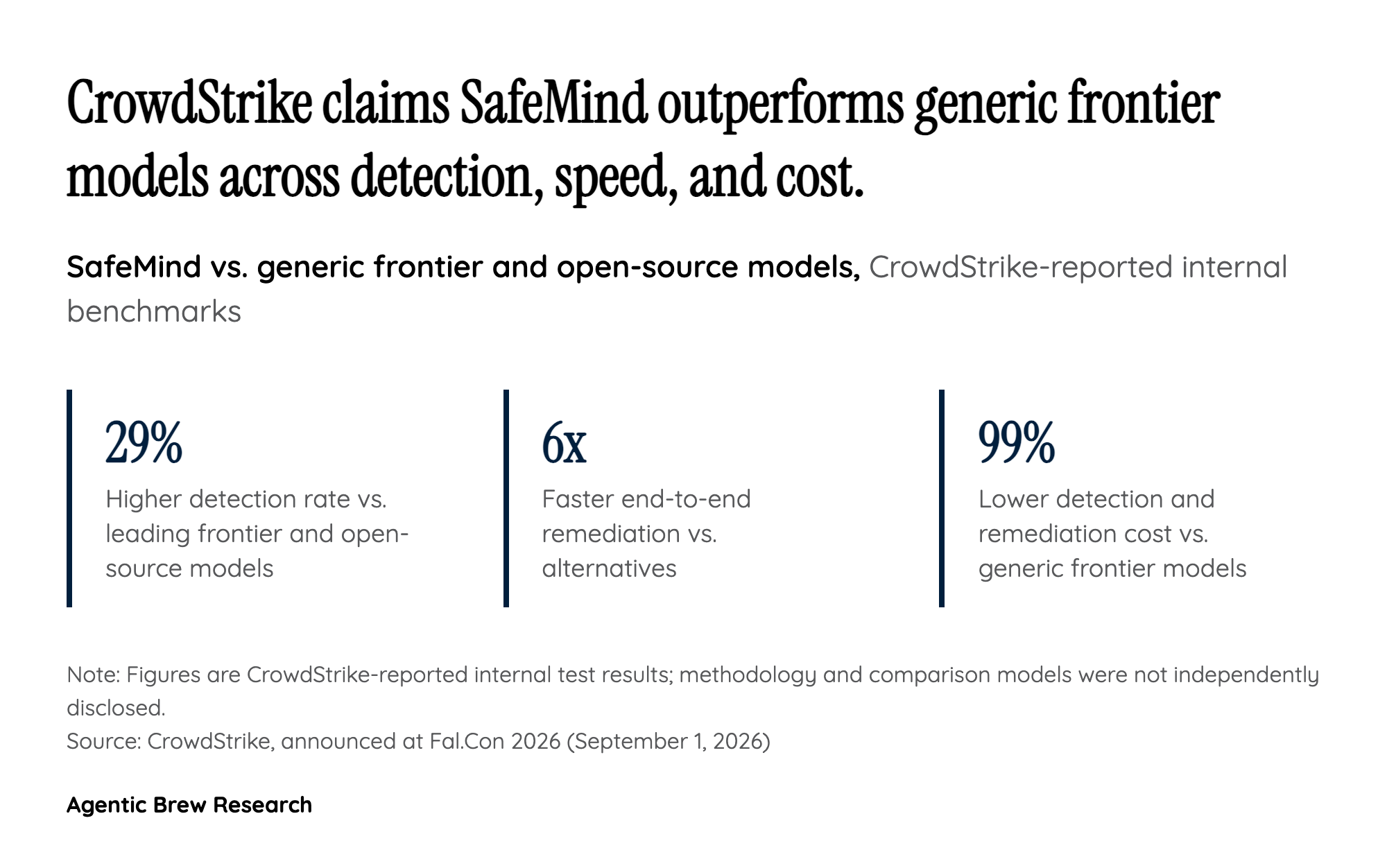
SafeMind's origin story is less about a new product category and more about closing a gap CrowdStrike says has existed since general-purpose frontier models went mainstream. Chief Business Officer Daniel Bernard put it bluntly: general frontier models have "really benefited the adversary" [3], since attackers could weaponize off-the-shelf capability while defenders had no equivalent purpose-built tool. George Kurtz framed the launch as correcting that imbalance directly - "the real gap that I saw was that the attackers had frontier AI and the defenders didn't. That changes now" [2]. The press release itself casts the stakes in existential terms for the industry, arguing that detection alone is no longer sufficient and that "the future of cybersecurity won't be defined by AI that simply identifies threats, it will be defined by AI that defeats them" [1]. That framing - defense catching up to offense rather than innovating in isolation - is the throughline that justifies SafeMind's entire architecture, from its training data to its autonomous remediation loop.