Google's AI July 4th founding fathers ad
TECH

Google's AI July 4th founding fathers ad

18+
Signals

Strategic Overview

  • 01.
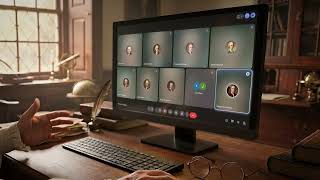
    For America's 250th anniversary, Google released a 65-second July 4th commercial imagining the Founding Fathers drafting the Declaration of Independence inside Google Workspace and Gemini, tagged 'Group project, but make it 1776.'
  • 02.
    In the ad, edits flow through Google Docs, a meeting is scheduled in Calendar and held remotely over Meet, and the document is finalized with electronic signatures.
  • 03.
    The founders use a 'help me visualize' AI tool to try animals for the national seal, Gemini takes meeting notes, and in the most-shared beat it advises them before they decline King George III's document access request.
  • 04.
    The ad deliberately stops short of suggesting AI could improve the Declaration's actual text, and Alphabet CEO Sundar Pichai amplified it on X.

Deep Analysis

The ad's tell: a Gemini spot with almost no Gemini in it

For a commercial built to sell Gemini, the spot is conspicuously restrained about AI itself. The visible work is ordinary collaboration software: edits suggested in Google Docs, a meeting scheduled in Calendar and run over Meet, and electronic signatures to close it out [1]. The genuinely AI-flavored moments are decorative - a 'help me visualize' tool cycling animals for the national seal and Gemini taking meeting notes [1]- and the ad deliberately refuses to imply AI could improve the Declaration's actual words [2]. Historian Angus Johnston seized on exactly this gap, noting how little real AI the ad shows and arguing that 'even in a corny fantasy joke, it's impossible to make the case that AI is a useful tool for political organizing, writing, or human collaboration' [1]. The restraint is the strategy, and it is also the weakness: the spot works hardest when it hides the product it is supposed to sell.
Acceptability engineering, wrapped in America 250

Read as marketing, the ad is a shift from capability-bragging to acceptability engineering: it normalizes AI by tucking it quietly inside familiar workflows rather than casting it as a hero that replaces humans [3]. Bolting that onto the Declaration's 250th anniversary let Google attach Workspace and Gemini to a high-profile civic moment [4], and CEO Sundar Pichai's decision to personally share it on X signaled how central this soft-normalization play is to the company. The bet is that if AI reads as the mundane connective tissue of a group project rather than a disruptor, resistance softens. The 'Group project, but make it 1776' framing is engineered precisely to make the technology feel inevitable and unremarkable.

Why borrowing the founders backfired

The backlash mechanism is specific: AI resistance spikes when a brand borrows public-trust symbols to sell private productivity tools, which amplified scrutiny of the historical framing [3]. Casting the founders as Workspace users invited the reading that Google was trivializing the deliberation, risk and danger behind the country's founding, and that 'trivializing' critique dominated the sharpest reactions. On X, the loudest dissent framed the ad as making a mockery of the effort involved in the founding, and a widely-shared Reddit thread around a Verge writeup pushed the same tone-deaf, out-of-touch read, tying it to broader distrust of AI owned by big tech; defenders were badly outnumbered. Audiences also tended to hear AI-as-hero as substitution rather than assistance, rejecting the premise even where the ad showed restraint [3].

A split-screen reception, and an echo of past Gemini stumbles

The response fractured by platform rather than settling into consensus. Sharp, dismissive reactions calling the ad cringey and stunningly tone-deaf ran against noticeably warmer takes from YouTube and Instagram viewers who read it as light and funny, splitting the narrative and eroding Google's control of the message [1]. That volatility is not new territory for the brand: Gemini was previously criticized and even paused over historically inaccurate image outputs [5], so a Gemini campaign that once again stumbles on history lands against a primed, skeptical audience. The pattern suggests the risk is less about any single spot than about repeatedly pairing Gemini with historical subject matter that invites exactly this scrutiny.

Historical Context

2026-07-04
Google published the 'Group project, but make it 1776' Workspace and Gemini ad on Independence Day, timed to the 250th anniversary of the Declaration of Independence.
2024-03-18
Google's Gemini image generator previously drew criticism and was paused over historically inaccurate image outputs, an earlier flashpoint in Gemini backlash.

Power Map

Key Players
Subject

Google's AI July 4th founding fathers ad

GO

Google / Alphabet

Advertiser and platform owner; produced the Workspace and Gemini spot to promote AI-in-productivity ahead of America's 250th anniversary.

SU

Sundar Pichai

Alphabet CEO; amplified the ad by sharing it on X, giving it executive-level promotion and visibility.

SO

Social critics

Primary source of backlash across platforms; called the ad tone-deaf and cringey, driving the negative narrative.

YO

YouTube and Instagram viewers

Reacted far more warmly than the sharpest critics, appreciating the humor and light AI touch.

HI

Historians and ethicists

Critics arguing the ad trivializes the human deliberation and risk behind the Declaration.

Fact Check

5 cited
  1. [1] New Google commercial imagines a Declaration of Independence written with help from AI
  2. [2] Google's AI Ad Rewrites 1776, But the Internet Isn't Signing
  3. [3] Google's AI collaboration ad
  4. [4] Google Imagines AI-Assisted Declaration Of Independence In New Workspace Ad For America 250
  5. [5] Google races to find a solution after AI generator Gemini misses the mark

Source Articles

Top 3

THE SIGNAL.

Analysts

"Argued the ad shows surprisingly little actual AI and that even a comic fantasy cannot make the case for AI in political organizing, writing, or human collaboration."

Angus Johnston
Historian
The Crowd

"Love this re-imagining of America's founding using Docs, Gmail, Calendar and more from @GoogleWorkspace. Really puts the history in version history :)"

@@sundarpichai12759

"There is something about this video that pisses me off. If I had to put the feeling into words, Google is minimizing / trivializing (making a mockery of?) the work, effort, risk, and danger involved in the country's founding."

@@neilcybart42

"New Google commercial imagines a Declaration of Independence written with help from AI"

@@TechCrunch61

"Infuriating Google commercial imagines the founding fathers embracing AI"

@u/MarvelsGrantMan136522
Broadcast
Group project, but make it 1776.

Group project, but make it 1776.