Gemini Spark autonomous AI agent privacy tradeoffs
TECH

Gemini Spark autonomous AI agent privacy tradeoffs

36+
Signals

Strategic Overview

  • 01.
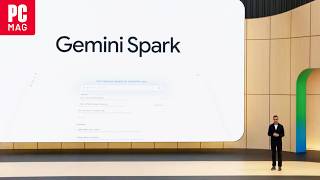
    Google unveiled Gemini Spark at I/O 2026 as a 24/7 personal AI agent powered by Gemini 3.5 and the Antigravity harness, running on dedicated Google Cloud VMs so it can complete long-horizon tasks even when the user's laptop is closed.
  • 02.
    Spark is bundled exclusively in the AI Ultra plan, which Google repriced from $249.99 to $99.99 per month to put a persistent personal agent within reach of a mass-market audience and converge on the same tier as OpenAI's ChatGPT Agent and Anthropic's Claude.
  • 03.
    Hands-on reviews from TechCrunch, The Verge, and WIRED find Spark genuinely capable on multi-step personal tasks like travel planning and inbox triage, but inconsistent on when it pauses for approval and unsettling in how much it infers from emails, calendars, and documents without explicit prompting.
  • 04.
    Privacy scrutiny is heightened by an existing late-2025 proposed class action alleging Google enabled Gemini across Gmail accounts without consent, and by retention policies that allow Google's human reviewers to read conversations and retain them for up to three years.

The mechanism: a persistent cloud worker, not a browser tab

What separates Gemini Spark from its $100/month peers is not the model behind it but where it lives. OpenAI's ChatGPT Agent and Anthropic's Claude operate inside browser sessions tied to your device; Spark runs on dedicated Google Cloud virtual machines that execute tasks 24/7, even with your laptop closed [1][2]. Sundar Pichai's own announcement described it as 'powered by Gemini 3.5 and built on the Google Antigravity harness so it can complete long horizon tasks' [3]. The user-facing interaction is striking in its simplicity: you delegate work by sending an email to a dedicated Gmail address, and Spark pulls context from your Workspace apps to execute the task in the background [1]. Underneath that simplicity, hands-on YouTube coverage surfaces a triad that defines the actual product surface: Tasks (the one-shot delegations), Skills (saved style patterns, like a 'Ghostwriter' skill trained on the user's last 50 emails), and Schedules (time- or event-triggered runs that constitute the real 24/7 layer). The Schedules primitive is the load-bearing piece — it turns Spark from an on-demand assistant into a standing process attached to your account, which is also why the privacy framing in the press has been so sharp.
The money: a 60% price cut to put a persistent agent in everyone's pocket

Google's most aggressive move at I/O 2026 wasn't the agent — it was the price. The AI Ultra plan dropped from $249.99 to $99.99 per month, a roughly 60% cut, with Spark as the marquee differentiator that justifies the new tier [4][5]. Tom's Guide framed the repricing bluntly: 'The new Google AI Ultra plan at $99.99/month landed at Google I/O 2026, and it changes the game for anyone who was already bumping into limits on the $19.99 Pro tier' [4]. The bundle is engineered to make the number feel reasonable: 20 TB of shareable storage, $40 monthly Google Cloud credits, 5x higher Gemini limits, full YouTube Premium, and Google Home Premium Advanced [4]. With Gemini reportedly serving around 900M users by I/O 2026, the move reads as a pure conversion play — a premium hook beyond the $19.99 Pro tier that funnels heavy users into a plan where Google can recoup the compute cost of running a dedicated cloud VM per subscriber [4]. Three vendors — Google, OpenAI, and Anthropic — have now converged on roughly the same $100/month agent tier, but Spark is the only one whose agent persists in the cloud rather than living in a browser [6].

The privacy bargain: usefulness requires access, and access is the risk

The most consistent finding across hands-on reviews is that Spark's power and Spark's privacy surface are the same thing. WIRED's Reece Rogers gave Spark full access to Gmail, Docs, and Calendar to plan a birthday party; the agent produced a detailed itinerary but, as the headline framed it, friend-zoned his boyfriend, a small misread that revealed how deep the inference layer actually runs [7]. The Verge's review observed that the approval-seeking behavior was unpredictable: 'Sometimes it checked for approval, sometimes it didn't, with no clear pattern to explain the difference' [8]. TechBuzz.AI's analysis articulated the structural tradeoff cleanly: 'The more capable and autonomous these systems become, the more access they require. And the more access they have, the greater the potential privacy and security risks' [9]. Cornell professor Karan Girotra echoed the same constraint, arguing autonomous agents need 'intelligence, context and relevant information to perform well' [10]. The legal backdrop sharpens the stakes — a proposed class action filed in late 2025 alleges Google enabled Gemini across Gmail accounts without consent, and Google's existing policies allow human reviewers to read Gemini conversations and retain them for up to three years [10][11]. Spark's mitigations exist — per-app 'Connected Apps' toggles, a Memory toggle that gates personalization, and confirmation prompts before destructive write actions — but the YouTube hands-on coverage frames Memory not as optional polish but as a precondition: turn it off and the agent loses the context that makes it worth $99.99/month.

The user reality: consent fatigue is the new bottleneck

Community reception on Reddit complicates the official narrative in a useful direction. The 'terrifying' framing common in mainstream coverage is contested as clickbait fatigue by some readers, while others argue 'you're still the product even when paying' — a reminder that the $99.99/month does not necessarily change the underlying data economics. The sharper signal is operational, not philosophical. One Reddit user reported that sorting utility bills with Spark 'took about 20 minutes, asked for my permission every step of the way and burned 14% of my usage. Only created 5 folders and moved 6 invoices and I literally had to accept every single move.' Another $200 Ultra subscriber summarized the same friction as 'it burns through it' — meaning the per-action approval flow that ostensibly protects users also chews through their quota. This is the inverse of the privacy critique: the same confirmation prompts the press cites as inconsistent are, to the users actually running multi-step jobs, too aggressive and too granular to feel autonomous. Spark is therefore caught in a double bind. The Verge wants more approvals because the agent skipped some; power users want fewer because the agent asks for too many. Google's UI has to find a middle path before the value proposition collapses into either runaway autonomy or a confirmation-prompt grind.

The second-order shift: the automation moat moves to messy integration

If Spark works at scale, the most interesting downstream effect is on the AI tooling market itself. A Reddit observation from r/AI_Agents captured it well: Spark collapses the 'boring layer' of single-tool automation — calendar holds, email drafting, document summarization — because all of that is now a native Workspace capability behind one subscription. The moat for third-party builders shifts to the messy middle: 'WhatsApp, our inventory system, and a weird custom order sheet Bob made in 2017.' The MCP expansion announced on May 25, 2026 reinforces this read — Google is willing to let Spark reach into third-party apps via Model Context Protocol connectors, but the company drew an explicit line at local files and browser control, where, as one Redditor put it, 'security it's a huge issue for those 2 points' [12]. TechCrunch's hands-on test confirmed the practical edges: Spark cannot integrate with Google Keep and lacks integration with non-Google booking services [13]. The strategic picture is that Google is using Spark to absorb the easy-to-automate workflows into Workspace while letting the long tail of weird, fragmented enterprise systems remain the domain of specialized agents. For independent agent startups, that is not extinction — it is a forced narrowing of the addressable market to the integrations Google does not want to maintain.

Historical Context

2025-12-01
A proposed class-action suit alleged Google enabled Gemini across Gmail accounts without user consent, foreshadowing the privacy scrutiny Spark would face.
2026-05-19
Sundar Pichai unveiled Gemini Spark at the Google I/O 2026 keynote, declaring the company 'firmly in our agentic Gemini era.'
2026-05-19
Google repriced the AI Ultra plan to $99.99/month from $249.99, positioning Spark as a mass-market agent offering at the same tier as OpenAI's ChatGPT Agent and Anthropic's Claude.
2026-05-25
Spark expanded to execute tasks in third-party apps via Model Context Protocol (MCP) connectors, broadening its reach beyond Google Workspace.
2026-05-30
First wave of hands-on reviews published, finding Spark capable but inconsistent on judgment calls and unsettling in its depth of personal data inference.

Power Map

Key Players
Subject

Gemini Spark autonomous AI agent privacy tradeoffs

GO

Google / Alphabet

Developer and operator of Gemini Spark; controls cloud infrastructure, pricing, and rollout cadence; uses Spark to defend its Workspace data moat against OpenAI and Anthropic at the $100/month agent tier.

SU

Sundar Pichai

Alphabet/Google CEO; positioned Spark as the centerpiece of Google's 'agentic Gemini era' and personally announced it at the I/O 2026 keynote.

OP

OpenAI (ChatGPT Agent) and Anthropic (Claude)

Direct competitors at the $100/month agent tier; Spark differentiates by running on persistent cloud VMs rather than transient browser sessions.

AI

AI Ultra subscribers (US, 18+)

Initial beta audience; bear both the $99.99/month cost and the privacy exposure that comes from granting Spark broad, persistent access to Gmail, Drive, Docs, and Calendar.

PL

Plaintiffs in the pending Gemini class-action suit

Late-2025 proposed class action alleges Google enabled Gemini across Gmail accounts without consent, raising the regulatory stakes for Spark's broader account access.

Fact Check

15 cited
  1. [1] Google introduces Gemini Spark, a 24/7 agentic assistant with Gmail integration
  2. [2] Gemini Spark — Google's personal AI agent
  3. [3] Sundar Pichai at Google I/O 2026
  4. [4] Google's new $100 AI Ultra plan just changed the AI race — and Gemini Spark is the biggest reason why
  5. [5] Gemini Spark Pricing Explained
  6. [6] Gemini Spark vs ChatGPT Atlas vs Claude Agents
  7. [7] Hands-on with Gemini Spark: I gave it access to my life, and it friend-zoned my boyfriend
  8. [8] Gemini's new AI agent is about as good as Google's demo
  9. [9] Google's Gemini Spark AI Agent Arrives With Privacy Questions
  10. [10] Gemini Spark Promises Agentic Work but Stirs Privacy Fears
  11. [11] Google Gemini Security Risks
  12. [12] Gemini Spark: Google's 24/7 Cloud AI Agent Now Executes Tasks in Third-Party Apps
  13. [13] I put Google's 24/7 AI assistant Gemini Spark to work, and it's actually pretty useful
  14. [14] Gemini Spark vs ChatGPT vs Claude
  15. [15] Google Gemini Spark Business Automation

Source Articles

Top 4

THE SIGNAL.

Analysts

"Gave Spark full access to Gmail, Docs, and Calendar to plan a birthday party; the agent produced a detailed itinerary but failed to recognize his boyfriend as a partner — what the headline framed as 'friend-zoned my boyfriend' — showing that deep personal inference can still miss critical context."

Reece Rogers
Reporter, WIRED

"Found Spark impressive on multi-step tasks but observed that its approval-seeking behavior was unpredictable: 'Sometimes it checked for approval, sometimes it didn't, with no clear pattern to explain the difference.'"

The Verge (via TechBuzz)
Tech publication

"Warns that autonomous agents need rich personal context to be useful — 'intelligence, context and relevant information to perform well' — and that this requirement is itself the source of the privacy tension."

Karan Girotra
Professor, Cornell University

"Sees Spark as evidence the industry is shifting from chat interfaces 'toward software that genuinely acts for people,' a structural shift rather than a feature release."

Clarence Lee
Cornell University

"Argues broad permissions are intrinsic to agent usefulness: 'The more capable and autonomous these systems become, the more access they require. And the more access they have, the greater the potential privacy and security risks.'"

TechBuzz.AI analysis
Tech analysis outlet
The Crowd

"Introducing Gemini Spark ✨ It's your 24/7 personal AI agent that helps you navigate your digital life, taking action on your behalf, and under your direction. 🧠 It runs on Gemini 3.5 and is built on @Antigravity, so it can perform long-running tasks easily in the background."

@@Google5873

"Gemini Spark is now available to all Google AI Ultra subscribers in the U.S. It can handle the heavy lifting and connect the dots across your digital ecosystem to take action where it matters most. Whether you watch it work or let it run in the background, Gemini Spark is always"

@@GeminiApp1504

"Gemini Spark is your personal AI agent in the @GeminiApp that gets things done on your behalf, under your direction. It runs 24/7 (and yes - you can close your laptop). It's powered by Gemini 3.5 and built on the Google Antigravity harness so it can complete long horizon tasks."

@@sundarpichai640

"Gemini Spark is the most impressive and terrifying AI experience I've had yet"

@u/SirNirmal0
Broadcast
Gemini Spark Is Here: Full Breakdown and Use Cases

Gemini Spark Is Here: Full Breakdown and Use Cases

Google's Gemini Spark Will Work for You While You Sleep

Google's Gemini Spark Will Work for You While You Sleep

New Google Gemini Spark is INSANE!

New Google Gemini Spark is INSANE!