Microsoft's Newest Commercial Model Is Alibaba's Model Underneath
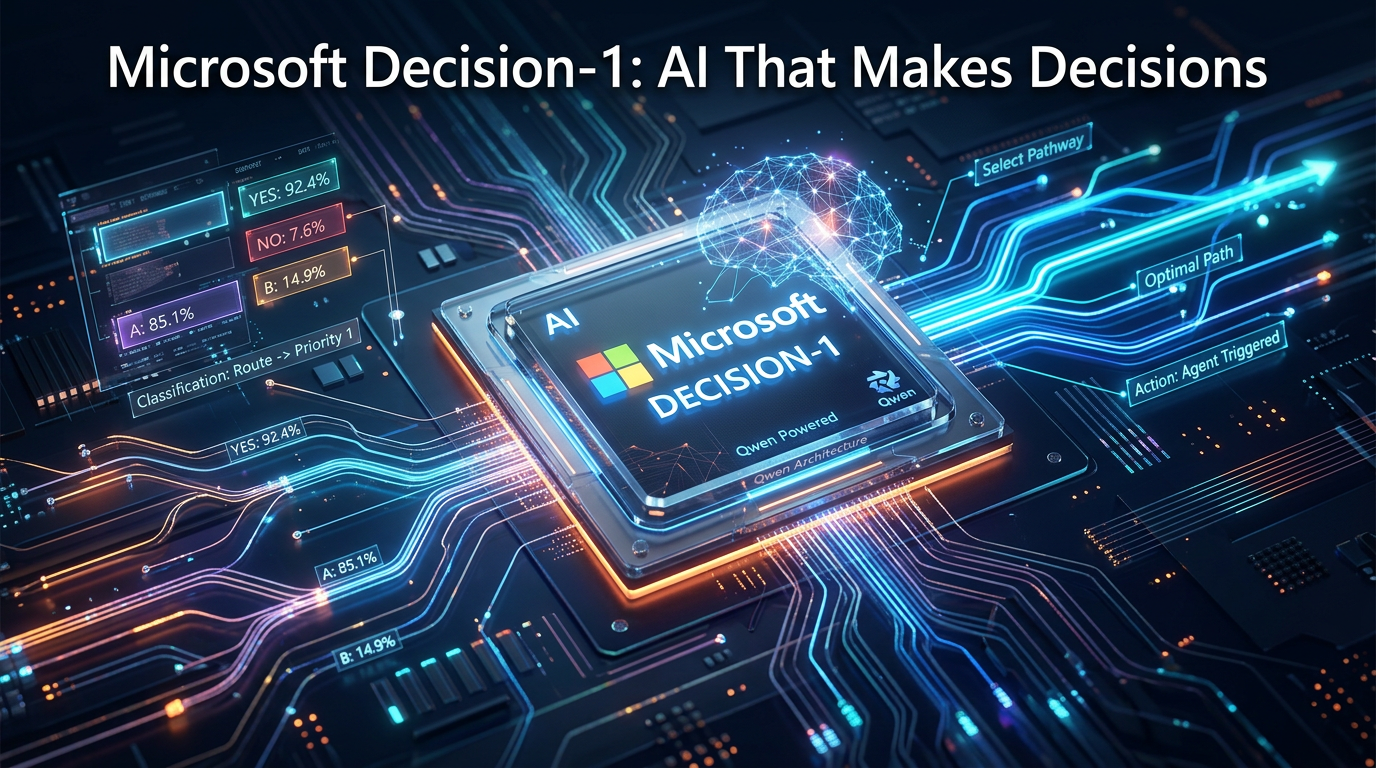
The most consequential detail of this launch is not the speed claim - it is the provenance. Microsoft did not build a new foundation model for structured decision-making, and it did not take one from its OpenAI partnership either. It post-trained Alibaba's open-weight Qwen3.5-9B [1], a 9-billion-parameter base model, into a product its own CEO personally unveiled [15]. For a company that spends at foundation-model scale, choosing a Chinese lab's open release as the substrate for a flagship Foundry SKU is a statement about where value now sits: not in the weights, but in the post-training, the calibration, and the distribution.
The direction of travel then reverses. Decision-1 ships with no open weights at all, and the Hugging Face listing for it returns a 404, which means self-hosting and fine-tuning are not options for customers [3]. Microsoft has also said it plans to rebase the model on its own MAI models and on OpenAI models in addition to the current Qwen base [4], without publishing a timeline or a backward-compatibility guarantee [5]. That is a real integration risk for anyone wiring Decision-1 into agent control loops today, because the thing being swapped out is precisely the thing teams will have tuned their thresholds against: the scoring distribution and the latency profile of a specific 9B model.
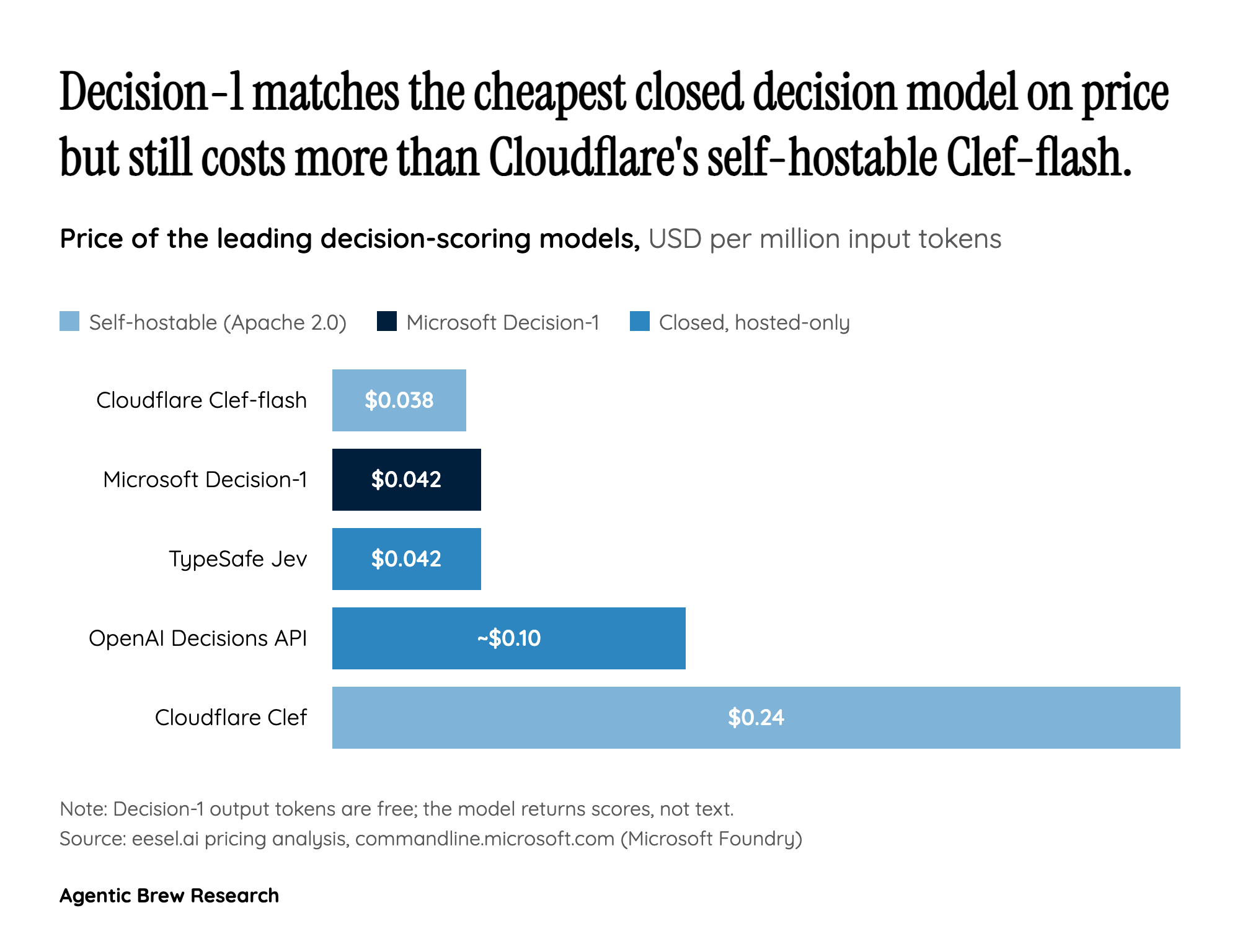
Developers noticed the asymmetry immediately. On Hacker News, commenters pointed out that Decision-1 is based on one of the smaller Qwen models, just like Cloudflare's Clef, Strands decider, and a plethora of others released [6], which deflates the premise that Microsoft built something structurally proprietary. The sharpest version of the complaint circulating in developer communities was simpler and more cynical: that the impressive part is taking something open-weight and making it closed.