The First Time Washington Pulled a Deployed Model Off the Market
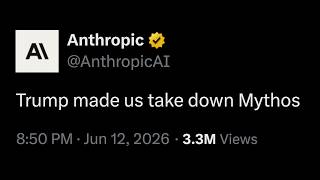
Export controls are usually a tool for chips, weapons systems, and encryption software. On June 12, at roughly 5:21 p.m. ET, the Commerce Department pointed them at something new: a commercial AI model that was already live and serving customers around the world. A directive signed by Secretary Howard Lutnick and addressed to CEO Dario Amodei suspended all foreign-national access to Claude Fable 5 and Mythos 5, and because Anthropic could not selectively gate the models fast enough, it had to abruptly disable them for every customer to stay compliant [5]. The company's own notice captured the whiplash: "we must abruptly disable Fable 5 and Mythos 5 for all our customers to ensure compliance" [2]. This was among the most aggressive uses of export-control authority against a deployed AI product to date [5].
What makes the episode a template rather than a one-off is how it was resolved. Anthropic did not win by litigating or waiting out the order. It trained an improved safety classifier aimed squarely at the reported jailbreak, submitted it to Commerce's Center for AI Standards and Innovation for testing, and paired the technical fix with a set of governance commitments: giving designated government partners expanded early access to models and safeguards, sharing threat intelligence, and working toward common security standards [1]. The government's lifting letter said Anthropic had "taken steps in close coordination with the U.S. government to address the risks" [3]. That is the new deal structure for frontier AI: a classifier patch plus a standing early-access-and-intel relationship with Washington, negotiated under the shadow of an off switch.