The Supply Chain Behind China's 97% Shipment Lock
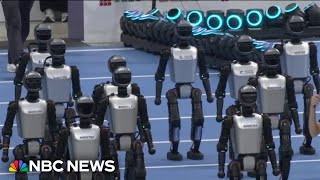
Chinese manufacturers shipped more than 97% of every humanoid robot sold worldwide in the first half of 2026, out of roughly 19,100 total units globally - up 272% year-over-year from just 5,100 a year earlier[1]. China also accounts for more than 85% of global demand[2], meaning the country isn't only building these robots, it's buying most of them too, which creates a self-reinforcing domestic market that outside competitors have struggled to crack.
That dominance traces back to how the industry is structured, not just how fast it is growing. Beijing-based analyst Zhang Xiaorong points to manufacturing synergy across China's existing electronics, EV, and warehousing supply chains as the core advantage, with the country's enormous domestic market doubling as a testing ground for rapid iteration[2]. Unitree alone sources more than 90% of its components domestically[2], and the government has layered state support on top of that industrial base: a nationwide push to deploy humanoids into more than 100 'high-value application scenarios,' backed by upwards of 100 billion yuan (about $14.8 billion) in 2026 investment from state-backed funds, tech giants, and automakers[3].
The scale is drawing pushback abroad and caution at home. The US Federal Communications Commission has announced a ban on imports of new foreign-made humanoid robots citing national security, a move widely read as targeting Chinese suppliers[4]. Domestically, with more than 150 humanoid robot companies now competing for the same subsidies and factory-floor customers, and analysts projecting China could produce over 100,000 humanoid units this year alone, commentators are already flagging oversupply and bubble risk as a real possibility once the current investment wave cools[5].