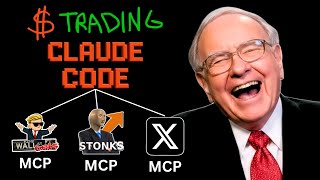
The MCP Bet: Robinhood Just Made Itself a Public API for Claude
The interesting thing about Robinhood's launch is not that an AI can buy AAPL for you. It is that Robinhood chose to standardize on Anthropic's Model Context Protocol rather than ship its own proprietary agent SDK. Approved clients at launch include Claude Code, Claude Desktop, ChatGPT, Codex, Codex CLI and Cursor, and Robinhood explicitly says any other MCP-compatible client can connect through the Robinhood Trading MCP link [5]. In other words, Robinhood now operates one of the first regulated US financial endpoints that any conforming agent can speak to.
The architectural choice matters because MCP is designed for action, not retrieval. Robinhood's own documentation defines MCP as an open standard that lets an AI agent take actions on the user's behalf instead of merely answering questions [5]. The agent is sandboxed inside a separate self-directed Agentic brokerage account, and Robinhood caps the blast radius at whatever capital the user pre-funds into that account [5]. That is a deliberate inversion of how most brokerages think about agent access: instead of bolting a chatbot onto the main account, Robinhood carved out a parallel account whose entire purpose is to be agent-readable.
The second-order effect is that Robinhood has implicitly invited every MCP developer in the world to write strategies, scanners and execution layers on top of its order book. VP of Product Abhishek Fatehpuria says the company built this because customers were demanding to bring their own LLMs and tools [3]. The compliance trade-off is non-trivial — a regulated broker is now letting third-party model providers initiate orders — but the upside is that Robinhood gets to be the default destination for any indie quant who wants to point Claude at the market this weekend.