AI Data Center Power Constraints Reshape the Buildout Race
TECH

AI Data Center Power Constraints Reshape the Buildout Race

26+
Signals

Strategic Overview

  • 01.
    Nokia CEO Justin Hotard says power and memory chip supply, not demand or GPU availability, are now the binding constraints on how fast the industry can build AI data centers, arguing builders could move twice as fast without them.
  • 02.
    NVIDIA announced a $1 billion equity investment in Nokia on October 20, 2025, taking a roughly 2.9% stake to jointly develop AI-native networking and 6G/AI-RAN technology; Nokia shares rose as much as 26% on the news.
  • 03.
    Google, NVIDIA, and Emerald AI launched the AI Energy Management Alliance (AEMA) on September 16, 2026, to help data centers dynamically adjust electricity use based on grid conditions, with Anthropic set to join as a partner.
  • 04.
    Gartner projects 40% of AI data centers will be power-constrained by 2027, and grid interconnection approvals now take 24-36 months, stretching to 5-7 years in markets like Virginia.

Deep Analysis

The Bottleneck Shifted From Chips to Power

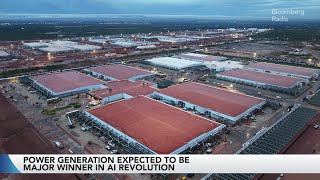
For most of the AI boom, the scarce resource was GPUs. Nokia CEO Justin Hotard says that is no longer true: the industry's limiting factor is memory chip supply and power, not demand or GPU availability [1]. Hotard argues the gap is wide enough that, if those constraints disappeared, builders could move twice as fast as they do today [1][2]. That claim lines up with a broader shift analysts are flagging for 2026 - the industry's primary constraint has moved from chip supply to grid connectivity, with Gartner projecting 40% of AI data centers will be power-constrained by 2027 [3]. The mismatch is structural: AI-optimized racks now draw 30 kW to over 100+ kW, far beyond the 5-15 kW of a traditional server rack, while grid interconnection approvals that used to be routine now take 24-36 months, and up to 5-7 years in markets like Virginia [3]. A data center shell can be built faster than the power to run it can be approved.

Who Pays for the AI Power Grab

The flip side of 'power-constrained' is: whose power, and who pays for it. A widely shared report put a number on the tension: Oregon's 111 operational data centers now account for 23 percent of the state's entire retail electricity sales, and that share is still climbing. A similar concern runs through reporting on PJM, the largest U.S. grid operator, where Moody's has written that 'the current system lacks adequate mechanisms' to handle the kind of load growth AI buildout is driving - coverage that frames the resulting costs as landing on residential ratepayers. That tension sits uneasily next to the optimistic framing from Nokia's Hotard that the industry isn't overbuilding at all [1]. There is a credible counter-argument, though: Andrew Gilbert of Energy Capital Partners argues that large, steady data center loads can spread a grid's fixed costs over more total usage, which in theory lowers rates for everyone else over time - the opposite of the ratepayer-subsidy narrative. Neither claim has fully won the argument yet, and the dispute over who ultimately foots the bill is likely to shape how aggressively regulators let new data centers connect to the grid.

Teaching the Grid to Flex: Inside the AI Energy Management Alliance

Google, NVIDIA, and startup Emerald AI launched the AI Energy Management Alliance (AEMA) on September 16, 2026, explicitly to address power as 'a defining constraint on the expansion of U.S. AI infrastructure' [4]. Anthropic is set to join as a partner [4]. Emerald AI CEO Varun Sivaram frames the philosophy bluntly: 'AI factories are too valuable to be treated as either passive loads or permanent islands' [5]- meaning data centers should flex their consumption with grid conditions rather than demand a fixed slab of power around the clock or wall themselves off behind private generation. The economics behind that pitch are striking: making data centers moderately flexible could unlock 100 gigawatts of capacity from the power system that already exists, since roughly half of power-system capacity sits unused across the year [5], and every gigawatt of new AI capacity made flexible could avoid an estimated $733 million in power-system costs [5]. There's a reliability case for flexibility too: rapid, bursty swings in AI power draw - spikes up to 50% above design capacity - are already straining batteries, generators, and cooling equipment at data centers, wearing them out faster than expected [6]. AEMA's bet is that teaching AI facilities to flex their demand solves the grid-bottleneck problem and the equipment-damage problem at the same time.

The Scramble for Megawatts: Gas, Nuclear, Solar, and Nokia's Networking Bet

Power scarcity is reshaping deals far beyond utilities. NVIDIA's $1 billion equity investment in Nokia, announced October 20, 2025, bought roughly a 2.9% stake and committed both companies to building AI-native networking and 6G/AI-RAN technology, with Nokia's switching and optical technology set to feed into NVIDIA's future infrastructure [7][8]. Nokia shares jumped as much as 26% on the news [8]. Hyperscalers are chasing power wherever they can find it: Bloomberg reported that Google parent Alphabet is close to an agreement to buy nuclear energy from Constellation Energy to secure dedicated generation for its data centers. JLL's Sean Farney describes a parallel hunt for 'digital dirt' - land that already has power connections - pushing data center siting into secondary markets as prime real estate runs out of available megawatts. As Andrew Gilbert of Energy Capital Partners puts it, gas turbine costs have nearly tripled in three to four years to roughly $2,500 per kW and nuclear now runs well over $10,000 per kW with real cost uncertainty, leaving solar - despite its intermittency - as the cheapest available option today and the default near-term stopgap even as gas and nuclear get bid up by data center demand.

Historical Context

October 20, 2025
NVIDIA announced its $1 billion equity investment in Nokia, taking a roughly 2.9% stake, to jointly build AI-native 6G/AI-RAN networking technology.
September 16, 2026
Launch of the AI Energy Management Alliance (AEMA) to advance grid-responsive, flexible AI data centers, with Anthropic joining as a partner.
Early October 2026
Hotard told a podcast that data centers could be built twice as fast if not for memory chip and power supply constraints, pushing back on overbuilding concerns.

Power Map

Key Players
Subject

AI Data Center Power Constraints Reshape the Buildout Race

NO

Nokia / Justin Hotard (CEO)

Telecom and networking vendor; CEO publicly framing power and chip supply, not demand, as the cap on AI data center buildout speed

NV

NVIDIA

Invested $1 billion in Nokia for an AI-RAN/6G networking partnership and co-founded the AI Energy Management Alliance with Google and Emerald AI

GO

Google

Co-founder of the AI Energy Management Alliance, contributing hyperscaler data center operator perspective on grid-responsive load

EM

Emerald AI

Startup co-founding AEMA; CEO Varun Sivaram is the alliance's public voice on treating AI power demand as flexible rather than fixed

AN

Anthropic

Named as an additional partner set to join the AI Energy Management Alliance

UT

Utilities and regional grid operators

Counterparties negotiating multi-year interconnection timelines with data center developers and allocating costs across rate bases

Fact Check

8 cited
  1. [1] Nokia CEO Justin Hotard Says AI Infrastructure Isn't Overbuilt
  2. [2] Nokia's Hotard on Europe's Data Centres
  3. [3] Power-Bound, Not GPU-Bound: AI Data Center Power Constraints Are the Real 2026 Bottleneck
  4. [4] Announcing the AI Energy Management Alliance
  5. [5] Nvidia, Google, and Emerald AI Form AI Energy Management Alliance
  6. [6] Data Centers Are Being Damaged by AI's Volatile Power Demand
  7. [7] Nvidia Takes 2.9% Stake in Nokia With $1B Investment to Develop AI-Powered Networking
  8. [8] Nvidia to Invest $1bn Into Nokia

Source Articles

Top 1

THE SIGNAL.

Analysts

“Hotard argues the industry isn't overbuilding, saying it would build at twice the current pace if supply constraints were lifted: 'I don't think you can say in any manner we're overbuilding today because reality is that if we could build 2x faster, our customers could build 2x faster, they probably would.' He also argues demand doesn't depend on new frontier model releases: 'Even if we didn't have another frontier model released in the next three years, we could probably make tremendous progress just deploying the technology that's there today.'”

Justin Hotard, CEO of Nokia
AI infrastructure demand is strong and durable; supply, not demand, is what's slowing the buildout

“Sivaram frames AEMA's core philosophy directly: 'AI factories are too valuable to be treated as either passive loads or permanent islands.' His argument is that flexibility - adjusting AI power draw to grid conditions in real time - can unlock capacity faster and cheaper than building new generation or transmission.”

Varun Sivaram, CEO of Emerald AI
AI data centers should be engineered as flexible grid participants, not static loads or self-contained islands

“Industry analysis frames 2026 as the year the constraint flipped from chips to power, projecting that 40% of AI data centers will be power-constrained by 2027 as rack densities and interconnection delays outpace grid buildout.”

Gartner (via Spheron Network analysis)
The primary AI data center bottleneck has shifted decisively from GPU supply to grid/power capacity

“The analysis warns that slow-moving utilities will lose meaningful load growth to operators who are forced to build their own generation instead of waiting on the grid: 'Those that can't adjust will lose out on meaningful customer load growth when developers are forced to rely on their own generation rather than the grid.'”

Utility Dive sponsor analysis
Utilities that fail to modernize interconnection models risk losing data center customers to self-generation

“Farney describes demand for AI-ready data center space growing far faster than the overall market, with tier-1 markets running out of power-connected land and hyperscalers moving to secondary markets in search of what he calls 'digital dirt' - parcels that already have grid capacity. He ties this directly to the jump in rack power density that has forced a shift to liquid cooling.”

Sean Farney, VP of Data Center Strategy, JLL
Power availability, not land or chips, is now the primary driver of where AI data centers get built

“Gilbert argues that spreading a grid's fixed costs over a larger, steadier load base can reduce rates system-wide, countering the narrative that AI data centers simply push costs onto residential customers. He also quantifies the energy-sourcing tradeoff: gas turbine costs have nearly tripled in three to four years to roughly $2,500 per kW, nuclear now runs well over $10,000 per kW with real cost uncertainty, and solar, despite its intermittency, remains the cheapest available option today.”

Andrew Gilbert, Energy Capital Partners
Large AI data center loads can lower electricity costs for other ratepayers over time if structured correctly, even as new generation costs spike
The Crowd

“Nokia $NOK CEO Hotard says AI infra demand remains strong and supply constraints are the main thing slowing the buildout. "I don't think you can say in any manner we're overbuilding today." "If we could build 2x faster, our customers could build 2x faster, they probably would."”

@@wallstengine171

“Google parent Alphabet is close to an agreement to buy nuclear energy from Constellation Energy, as technology companies race to line up power for the data center boom.”

@@business212

“Announcing the AI Energy Management Alliance (AEMA), founded by @EmeraldAI_, @Google, and @NVIDIA! We're launching with 20 amazing members, spanning AI leaders @AnthropicAI and @ADI_News to energy leaders @TheAESCorp @ConstellationEG @nationalgrid @nrgenergy @RWE_AG, and more.”

@@vsiv42

“Oregon data centers use almost 25% of the state's power”

@u/Wagamaga8572
Broadcast
Why AI Data Centers Are Running Out of Power

Why AI Data Centers Are Running Out of Power

AI Data Centers at Breaking Point: Power, Scale, and Speed

AI Data Centers at Breaking Point: Power, Scale, and Speed

AI Data Center Boom Tests Buildout Limits, Power Supply

AI Data Center Boom Tests Buildout Limits, Power Supply

AI Data Center Power Constraints Reshape the Buildout Race — AI News | Agentic Brew