Nvidia's $150B Annual Taiwan Investment
TECH

Nvidia's $150B Annual Taiwan Investment

42+
Signals

Strategic Overview

  • 01.
    Nvidia CEO Jensen Huang announced on May 27, 2026 that the company will spend up to $150 billion annually in Taiwan, calling the island the 'epicenter' of the AI revolution — a roughly 10x increase from $10-15 billion per year just four to five years earlier.
  • 02.
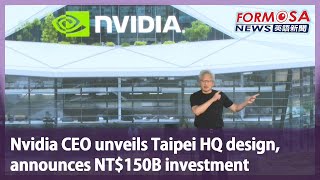
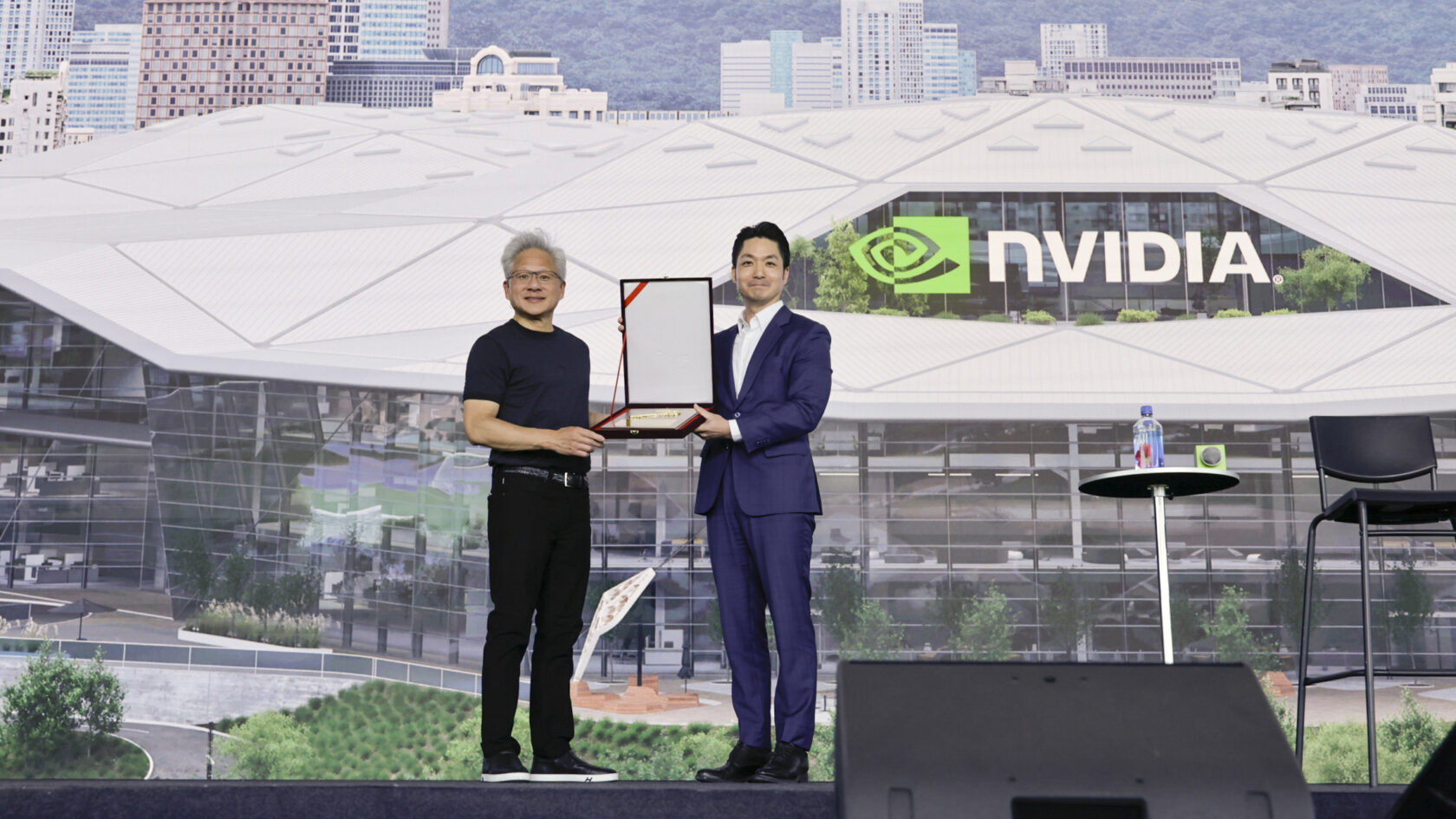
    The announcement coincided with the official launch of 'Nvidia Constellation,' the company's first overseas headquarters, set to break ground in mid-2026 and open by 2030 in Taipei's Beitou-Shilin Technology Park, designed to house roughly 4,000 employees on a 4-hectare site.
  • 03.
    Nvidia signed a 50-year land lease in February 2026 (extendable 20 years) for plots T17 and T18, with total campus investment exceeding NT$40 billion (~$1.27B USD) plus a NT$12.2 billion (~$390M) royalty payment.
  • 04.
    The pledge was framed around Vera Rubin, Nvidia's next-generation AI platform, which Huang called 'the largest product launch, probably in the history of Taiwan.' Each Vera Rubin system contains roughly 2 million parts assembled across about 150 Taiwanese partners.
  • 05.
    Nvidia currently employs more than 2,000 people in Taiwan; Constellation will scale staffing toward 4,000 direct employees and is expected to generate more than 10,000 total jobs at the Beitou-Shilin park, which Taipei projects could eventually host 60,000 permanent jobs.

Deep Analysis

The CoWoS bottleneck: why Taiwan is physically irreplaceable

The single most important word in this story is 'packaging.' Modern AI accelerators aren't really chips anymore — they're laminated assemblies of GPU dies, HBM memory stacks, and silicon interposers fused together by TSMC's CoWoS (Chip-on-Wafer-on-Substrate) process. That step is the binding bottleneck for Vera Rubin and every other leading-edge AI accelerator, and it does not exist at commercial scale outside Taiwan [1]. TSMC has spent the last 18 months racing to scale CoWoS capacity from roughly 35,000 wafers per month in late 2024 toward a projected 120,000-140,000 by the end of 2026 — nearly 4x in under two years — and Nvidia has reportedly locked up more than 60% of that 2026 capacity for the Rubin ramp [1][2][3]. The mechanics make the geography unavoidable: even when TSMC and Nvidia produced the first Blackwell wafer in Arizona, those wafers still had to be shipped back to Taiwan for CoWoS integration before they could become usable products [4]. That's why a Taipei headquarters next door to the people running the packaging line isn't a symbolic gesture — it's an engineering decision. Each Vera Rubin system involves roughly 2 million parts coordinated across about 150 Taiwanese partners [5], and at that level of complexity, latency between design, supplier, and packaging team measured in hours instead of days is a competitive advantage.


Follow the money: $10B to $150B in five years dwarfs the CHIPS Act

The trajectory of Nvidia's Taiwan spend is the cleanest measure of how lopsided the AI build-out has become. The company spent roughly $10-15 billion per year in Taiwan four to five years ago, sits around $100 billion now, and is projecting up to $150 billion annually — a roughly 10x increase in half a decade [6][7]. To put that in scale: the entire U.S. CHIPS and Science Act allocated about $57 billion over multiple years for the whole American semiconductor industry. A single private company is now committing nearly three times that amount, every year, to a single foreign island. Constellation itself is the small line item — a NT$40 billion (~$1.27B) campus build plus a NT$12.2 billion (~$390M) royalty under a 50-year lease [8]. The vastly larger number is the ecosystem spend flowing to TSMC, ASE, Foxconn, Quanta, Wistron, Inventec, Sanmina, Wiwynn, Powertech and SK Hynix, who together turn Nvidia's designs into rack-scale systems [5][9]. Markets noticed: Taiwanese chip names rallied after the announcement [10], and Nvidia is now projected to overtake Apple as TSMC's largest customer in 2026 — a decades-long power shift in the foundry's client base completed in the span of one product cycle [11].

Silicon Shield, version 2026: deeper dependence as deterrent — and the skeptic case

The 'Silicon Shield' thesis has been Taiwan policy shorthand for years: the more the world's economy depends on Taiwanese chips, the more incentive Washington and allies have to deter a Chinese move on the island. Nvidia's $150 billion/yr commitment is the most muscular expression of that dependence yet, and developer-forum reaction split between cynical 'monopoly money' readings and exactly this geopolitical framing. But the same concentration is also the argument against it. A Benzinga analysis warned that spending $150 billion annually in a single geography means supply-chain disruptions there carry outsized financial risk [4], and an independent Trefis note went further — arguing that 'China doesn't need a full invasion — even a limited blockade could halt TSMC exports overnight' and force a permanent geopolitical premium into chip-sector valuations [12]. A Gadget Review analysis framed the concentration in plainer terms, asking readers to imagine their favorite AI tools depending entirely on servers in one earthquake-prone region [13]. The U.S. re-shoring strategy doesn't change the short-term math. TSMC's Arizona, Japan, and Germany fabs can produce wafers, but commercial-scale advanced packaging isn't expected outside Taiwan before 2028-2030 [4], meaning the most strategic AI workloads of this decade remain Taiwan-bound regardless of CHIPS Act intent.

AMD's parallel $10B commitment turns this into a two-front race for the same scarce capacity

Six days before Huang's announcement, AMD CEO Lisa Su pledged more than $10 billion of her own in Taiwan ecosystem investments to scale 2.5D EFB packaging for AMD's Helios + MI450X AI systems shipping in the second half of 2026 [14][15]. The headline-grabbing comparison — $150B vs $10B — undersells what is actually happening. AMD's named partners include ASE, PTI, Sanmina and Wiwynn, the same packaging, substrate and rack-integration firms inside Nvidia's 150-partner ecosystem [5][14]. Both companies are now bidding for finite slots on the same CoWoS-class lines, the same Foxconn and Quanta rack-build floor space, and the same engineering talent pool. Nvidia's $150B/yr commitment is partly a statement to TSMC and partners that it intends to remain the priority customer through the Rubin generation — locking up over 60% of 2026 advanced packaging capacity is the operational expression of that [3]. Su's framing of 'integrated, rack-scale AI infrastructure that helps customers accelerate deployment' [14]signals AMD wants to win on rack-level systems engineering, which is exactly where Taiwan's ODMs add the most value. The competitive pressure ratchets prices and lead times for everyone else in the AI hardware stack, from hyperscalers down to neocloud startups.

The constraint behind the constraint: Huang asked Taipei's mayor for more electricity

The most unscripted moment in the Constellation celebration was Huang turning to Mayor Chiang Wan-an and saying, on stage, 'Human labor needs rice, but AI labor needs electricity...we need a lot more electricity' [6][16]. That is not a throwaway line. Taiwan imports roughly 97% of its energy [4], and the island's grid is already strained by existing semiconductor fabs that are among the most power-hungry industrial sites on Earth. Scaling Vera Rubin manufacturing through the 150-partner ecosystem, plus running a 4,000-person Nvidia headquarters and an AI campus projected to support up to 60,000 permanent jobs in the Beitou-Shilin park at maturity [8], layers a substantial new electrical load on top of that base. Huang's public ask reframes the limiting reagent of the AI build-out: not GPUs, not wafers, not even CoWoS slots — but megawatts. It also shifts a political problem onto Taipei. Energy policy is contested in Taiwan (nuclear restart debates, LNG terminal siting, renewables build-out), and Nvidia's $150B/yr commitment effectively makes the company a stakeholder in those decisions. The chip arms race is increasingly an energy-supply race, and the next bottleneck in Nvidia's stack may be one its CEO can't solve with capex.

Historical Context

1997
Nvidia, then near-bankrupt with 50-60 employees, secures TSMC manufacturing after Huang writes to founder Morris Chang — the origin of the modern Nvidia-Taiwan dependency.
1998
TSMC and Nvidia move to high-volume production on the 0.35 micron node, beginning a partnership that would scale into the AI era.
2021
Four to five years before the Constellation announcement, Nvidia's annual Taiwan ecosystem spend sat at roughly $10-15 billion.
2026-01-26
Analysts confirm Nvidia will overtake Apple as TSMC's largest customer in 2026, completing a decades-long power shift in the foundry's client base.
2026-02-11
Nvidia signs a 50-year land lease (with optional 20-year extension) with Taipei City for plots T17/T18 in the Beitou-Shilin Technology Park.
2026-05-21
AMD announces more than $10 billion in Taiwan ecosystem investments to scale 2.5D EFB packaging for its Helios + MI450X AI systems shipping 2H 2026.
2026-05-27
Jensen Huang unveils the $150B/yr Taiwan spend and the Constellation HQ at the Beitou-Shilin launch celebration, ahead of Computex / GTC Taipei.

Power Map

Key Players
Subject

Nvidia's $150B Annual Taiwan Investment

NV

Nvidia

Buyer of Taiwan-made chips, packaging and systems; anchoring its AI supply chain with $150B/yr ecosystem spend and a new Taipei headquarters.

TS

TSMC (Taiwan Semiconductor Manufacturing Co.)

Sole foundry for Nvidia's most advanced GPUs; controls ~72% of leading-edge global foundry output and the CoWoS advanced packaging that is the binding bottleneck for Vera Rubin.

AM

AMD

Competing U.S. chipmaker that announced more than $10B in Taiwan ecosystem investments on May 21, 2026 to scale its own AI packaging and Helios rack-scale platforms for 2H 2026.

TA

Taipei City Government / Mayor Chiang Wan-an

Granted the 50-year lease, presented Huang the Key to the City, and framed the deal as a defining moment for Taipei's role in the global AI economy.

TA

Taiwan ecosystem partners (Foxconn, Quanta, Wistron, ASE, SPIL, Inventec, Sanmina, Wiwynn, Powertech)

Roughly 150 Taiwanese suppliers assembling Vera Rubin systems (nearly 2 million parts each); the same packaging and rack-integration capacity AMD is also paying to secure.

SK

SK Hynix

Supplies HBM4 high-bandwidth memory packaged onto Nvidia Rubin GPUs by TSMC's CoWoS line.

Fact Check

16 cited
  1. [1] Nvidia's Taiwan Fortress: Where AI Ambitions Meet Manufacturing
  2. [2] The Great Unclogging: TSMC Commits $56 Billion Capex to Double CoWoS Capacity for Nvidia's Rubin Era
  3. [3] Nvidia at Computex 2026: Jensen Huang Flies to TSMC as Vera Rubin Ramp Strains Taiwan Supply Chain
  4. [4] Nvidia's Taiwan Investment Signals A New AI Supply Chain Reality
  5. [5] Nvidia's Huang calls Taiwan AI 'epicentre' as company pledges $150bn spend
  6. [6] Nvidia Signals $150B Spend in Taiwan
  7. [7] Nvidia to Spend US$150 Billion a Year in Taiwan, Epicenter of AI Revolution, Says CEO
  8. [8] Nvidia Constellation Taipei Campus: Lease Terms and Investment Breakdown
  9. [9] Nvidia Pledges $150 Billion a Year to Taiwan as Constellation Campus Breaks Ground
  10. [10] Nvidia plans $150 billion spending in Taiwan, says CEO Huang
  11. [11] Nvidia set to supplant Apple as TSMC's largest customer
  12. [12] The $5 Trillion AI Risk Sitting In The Taiwan Strait
  13. [13] 10x Scale, 10x Risk: Why Nvidia's $150B Taiwan Pivot Changes the Geopolitical Game
  14. [14] AMD Announces More Than $10 Billion in Taiwan Ecosystem Investments to Accelerate AI Infrastructure
  15. [15] AMD to invest more than $10 billion in Taiwan's AI chips sector
  16. [16] Jensen Huang on Taiwan: AI Labor Needs Electricity

Source Articles

Top 4

THE SIGNAL.

Analysts

"Taiwan is the indispensable manufacturing core of the AI economy; Nvidia's ecosystem there has grown roughly 15x from 10 partners to 150 in a handful of years."

Jensen Huang
CEO, Nvidia

"AI growth is now energy-bound; Taiwan must scale electricity supply to keep pace with AI manufacturing. 'Human labor needs rice, but AI labor needs electricity...we need a lot more electricity.'"

Jensen Huang
CEO, Nvidia

"AMD is leaning on Taiwan's packaging and rack-scale ecosystem to ship its next-gen Helios + MI450X AI infrastructure starting 2H 2026."

Lisa Su
Chair and CEO, AMD

"Frames Nvidia Constellation as 'a major milestone for both Taipei and Taiwan.'"

Chiang Wan-an
Mayor, Taipei City

"Spending $150 billion annually in a single geography means supply chain disruptions there carry outsized financial risk."

Benzinga Opinion
Markets opinion column, Benzinga

"Even a limited PLA blockade of Taiwan (short of invasion) could halt TSMC exports overnight, repricing Nvidia with a permanent geopolitical premium."

Trefis
Independent equities research

"The world's AI infrastructure now flows through a 14,000-sq-mile, earthquake- and conflict-exposed island, raising long-term sustainability questions."

Gadget Review analysis
Technology analysis
The Crowd

"🇹🇼 NOW: Nvidia CEO Jensen Huang calls Taiwan the "epicentre" of the AI revolution and the world's technology manufacturing hub for years to come."

@@Cointelegraph551

"Jensen Huang presents new Taiwan campus. Nvidia plans to invest around $150 bn a year in Taiwan, This is only after a week when rival AMD said it would invest more than $10 bn in Taiwan's AI sector."

@@rohanpaul_ai168

"Rumor: Nvidia CEO Jensen Huang will be back in Taiwan this month to formally ink a deal with the Taipei City government for its new Taiwan HQ, Nvidia Constellation, will host another "Trillion Dollar Banquet" for suppliers (named due to heavyweight Chairs, CEOs attending), and"

@@dnystedt237

"Nvidia plans to invest $150 billion in Taiwan every year (you heard it right, 150 bi)"

@u/Get-the-Vibe802
Broadcast
CEO Jensen Huang says Nvidia will always invest in Taiwan|Taiwan News

CEO Jensen Huang says Nvidia will always invest in Taiwan|Taiwan News

Nvidia CEO Jensen Huang Arrives in Taiwan, Says AI Compute "Equals Revenues" | AI1G

Nvidia CEO Jensen Huang Arrives in Taiwan, Says AI Compute "Equals Revenues" | AI1G

Nvidia CEO unveils Taipei HQ design, announces NT$150B investment|Taiwan News

Nvidia CEO unveils Taipei HQ design, announces NT$150B investment|Taiwan News