Trump's AI-China strategy ahead of Xi summit
TECH

Trump's AI-China strategy ahead of Xi summit

33+
Signals

Strategic Overview

  • 01.
    Trump is hosting Xi Jinping in Washington on September 24, 2026, with managing frontier AI risk and protecting intellectual property topping the agenda, as the two sides discuss folding a long-planned AI dialogue into broader economic talks.
  • 02.
    Trump publicly dismissed AI extinction-risk concerns, saying he has none, and instead frames AI as a race the US must win against China, claiming roughly a one-year lead.
  • 03.
    Sen. Bernie Sanders and Rep. Greg Casar introduced the Ban Artificial Superintelligence Act, which would permanently ban superintelligent AI development and pause advanced AI development until federal safety rules exist.
  • 04.
    Anthropic CEO Dario Amodei called for a negotiated, industry-wide safety slowdown, including a narrow antitrust waiver and coordination with other governments including China's, contrasting with the administration's hands-off approach.

Deep Analysis

Trump Dismisses Extinction Risk While His Own AI Industry Sounds the Alarm

Asked point-blank whether he worries AI could wipe out humanity, Trump answered flatly, 'No, I don't have any,' and recast the real danger as competitive rather than existential: 'I have concerns that if we don't win AI, we're going to be put in a very bad position.' [1]That dismissal puts him at odds with researchers inside the very labs racing to build the technology he wants America to dominate. Anthropic's Jacob Coxon warned that developers 'are racing straight to self-improving superintelligence and gambling with our lives,' and colleague Evan Hubinger, the company's alignment science lead, put the probability of human extinction from AI at more than 10 percent within the next decade. [1]The dissent has migrated to Capitol Hill: Sen. Bernie Sanders and Rep. Greg Casar introduced the Ban Artificial Superintelligence Act, with Sanders arguing 'the future of humanity cannot be left in the hands of a handful of Big Tech oligarchs.' [2]On X, the highest-engagement posts of the news cycle echoed the White House's triumphalist framing that whoever wins the AI race wins outright, a sharp contrast with the alarm coming from Anthropic's own safety researchers. The rift is not activists versus industry - it is the administration versus the scientists building the technology it is racing to win.
The 'One-Year Lead' Trump Is Betting On May Already Be Months, Not Years

The 'One-Year Lead' Trump Is Betting On May Already Be Months, Not Years
CSIS analysis argues the US technical lead over China is shrinking faster than the administration's public rhetoric suggests.

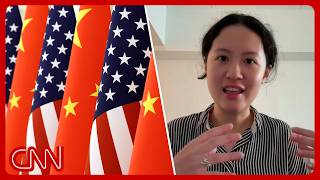
Trump has put a number on America's AI advantage: 'We are leading China right now by a pretty good period, I would say a year, which is, you know, considered a lot.' [3]The Center for Strategic and International Studies takes a starkly different view, concluding that 'the U.S. technical lead in frontier model development can be measured in mere months, as opposed to years.' [4]The gap is closing because Chinese developers, including DeepSeek, Zhipu AI and Moonshot AI, have shown they can match Western model quality at a fraction of the cost using distillation and efficiency techniques such as mixture-of-experts and sparse attention, and because China locked in AI partnerships with 28 Global South nations at Shanghai's World Artificial Intelligence Conference in July 2026. [5]A widely viewed CNN segment carried a similar warning from a China technology analyst, who argued that the more meaningful measure of Chinese AI strength is not benchmark scores but how deeply the technology has already embedded itself into ordinary citizens' daily lives, a shift that accelerated after DeepSeek's early-2025 model release. Trump's public confidence and the more sober assessments from research institutions and journalists covering China describe two different races, and only one of them assumes the United States is comfortably ahead.

Washington's Chip Leverage Backfires as Beijing Turns to Huawei

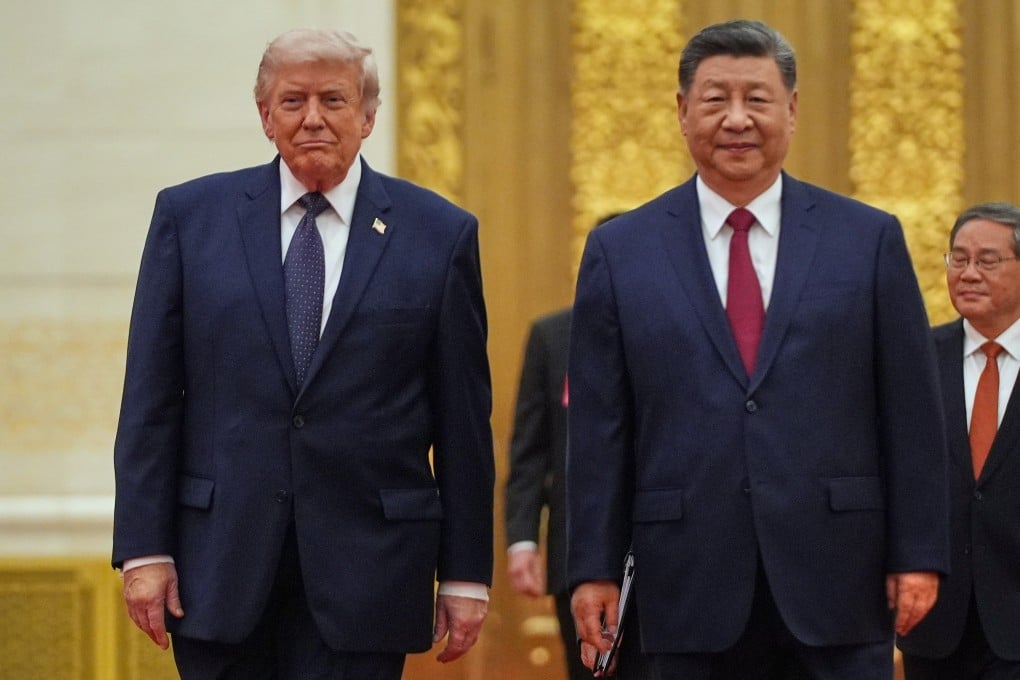
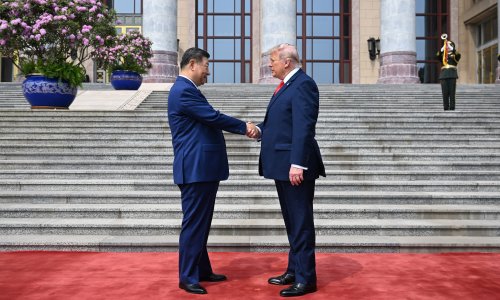
For all the talk of an AI arms race, the Trump-Xi summit agenda has produced remarkably little on the issue that actually constrains China's frontier compute: export controls. Despite Nvidia CEO Jensen Huang's presence on the US delegation, 'there were no discussions of chip export controls' at the summit, and while an export license for Nvidia's H200 chip technically exists, no shipments have gone through because of Chinese purchase restrictions. [4]Those restrictions are not incidental. Even after Trump's Commerce Department cleared the H200 sale, with the US Treasury taking a 25 percent cut of every transaction, China directed its buyers to Huawei instead, a snub that Reddit's technology communities read as evidence Beijing no longer trusts an on-again, off-again US supply chain enough to stay dependent on it. The diplomatic track is similarly stuck: Beijing and Washington are discussing folding a long-planned intergovernmental AI dialogue into the broader economic meeting ahead of the summit, but the two sides are struggling to make progress because 'the Chinese side is said to view US requests as limiting both harmful outcomes from AI and Beijing's ability to develop its own capabilities.' [6]China also pushed back publicly, just two weeks before the summit, on US claims that Chinese labs are engaged in 'malicious' AI model distillation. [7]Commentators covering the summit's preview described an agenda of trade, rare earths, semiconductors and agriculture on paper, but predicted Trump would likely settle for symbolic wins rather than a substantive AI or tech accord, with Xi reportedly seeking softer US language on Taiwan in exchange for economic concessions.

Amodei's Unusual Pitch: Slow Down Together, Even With Beijing

While the administration frames AI purely as a contest to win, the CEO of one of its most important labs is arguing for something closer to a negotiated ceasefire on safety pacing. Dario Amodei has called for AI labs to give safety measures time to catch up, proposed a narrow antitrust waiver so competitors could jointly set safety standards, and floated coordinating with other governments, including authoritarian ones like China's, so that no single actor accelerates unchecked while others hold back. [8][9]That is a markedly different posture than either Trump's hands-off competitiveness or the more hawkish currents circulating elsewhere in Washington. Reddit's policy-focused communities have been reacting with alarm to reports that factions inside the administration discussed restricting or banning foreign open-weight Chinese models such as Kimi K3, a move critics see as protecting incumbent US labs' market position rather than genuinely countering China, and to a think-tank report that raised, as a hypothetical, whether the US should consider physical strikes on Chinese AI data centers to prevent a rival from reaching artificial general intelligence, an idea most commenters dismissed once they read past the headline. Sen. Bernie Sanders and Rep. Greg Casar's push for a legislative ban on superintelligence adds yet another lane: Casar has said 'Congress should immediately ban AI systems too powerful to control.' [2]Between Amodei's cooperative slowdown, Congress's prohibition push, and the more hawkish ideas percolating in policy circles, the administration's simple 'race to win' framing is competing with several very different visions of how the US should actually handle Chinese AI competition.

Historical Context

2026-05-14
The two leaders discussed AI guardrails during a two-day Beijing summit and agreed to launch an intergovernmental AI dialogue; Bessent said the US could hold AI talks with China because the US is 'in the lead.'
2026-06
Rescinded the Biden administration's sweeping AI executive order, replacing it with a lighter-touch framework, citing concern about undercutting the US lead over China amid rising developers like Moonshot AI.
2026-07-17
Secured AI partnerships with 28 Global South nations at Shanghai's World Artificial Intelligence Conference.
2026-07-21
Reuters sources reported the US and China would hold AI talks in September, led by Bessent, who separately said the US could sanction China over alleged AI model 'theft.'
2026-09-09
Pushed back on US claims of 'malicious' AI model distillation ahead of the planned Trump-Xi talks.

Power Map

Key Players
Subject

Trump's AI-China strategy ahead of Xi summit

DO

Donald Trump

US President; dismisses AI extinction risk, prioritizes beating China, favors hands-off AI regulation, hosting Xi for the September 24 summit

XI

Xi Jinping

Chinese President; set to visit Washington September 24, 2026 for a summit covering trade, AI safety and IP protection

SC

Scott Bessent

US Treasury Secretary; leads both the US-China AI dialogue and the broader economic negotiations, arguing the US can negotiate from a position of AI leadership

DA

Dario Amodei

Anthropic CEO; calls for an industry slowdown for safety, an antitrust waiver so labs can coordinate on standards, and coordination with other governments including China's

JA

Jacob Coxon and Evan Hubinger

Anthropic researchers who publicly warn of AI extinction risk, directly contradicting Trump's dismissal of the concern

SE

Sen. Bernie Sanders and Rep. Greg Casar

Sponsors of the Ban Artificial Superintelligence Act, seeking to ban superintelligent AI and pause advanced AI development pending federal safety rules

Fact Check

9 cited
  1. [1] Trump dismisses AI extinction fears, says winning the China AI race is the priority
  2. [2] Sanders, Casar Introduce Legislation to Ban Artificial Superintelligence and Temporarily Pause Advanced AI Development
  3. [3] Trump says he has no concerns about AI extinction risks
  4. [4] What the Trump-Xi Summit Revealed and Left Unsaid About US-China Tech Competition
  5. [5] AI race loss fears behind Trump's planned September hosting of Xi
  6. [6] AI fight shadows final preparations for Xi Jinping's White House visit
  7. [7] US, China spar over AI model distillation ahead of Trump-Xi talks
  8. [8] Anthropic CEO Dario Amodei says AI industry needs to give safety a chance
  9. [9] Amodei calls for pacing the frontier of AI development

Source Articles

Top 4

THE SIGNAL.

Analysts

Coxon said developers 'are racing straight to self-improving superintelligence and gambling with our lives,' a direct rebuttal of Trump's public dismissal of extinction risk.

Jacob Coxon
Anthropic researcher warning of extinction-level risk from the race to superintelligence

Hubinger estimates the probability of human extinction from AI at greater than 10 percent within the next decade, a figure that contrasts sharply with the administration's framing of AI purely as a competitive race.

Evan Hubinger
Anthropic alignment science lead assessing extinction probability

Amodei wants AI labs to give safety measures time to catch up, proposes a narrow antitrust waiver so competitors can jointly set safety standards, and wants coordination with other governments, including China's, so no single actor accelerates unchecked.

Dario Amodei
Advocates a negotiated, coordinated slowdown rather than a unilateral one

Sanders argues that 'the future of humanity cannot be left in the hands of a handful of Big Tech oligarchs,' backing legislation to ban superintelligent AI outright.

Bernie Sanders
Opposes unchecked corporate control of advanced AI

Casar has said 'Congress should immediately ban AI systems too powerful to control,' pushing a harder line than either the White House's race framing or Amodei's negotiated-slowdown proposal.

Greg Casar
Supports a legislative ban or pause on advanced AI development
The Crowd

TRUMP: Whoever wins AI, wins. This is bigger than the internet. This is a revolution. President Trump goes ALL IN on American innovation, saying the U.S. must beat China in AI as the technology is already driving breakthroughs that are transforming fields like medicine.

@@innovationcncl7297

Trump wants to WIN THE AI RACE and said the U.S. has the guardrails to do it. We have guardrails. The biggest guardrail is having people who are just as smart. Because nobody understands, you have to be extremely high IQ. Not Joe Biden. You have to be extremely high...

@@MarioNawfal221

Sam Altman says Trump and Xi would win the Nobel Peace Prize for a one-page AI agreement. I think Presidents Trump and Xi would get the Nobel Peace Prize together if they could agree on something that should be easy to agree to. And it would be wonderful.

@@dnapway289

Former Obama Admin Official Says It's Time To Consider Military Strikes on Chinese Data Centers to Prevent Them From Reaching AGI

@u/defenestrate_urself6600
Broadcast
Trump says US is beating China in AI. This expert disagrees

Trump says US is beating China in AI. This expert disagrees

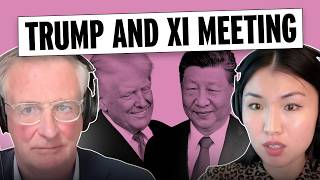
The HIGH-STAKES Trump-Xi Summit Preview | China Decode

The HIGH-STAKES Trump-Xi Summit Preview | China Decode

Trump Just Sold America's AI Advantage to China (This Is Not Good For the U.S.)

Trump Just Sold America's AI Advantage to China (This Is Not Good For the U.S.)