A Real Paper Behind the Hype: How Axis's Teleoperation Engine Actually Works
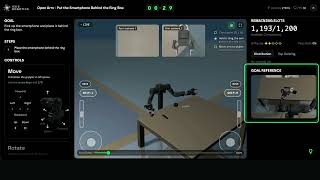
Strip away the press releases and there is an actual piece of engineering here. Axis's platform lets global contributors remotely teleoperate simulated robot arms through a browser, generating demonstration trajectories that are then validated, filtered, smoothed and augmented before entering model training pipelines [1]. That pipeline is not vaporware: Axis's own peer-reviewed paper reports a dataset of 207 tasks and over 50,000 trajectories, and shows that continually pretraining the pi0.5 model on this data improved performance by 5.8% and beat RoboCasa365 baselines by 37.3% [1][2]. Co-authors affiliated with UC Berkeley, Georgia Tech, Texas A&M, Johns Hopkins, UPenn, Michigan, NUS and NTU appear alongside Axis staff on that paper, which is the closest thing in this story to independent technical validation [1]. This is the part of Axis worth taking seriously: a measurable, if modest, contribution to a genuine physical-AI data problem - robot manipulation models are starved for diverse real-world interaction data, and crowdsourced simulation teleoperation is a legitimate (if unproven at scale) way to generate more of it cheaply.