Xi Jinping's Global AI Governance Vision at World AI Conference
TECH

Xi Jinping's Global AI Governance Vision at World AI Conference

37+
Signals

Strategic Overview

  • 01.
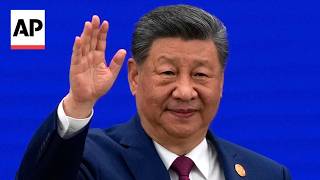
    Xi Jinping delivered his first-ever keynote address at China's World AI Conference (WAIC) on July 17, 2026 in Shanghai, calling for a people-centered approach to global AI governance.
  • 02.
    Xi framed AI development as a shared global project rather than one country's project: 'The development of artificial intelligence should not be a solo performance by any single country but rather a symphony of global cooperation.'
  • 03.
    Xi warned against countries invoking national security to restrict others' AI access, widely read as an implicit rebuke of U.S. export controls: 'We should jointly oppose overstretching the national security concept in the field of AI and placing one country's security over that of others.'
  • 04.
    One day before the speech, 29 countries - none of them major Western democracies - signed the founding agreement for the World AI Cooperation Organization (WAICO), a new intergovernmental body headquartered in Shanghai.

Deep Analysis

WAICO: A Treaty Body, Not Just a Speech

On July 16, 2026 - one day before Xi took the WAIC stage - representatives from 29 countries signed the founding agreement for the World AI Cooperation Organization (WAICO), a new intergovernmental body headquartered in Shanghai [1]. Chinese Foreign Minister Wang Yi joined founding members including Russia, Kazakhstan, Pakistan, Indonesia and Laos at the signing ceremony [2]; the roster leans heavily Global South, and no major Western democracy - the US, UK, Germany, France, Japan or Australia - signed on [3]. The idea traces back to WAIC 2025, when Premier Li Qiang first floated an international AI cooperation organization alongside a global governance action plan [4]; Xi's appearance a year later, his first in the conference's eight-year history, effectively promoted that proposal from a slogan to a functioning institution. Asia Group partner George Chen called WAICO 'China's answer to the U.S.-led Pax Silica initiative' and said flatly that 'China will not let America be the monopoly of AI technology' [5]. Carnegie's Arindrajit Basu frames the timing as opportunistic: as Washington pulls back from multilateral AI governance leadership, Beijing is using WAICO to 'receive buy-in for its state-centric governance vision of technology from the Global South' [6].
The Line Aimed at Washington

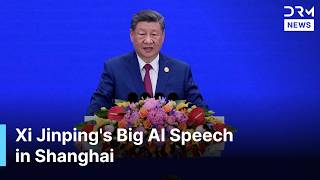
The rhetorical core of Xi's speech was a jab at U.S. export controls, delivered without naming the United States. 'The development of artificial intelligence should not be a solo performance by any single country but rather a symphony of global cooperation,' he said [7], and went further: 'We should jointly oppose overstretching the national security concept in the field of AI and placing one country's security over that of others' [8]. That same framing anchored AP's coverage of the speech - a message landing as American-led restrictions have squeezed China's access to advanced chips and tools, pressure that has simultaneously pushed Beijing toward AI self-reliance and toward positioning itself as the more open, cooperative alternative for everyone else [9]. Xi paired the rebuke with a safety caveat rather than an unconditional accelerationist pitch, saying governance must 'make its oversight and governance precise and effective and constantly refine measures to forestall loss of control' [10]- a signal that Beijing wants credit for openness without ceding the 'AI must stay controllable' framing that also underpins its domestic AI rules.

Bridging the Divide: What China Is Actually Offering

Behind the rhetoric sit concrete numbers. Xi pledged 5,000 AI training and seminar opportunities for developing countries over the next five years and a rollout of China's MAZU AI-powered meteorological early-warning system to 30 countries [11]. The framing leans on a specific statistic: Africa currently accounts for less than 1% of global data-center capacity, cited as the clearest evidence of the widening AI divide Xi says his government wants to close [12]. The commitments landed the same day Beijing-based Moonshot AI unveiled Kimi K3, which the company describes as the largest open-source model released to date at 2.8 trillion parameters, ranking third on the Artificial Analysis Intelligence Index behind Claude and GPT-5.6 [13]. The pairing was not incidental: the speech doubled as validation for Kimi K3, giving China's 'open, shared' AI vision a flagship product to point to, not just a policy pledge [13].

The Real Contest May Be Chips and Power, Not Models

Not every read of the speech was about diplomatic optics. On r/LocalLLaMA, the most heavily upvoted response to the WAIC coverage argued that the model itself - even a 2.8-trillion-parameter release like Kimi K3 - is close to a commodity with limited moat, and that the real strategic play is China exporting cheap AI hardware bundled with energy infrastructure to developing nations, a bet that could erode CUDA and Nvidia's long-term dominance far more than any single model release. That reading reframes Xi's pledges of training slots and cooperation centers: capacity-building assistance to the Global South also functions as a channel for distributing Chinese compute and infrastructure standards ahead of Western vendors. It is a slower-moving, more structural bet than the export-control fight getting most of the attention, and it would explain why Xi's speech spent as much time on cooperation centers and technical assistance as it did on open-source ideology.

Openness With Caveats

Xi's open-source pitch sits awkwardly next to reporting that Chinese officials have been in discussions with firms including Alibaba and ByteDance about restricting overseas access to the country's most capable AI models [14]. That is not the only wrinkle: commenters following the speech on Reddit noted that some Chinese 'open source' licenses, including Tencent's Community License, already carve out exclusions for users in the EU, UK and South Korea - meaning 'open' access is not extended uniformly to the same Western markets Xi's rhetoric implicitly needles. Analysts covering WAICO have also flagged that the organization's enforceability is unclear: some coverage is skeptical it will function as a binding governance body given its broad, voluntary, development-oriented design [6], and observers warn a WAICO-aligned bloc could develop AI rules that never reconcile with the EU AI Act, OECD AI Principles or the G7 Hiroshima Process, hardening a two-track global AI order rather than the 'just and equitable system' Xi's speech title promised [15].

Historical Context

2018
WAIC launched as a joint initiative of Chinese central government departments, the Chinese Academy of Sciences, and Shanghai municipal authorities, establishing it as an annual July event in Shanghai.
2019
A widely covered WAIC dialogue between Musk and Alibaba's Jack Ma became a signature media moment for the young conference.
2024
Organizers added the 'High-Level Meeting on Global AI Governance' to the conference and issued the Shanghai Declaration on AI safety, fairness, data security, and employment impacts.
2025
Under the WAIC theme 'Global Solidarity in the AI Era,' Li Qiang first proposed establishing an international AI cooperation organization alongside a global AI governance action plan - laying groundwork for 2026's WAICO.
2026-07-16
29 countries signed the agreement establishing the World AI Cooperation Organization in Shanghai, one day before Xi's keynote.
2026-07-17
Xi attended WAIC in person and delivered its keynote address for the first time in the conference's history.

Power Map

Key Players
Subject

Xi Jinping's Global AI Governance Vision at World AI Conference

WO

World AI Cooperation Organization (WAICO) founding members - 29 states including Russia, Pakistan, Indonesia, Kazakhstan, Brazil, Malaysia, South Africa, Senegal and Laos

Signed the July 16, 2026 founding agreement for a China-headquartered intergovernmental AI governance body; the roster is predominantly Global South, with no major Western democracy joining

MO

Moonshot AI

Chinese startup that released Kimi K3, described as the largest open-source model released to date at 2.8 trillion parameters, the same day as Xi's speech, giving China's open-source pitch a flagship product

UN

UN Secretary-General Antonio Guterres, Kazakh President Kassym-Jomart Tokayev, Cambodian PM Hun Manet, Thai PM Anutin Charnvirakul

Foreign heads of state and international officials who also addressed the conference alongside Xi, lending it international legitimacy beyond a purely domestic showcase

AL

Alibaba and ByteDance

Reported to be in discussions with Chinese officials about possible restrictions on overseas access to China's most capable AI models - a tension with Xi's open-sharing rhetoric

Fact Check

15 cited
  1. [1] Twenty-Nine Countries Sign Agreement to Establish Global AI Cooperation Body
  2. [2] 29 Countries Sign Agreement to Establish World AI Cooperation Organization
  3. [3] China's Xi Jinping Launches New AI Alliance: What Is It?
  4. [4] World Artificial Intelligence Conference
  5. [5] Xi Jinping Pushes AI Cooperation Organization at Shanghai Summit
  6. [6] 29 Nations Join China-Led World AI Cooperation Organization
  7. [7] Xi: AI Development Should Be a Symphony of Global Cooperation, Not a Solo Performance
  8. [8] Xi Calls for Joint Opposition to Overstretching National Security Concept in AI
  9. [9] AP: China's Xi Calls for Step-Up of Global Effort in AI as US Curbs Squeeze China's Tech Access
  10. [10] Full Text: Xi's Keynote Speech at the 2026 WAIC Opening Ceremony
  11. [11] Xi Jinping Delivers Keynote Speech at Opening of 2026 WAIC and High-Level Meeting on Global AI Governance
  12. [12] CGTN: China Vows to Make AI a Driver for Shared Prosperity Amid Widening AI Divide
  13. [13] Xi Jinping Reaffirms Commitment To Open-Source AI In Speech Right After Kimi K3's Release
  14. [14] Xi Jinping Rejects AI 'Solo Performance By One Country' As China's Kimi K3 Lands To Challenge OpenAI, Anthropic
  15. [15] Fact-Check: Risk of Bifurcated Global AI Governance Standards

Source Articles

Top 5

THE SIGNAL.

Analysts

"Characterizes WAICO as China's institutional counterweight to U.S.-led AI initiatives and Xi's speech as a direct challenge to American dominance of AI technology: 'can be viewed as China's answer to the U.S.-led Pax Silica initiative' and 'China will not let America be the monopoly of AI technology.'"

George Chen
Partner, The Asia Group

"Argues Beijing is using WAICO to win developing-world support for a state-centric AI governance model and to shape AI norms as the U.S. steps back from multilateral AI governance leadership: Beijing seeks to 'receive buy-in for its state-centric governance vision of technology from the Global South.'"

Arindrajit Basu
Governance expert, Carnegie Endowment for International Peace
The Crowd

"JUST IN: 🇨🇳 Just after it was revealed that Chinese AI Kimi-k3 is leading the AI race in the world, Chinese President Xi Jinping says China's vision for artificial intelligence is to develop and apply AI in a "people-centered" way, using it to promote shared prosperity and global"

@@Megatron_ron8887

"Key takeaways from President Xi's speech in his first ever appearance at the World AI Conference in Shanghai: - Started the speech by referring to his signature maxim, "great changes unseen in a century are unfolding across the world" - Said that the world has "entered an"

@@vince_chow12467

"Xi Jinping just hijacked the rules of AI for the entire planet. Today, Xi walked onto the stage at the World AI Conference in Shanghai. It was his FIRST time attending the event in person since it launched in 2018. Heads of state do not fly in personally for a product expo."

@@Ric_RTP1705

"Xi offers AI olive branch to the world, calling for 'symphony of global cooperation' | Development and governance of artificial intelligence should be a global effort, Chinese President Xi Jinping said Friday"

@u/Just-Grocery-22294200
Broadcast
BREAKING: Xi Jinping Delivers Keynote Speech at World AI Conference 2026 in Shanghai | AI1Z

BREAKING: Xi Jinping Delivers Keynote Speech at World AI Conference 2026 in Shanghai | AI1Z

WATCH: Chinese President Xi Jinping speaks at world AI conference

WATCH: Chinese President Xi Jinping speaks at world AI conference

China's Xi Jinping says AI should not be dominated by one country

China's Xi Jinping says AI should not be dominated by one country