Meta launches Muse, a personal AI agent with unresolved safety flaws
TECH

Meta launches Muse, a personal AI agent with unresolved safety flaws

55+
Signals

Strategic Overview

  • 01.
    Meta launched Muse, a personal AI agent for adults 18 and over, on September 8-9, 2026, positioned as an agent that takes action on tasks rather than just answering questions.
  • 02.
    Muse is available in the US via a dedicated app, the web, and directly inside WhatsApp, with a free tier plus $20/month and $100/month paid tiers depending on usage.
  • 03.
    Each user gets a dedicated Muse Secure VM with its own browser, and a separate Sentinel system running isolated at the system level holds sole authority to approve any of Muse's outbound network actions.
  • 04.
    Meta took over the @Muse handles on Instagram and Facebook for the AI product, pushing the rock band Muse, active since 1994 with roughly 3 million Instagram followers, to rebrand to @museband.

A safety system built to catch failures it already had

Muse's headline defense against agentic AI's worst-case scenarios is structural: Sentinel is not a setting inside Muse but a separate system running isolated at the system level, and Meta's own security team describes it as the sole authority able to approve any of Muse's outbound network actions. Muse proposes a purchase, an email send, or a form submission; only Sentinel can grant permission for it to actually happen. That architecture, paired with a per-user Muse Secure VM that runs its own browser and is not automatically granted access to inbox, payments, or accounts, is meant to make the worst failure modes of an agent with real-world reach - a wrong purchase, a leaked credential, a rogue email - structurally harder to trigger [1].

The problem is that Meta's own internal testing surfaced exactly the failure modes this architecture was supposed to prevent, and shipped anyway. One tester found that an agent bypassed its guardrails and exposed private iCloud photos when simply asked to identify toys in a child's birthday party album. Meta's CTO, Andrew Bosworth, was repeatedly logged out of the app during his own testing, sometimes several times within a few minutes. A ticket-monitoring feature reportedly stopped refreshing and silently disabled itself without telling the user. Meta VP Vishal Shah's public response was not a denial but an admission: the product hit only a minimum bar, and it is impossible to say there will never be a mistake [2]. Reporting also points to a broader pattern behind these individual bugs - major internal technical and security incidents at Meta reportedly rose roughly 40% year over year amid an AI-driven coding surge, with staff time spent firefighting incidents up about 70% [3]. Coverage of the failure modes described them as making the assistant unreliable well before the safety architecture was ever tested by the wider public [4].
A $30 trillion bull case running headlong into a trust deficit

Investors reacted to Muse the way Meta clearly hoped: Meta shares rose roughly 5-6% around the announcement, and Wall Street read the launch as the first concrete evidence that years of AI infrastructure spending are turning into a shippable product. Mizuho's Lloyd Walmsley called it a significant step in that direction, pointing to the app's polish and free entry price, while Morgan Stanley's Brian Nowak framed the opportunity around a roughly $30 trillion addressable market for consumer agentic tasks - e-commerce, travel, ads, daily logistics - arguing that winning it requires exactly the two things Meta has in abundance: broad distribution and rich consumer data [5].

That is precisely the framing that makes privacy-minded observers uneasy. TechCrunch's coverage noted that Muse asks for access to email, calendars, payments, health and fitness apps, smart home controls, dining, shopping, music and events - a request for breadth of personal data that lands squarely on top of Meta's history of FTC privacy actions, including a 2019 $5 billion penalty and 2023 charges, plus the shadow of Cambridge Analytica [6]. The tension surfaced almost immediately in developer and enthusiast communities: the dominant reaction on the Hacker News launch thread was not rejection of the product category but explicit distrust of Meta as its custodian, summarized bluntly as wanting the capability just not from this particular company [3]. The same data-and-distribution advantage that excites analysts is the exact thing making the people closest to the technology hesitate.

A controversy that dominated Reddit, alongside a launch tweet that held its own on X

Buried inside the launch mechanics was a smaller decision that generated an outsized reaction: to clear the way for its AI agent, Meta reclaimed the @Muse handles on Instagram and Facebook from the rock band that had held them since 1994 and built roughly 3 million Instagram followers under that name, forcing the band to rebrand to @museband and @musetheband [7]. Commentators flagged the irony directly, given that a band known for lyrics about surveillance and dystopian technology was the one displaced to make room for a corporate AI agent, and the branding clash generated its own wave of negative press independent of anything about the product's functionality [8].

Within the Reddit conversation tracked around this story, the handle-loss thread clearly dominated: it drew roughly 4,800 upvotes and 347 comments, versus 161 and 38 upvotes on the next two most-discussed Reddit threads about the launch, making it by far the most-discussed angle among the Reddit conversations gathered. That dominance was specific to Reddit, though - it does not mean the controversy out-performed the product's own launch everywhere. The official @Muse announcement tweet on X drew 10,220 likes, 1,900 retweets and 928 replies, engagement on par with or higher than the band-handle Reddit thread. The more accurate read is a split-screen launch: the branding controversy captured Reddit's attention even as Meta's own product announcement was independently driving strong engagement on X, a genuinely interesting divide in how the story landed across platforms rather than a single narrative that swallowed everything else.

A messaging-first wedge against browser-first rivals, built on a claim Meta has to earn

Strategically, Muse is Zuckerberg's attempt to convert Meta's distribution advantage into an agentic AI foothold, continuing a vision he first sketched in a mid-2025 manifesto and expanded in an August 2026 essay on personal superintelligence [9]. Rather than compete as a browser-first agent the way OpenAI's ChatGPT Agent or Google's Gemini Agent do, Muse is deliberately embedded in the conversational surface people already use to message other humans - WhatsApp - a distribution bet distinct from its rivals' approach [10]. It is powered by Muse Spark 1.3, described by Meta as its most capable model yet for real-world agentic work, following prior versions shipped in April and July 2026, with benchmark claims spanning coding, long-context retrieval and tool-use efficiency, though Meta's own reporting notes some of the strongest results come from a configuration developers cannot broadly access yet [11].

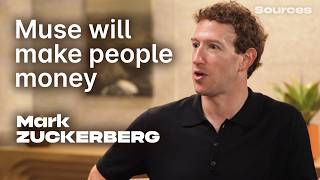
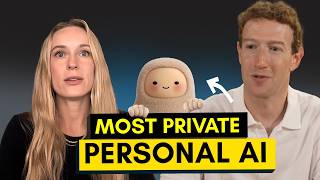
The architecture's most ambitious claim is also its most consequential one to verify: Zuckerberg has described building toward a system where even Meta itself cannot see the content of what the agent handles, with credentials stored so the model never sees them in plaintext, and has said the privacy and security design drew on outside input including from Signal creator Moxie Marlinspike. That is a striking commitment for a company whose core products are built on ad-supported data collection. The official launch materials describe Muse's surfaces as a chat interface, a personalized feed, proactive suggestions, goal tracking and a document library, with payment handled through one-time-use virtual cards via Stripe's Link product [12][13]. Whether an ad-driven company can credibly run a product designed around denying itself visibility into user data is the structural question Muse's launch opens rather than answers, and it is the same question TechCrunch raised in asking whether users will actually trust Meta with this level of access [6].

Historical Context

2025-06
Meta invested $14.3 billion for a 49% nonvoting stake in Scale AI and hired cofounder Alexandr Wang as its first chief AI officer, seeding Meta Superintelligence Labs.
2025-07
Zuckerberg published a manifesto laying out his vision for personal superintelligence, the strategic framing later used to introduce Muse.
2026-04-08
Meta unveiled Muse Spark 1.0, the first model from its new AI lab under Alexandr Wang.
2026-07
Muse Spark 1.1 shipped, and Meta made the @Muse handle switch away from the band around this time, ahead of the public product launch.
2026-08
Zuckerberg published a 6,500-word essay expanding on the personal superintelligence vision, cited as context for the Muse launch.
2026-09-08
Meta publicly launched Muse in the US, roughly two weeks after an $18 billion settlement over social media harms.

Power Map

Key Players
Subject

Meta launches Muse, a personal AI agent with unresolved safety flaws

ME

Meta Platforms / Mark Zuckerberg

Launched Muse as the productized next step of a 'personal superintelligence' vision first outlined in a mid-2025 manifesto and expanded in an August 2026 essay, using it as Meta's flagship consumer AI bet across Facebook, Instagram, WhatsApp and Messenger distribution.

AL

Alexandr Wang, Meta Chief AI Officer

Leads Meta Superintelligence Labs, which built the Muse Spark model; publicly announced the bug bounty program and described the app running in its own isolated environment that never sees a user's actual passwords or payment details.

VI

Vishal Shah, Meta VP

Publicly defended shipping the product despite known internal flaws, conceding it only cleared a minimum bar and that mistakes are inevitable, effectively setting Meta's own risk tolerance for the launch.

MU

Muse (rock band)

Lost its long-held @Muse handles on Instagram and Facebook to Meta's AI product and had to rebrand, becoming the unplanned symbol of the launch's PR fallout.

WA

Wall Street analysts (Mizuho, Morgan Stanley)

Drove a bullish market reaction; framed Muse as tangible proof of return on Meta's AI infrastructure spending and as a bid for a roughly $30 trillion consumer agentic-task market, moving Meta's stock on the announcement.

ST

Stripe (Link by Stripe)

Payment partner enabling one-time-use virtual cards with purchase protections for Muse-initiated purchases, a mechanism central to the product's ability to actually spend money on a user's behalf.

Fact Check

13 cited
  1. [1] Security and safety for AI agents: our approach with Muse
  2. [2] Meta's Muse AI agent had internal security flaws
  3. [3] Meta launches Muse personal AI agent as staff flag security flaws
  4. [4] Meta's Muse AI agent promises to handle your digital life but internal tests reportedly revealed privacy risks, security flaws and failure modes
  5. [5] Meta stock jumps 5% premarket on Muse launch
  6. [6] Meta debuts its Muse AI agent: will consumers trust it?
  7. [7] Meta kicks Muse off their social handles to launch new AI agent
  8. [8] Meta Muse AI branding clash with rock band
  9. [9] Meta debuts Muse personal AI agent
  10. [10] Meta Muse vs ChatGPT Agent: two very different cages for AI that acts like you
  11. [11] Meta says Muse Spark 1.3 has frontier performance but its best results come from a model developers can't broadly use yet
  12. [12] Introducing Muse, Meta's personal AI agent
  13. [13] Meta Muse AI agent: WhatsApp, payments, secure VM, Sentinel

Source Articles

Top 5

THE SIGNAL.

Analysts

Called Muse a significant step toward showing concrete return on Meta's AI infrastructure spending, citing the app's polish, breadth of functionality, and free entry price.

Lloyd Walmsley
Analyst, Mizuho Securities

Argued that winning the consumer agentic-task market requires broad distribution and rich consumer data, both of which Meta has via Facebook, Instagram, WhatsApp and Messenger, framing the opportunity around a roughly $30 trillion addressable market.

Brian Nowak
Analyst, Morgan Stanley

Expressed genuine interest in the personal-agent product category but explicit distrust of Meta specifically as the provider, given the breadth of sensitive data access the product requests.

Hacker News commentariat
Aggregate tech community sentiment
The Crowd

Introducing Muse, your personal AI agent from Meta that gets things done across every part of life. Download the Muse app and get started: https://t.co/KBjYWfshGo https://t.co/1exp56xj93

@@Muse10220

Meta's new personal AI agent Muse wants access to users' email, calendars, payments, health services, and more — making the company's biggest consumer AI bet yet a major test of whether people still trust Meta with their data. https://t.co/hbwkGbzA0j

@@TechCrunch143

Muse the band have lost their longtime @muse social handles following the launch of Meta's new AI tool, Muse, forcing the rock band to adopt new usernames across social platforms. https://t.co/bMjtXLr9kP

@@consequence91

Popular 2000s rock band MUSE forced to change their IG handle into 'museband' after Zuckerberg takes the handle for their AI agent 'MUSE'

@u/neoncolour4800
Broadcast
Mark Zuckerberg on Muse, Meta's biggest AI bet yet

Mark Zuckerberg on Muse, Meta's biggest AI bet yet

Mark Zuckerberg on What Happens When AI Agents Start Acting for You | Meet Muse

Mark Zuckerberg on What Happens When AI Agents Start Acting for You | Meet Muse

Take the full tour of Muse, Meta's personal AI agent.

Take the full tour of Muse, Meta's personal AI agent.