Meta open-sources Muse Gadgets hardware SDK
TECH

Meta open-sources Muse Gadgets hardware SDK

32+
Signals

Strategic Overview

  • 01.
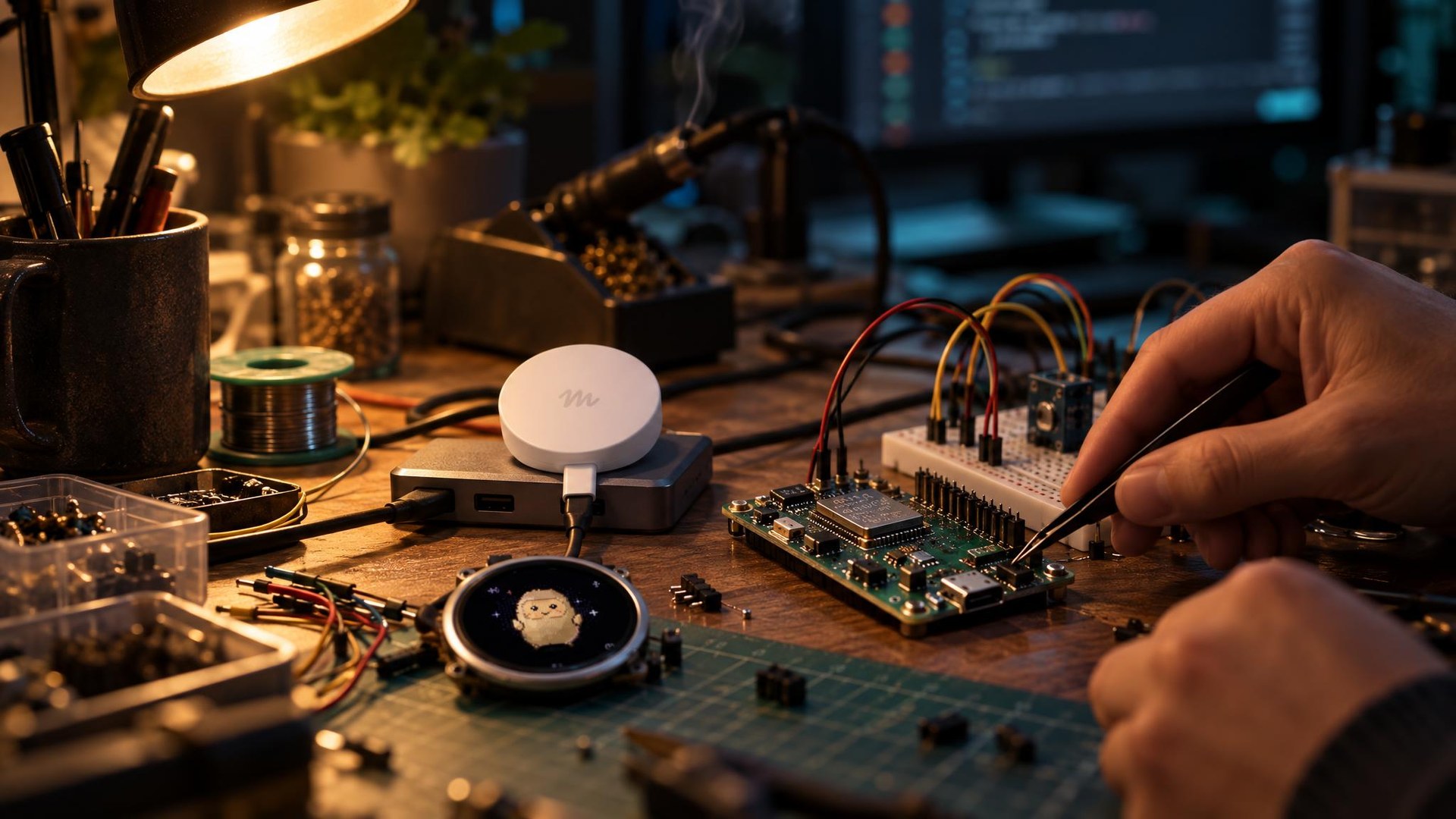
    On October 2, 2026, Meta announced Muse Gadgets, an open-source ESP32 firmware and Linux SDK, licensed Apache 2.0, that lets developers build hardware devices - displays, sensors, Raspberry Pi boxes - that connect to Muse, Meta's personal AI agent.
  • 02.
    Meta's own reference device, Muse Home Link, is a free USB-C dongle that connects Muse to a home network so it can talk to smart-home gear like TVs and speakers. Meta manufactured 5,000 units and is giving them free to U.S. Muse subscribers, one per person, while supplies last.
  • 03.
    Reference gadgets Meta lists today include a Waveshare round AMOLED touchscreen, a Seeed reTerminal e-ink display for briefings, the M5Stack StickS3 pocket display, the AiPi Lite desk companion, the Home Assistant Voice Preview Edition, and a Raspberry Pi 5, with an HDMI TV stick coming soon.
  • 04.
    The release follows Muse's September 8, 2026 consumer launch and comes just over a week after Meta unveiled the Muse Charm wearable, extending Meta's agentic AI push from a phone app into a growing set of physical hardware touchpoints.

Open Source in Name, Gated by Design

The Muse Gadgets code published to facebookincubator/muse-gadget-sdk on GitHub carries an Apache 2.0 license, and developers get an SDK token from gadgets.muse.ai to pair a device [1]. That token, not the code, is where the real control sits. An independent analysis argues this amounts to an illusion of openness: every gadget must authenticate with a Meta-issued credential before it can connect to an account, so Meta retains a control point over the ecosystem even though the firmware is freely licensed [2]. Developer and hobbyist discussion on Hacker News echoed the concern from the ground up, noting that gadgets depend on an active Muse subscription and that Meta's own terms say the service 'may change, stop working, or be withdrawn at any time, with or without notice' [3]. In other words, you can read, fork, and modify the firmware, but the thing that makes it useful - a live connection to Muse - stays entirely at Meta's discretion.


A Three-Week Sprint From App to Hardware Ecosystem

Muse Gadgets did not appear in isolation. Muse itself launched as Meta's first consumer agentic AI app on September 8, 2026 [4]. Two weeks later, reports described a standoff between Meta and Amazon over Muse ahead of Meta Connect, pointing to friction with a major retail partner just as Meta was trying to widen Muse's footprint [5]. The next day, September 24, Meta unveiled the Muse Charm, a Tamagotchi-like wearable amulet that previewed the company's appetite for dedicated Muse hardware form factors [6]. Muse Gadgets and Home Link, announced October 2, read as the next and most expansive step in that sequence - an open invitation for anyone to build the hardware touchpoints Meta hasn't built itself [7], arriving at a moment when the company has clear incentive to make Muse feel bigger than a single app.

Smart Home Access Without the Smart Home Vendors

Muse Home Link is a USB-C powered device that connects Muse to a home network so it can talk to smart-home gear - TVs, speakers, lights, printers - that exposes a local HTTPS or web interface [8]. Crucially, Home Link's own code is open source too, and the community has already written skills for Philips Hue, Sonos, Apple TV, Google Nest, and Samsung TVs [1]. None of those companies had to build or bless anything - the integration path runs through Meta's dongle and the open skill framework around it, which means Muse's reach into established smart-home ecosystems is being built by third parties on Meta's terms rather than through partnerships with the device makers themselves.

Builder Enthusiasm Meets Privacy Skepticism

Reaction has split along predictable lines. Hobbyist communities reacted with a mix of excitement and friction: some questioned whether the announcement was even official before tracing it back to Meta's own product leadership, others ran into practical snags like Raspberry Pi scarcity and regional exclusions on the free Home Link units, and a vocal subset raised privacy objections to giving Meta visibility into home network traffic - concerns sharpened by a previously reported incident in which Muse disclosed a user's home address to a stranger [3]. At the same time, builders moved fast: within the same announcement window, hardware was already being ported to new boards outside Meta's own reference list, suggesting genuine grassroots pickup even amid the skepticism. Wall Street's read cuts the other way entirely - analysts cited the expanding Muse hardware and software surface, including Gadgets and Home Link, as support for raised price targets, with Tigress Financial moving its Meta target from $945 to $995 on a Strong Buy rating [9]. The tension is the story: a platform critics call gated-open-source is simultaneously drawing hobbyist builders in and reassuring investors about Meta's monetization reach.

Historical Context

2026-09-08
Muse launched as Meta's first consumer agentic AI app, the product that Muse Gadgets and Muse Home Link now extend into physical hardware.
2026-09-23
Reports surfaced of a standoff between Meta and Amazon over Muse ahead of Meta Connect.
2026-09-24
Meta unveiled the Muse Charm, a Tamagotchi-like AI wearable amulet, previewing its push into dedicated Muse hardware form factors.
2026-10-02
Meta publicly announced Muse Gadgets (open-source ESP32/Linux SDK) and Muse Home Link (5,000 free USB-C units).

Power Map

Key Players
Subject

Meta open-sources Muse Gadgets hardware SDK

NA

Nat Friedman

Head of product at Meta Superintelligence Labs; publicly announced Muse Gadgets and Muse Home Link, framing it as a side project to let builders explore new hardware form factors around Muse.

ME

Meta (Superintelligence Labs)

Manufactures and ships the Muse Home Link hardware (5,000-unit first batch), maintains the open-source SDK repo, and retains a gating control point via mandatory SDK tokens that authorize device-to-account pairing.

HO

Hobbyist/maker community (ESP32, Raspberry Pi, Home Assistant users)

Target developer audience; existing communities around Waveshare, Seeed, M5Stack, and Home Assistant Voice Preview Edition hardware are referenced as starter platforms for new gadgets.

SM

Smart-home device makers (Philips Hue, Sonos, Apple TV, Google Nest, Samsung)

Products that the Home Link's open-source community skills already target for control, extending Muse's reach into existing smart-home ecosystems without those vendors building anything themselves.

Fact Check

9 cited
  1. [1] Meta Open-Sources Muse Gadget SDKs for DIY AI Hardware Devices
  2. [2] Meta Muse Gadgets Are Open Source, But The Platform Is Not
  3. [3] Hacker News discussion: Muse Gadgets
  4. [4] Meta Open-Sources Muse Gadgets, Lets Developers Build Their Own Hardware For Its AI Agent
  5. [5] Meta's Standoff With Amazon Over Muse Comes Ahead of Meta Connect
  6. [6] Meta's Muse Charm Looks Like a Tamagotchi But It's Tapping Into a Much Newer Trend
  7. [7] Meta Wants You To Build Your Own Muse Gadget
  8. [8] Meta's Muse Gadgets Open Source Smart Home Link
  9. [9] Meta Just Launched Charm Gadget - Analysts React

Source Articles

Top 5

THE SIGNAL.

Analysts

“Argues Meta has created an illusion of openness: the SDK code is Apache 2.0 licensed, but every gadget must authenticate with an SDK token controlled by Meta, so Meta keeps a central control point over accounts and usage even though the firmware itself is open.”

Remio.ai analysis
Independent tech commentary

“Raised privacy concerns about giving Meta home Wi-Fi access, noted the firmware depends on an active subscription and can be withdrawn without notice, and pointed to a prior incident where Muse disclosed a user's home address as a reason for distrust.”

Hacker News commenters
Developer and hobbyist community discussion

“Bullish on Meta's broader AI monetization strategy, including the Muse hardware extensions, raising Meta's price target from $945 to $995 with a Strong Buy rating.”

Ivan Feinseth
Analyst, Tigress Financial
The Crowd

“🚨 MUSE ECOSYSTEM ALERT 🚨 today we are announcing Muse Gadgets! this is an open-source ESP32 firmware and Linux SDK for anyone to make hardware that works with Muse we are also releasing our own gadget—Muse Home Link—to enable your muse to work with your smart devices (TV, ...)”

@@alexandr_wang7509

“🚨 side project alert 🚨 Announcing Muse Gadgets, an open source ESP32 firmware and Linux sdk so that you can make hardware devices that work with Muse. Grab an API token from gadgets.muse.ai and point your favorite coding agent at the github repo to build your own”

@@natfriedman6531

“Muse gadgets running on a conference badge @alexandr_wang Ported to micropython to run on the RP2350”

@@wesbos149

“Introducing Muse Gadgets: Open source hardware for your Muse”

@u/6353JuanTaboApp623
Broadcast
Apple Locks Down macOS Over AI Agent Risks | Meta Opens Muse Code

Apple Locks Down macOS Over AI Agent Risks | Meta Opens Muse Code

Muse News (Episode 3): Muse Gadgets

Muse News (Episode 3): Muse Gadgets

Muse Gadgets abre código, matemática com Muse Spark e Jev em Python

Muse Gadgets abre código, matemática com Muse Spark e Jev em Python