Inside Neuro-Embodied-AI: how BrainCo turns a thought into a robot's grip
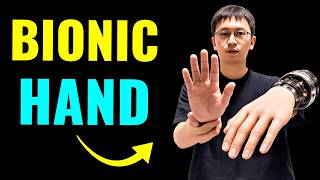
BrainCo's platform runs on what the company calls 'Neuro-Embodied-AI': an EEG headset captures raw brain signals, an AI layer decodes the wearer's intent, and the robot's own systems carry out the resulting action - the whole loop completes in under 200 milliseconds[1][2]. The system is built from three unified pieces - an EEG sensing system, a software layer that handles signal processing, control mapping, and pre-loaded BCI paradigms, and a robot execution terminal - packaged so a researcher with no BCI background can get a robot responding to brain signals in about 10 minutes[3][4]. BrainCo's own launch demo shows two distinct control paradigms behind that pitch: motor imagery, where the wearer imagines performing a movement, and SSVEP, where they simply focus on visual targets flickering at different frequencies. In a live demo at WAIC 2026, a robotic arm grasped a cup and picked up an apple using brain signals alone, with no buttons, speech, or physical movement involved, and the platform is built to work with third-party humanoid robots, robotic arms, and robotic dogs[1][2]. BrainCo's own demo footage has also shown the same platform pouring water, delivering a filled cup, and executing two-handed gesture commands like a thumbs-up or a handshake. The robotic hardware behind these demos is not generic: BrainCo's own Revo 3 Dexterous Hand packs 21 degrees of freedom and 70 newtons of grip force with sub-millimeter grasping precision, while its Intelligent Bionic Hand weighs just 383 grams and moves each of its five fingers independently[5]. BrainCo SVP Nyx He framed the platform as the payoff of a decade of BCI work: 'A decade of BCI research has given us the ability to decode what a person intends to do and translate that into machine action. By integrating brain-computer interfaces, AI, and embodied AI, we believe it will define the next chapter of human-machine collaboration.'[5]