OpenAI tests visual ads in ChatGPT image generation
TECH

OpenAI tests visual ads in ChatGPT image generation

30+
Signals

Strategic Overview

  • 01.
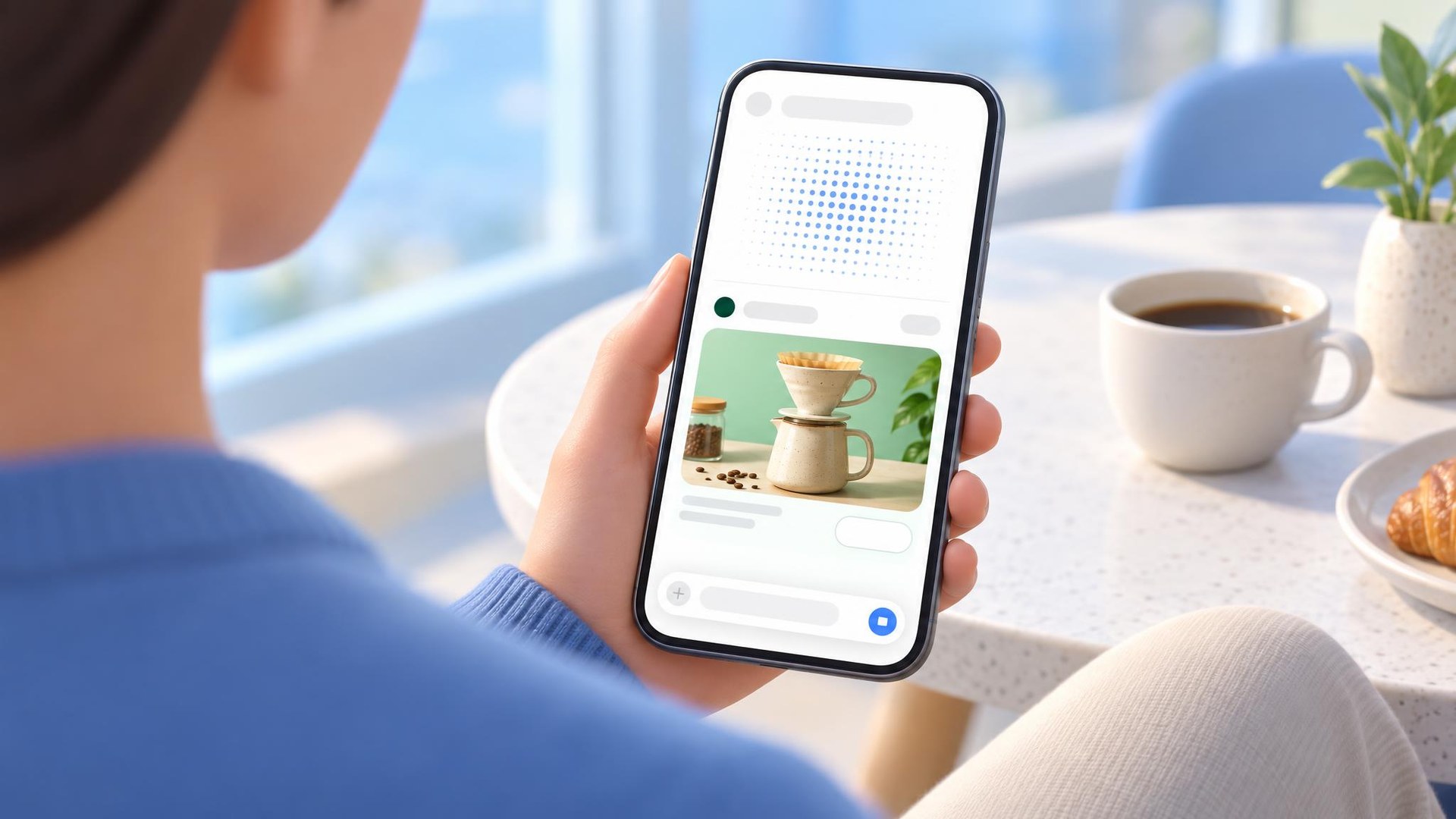
    OpenAI began testing a new visual ad format that appears alongside images ChatGPT generates, starting in October 2026 with a limited group of US advertisers.
  • 02.
    The ads show product inspiration or usage imagery, carry clear labels, stay visually separate from the AI-generated image itself, and do not influence ChatGPT's responses.
  • 03.
    Ads will appear only to Free and Go-tier users in the US for now; paying subscribers will not see them.
  • 04.
    OpenAI says safeguards keep ads out of emotionally vulnerable, sensitive, or otherwise unsuitable conversations.

Deep Analysis

From $60 CPM to a $100 Billion Target: The Economics Behind the Push

ChatGPT Ads is barely eight months old, and the trajectory explains why OpenAI is already extending into image generation. The product launched on February 9, 2026 at a $60 CPM and reached $100 million in annualized revenue within six weeks [1]. By August 31, 2026, it had crossed a $1 billion annualized run rate - in under 200 days from launch [2]. Layered onto a user base that grew from 900 million weekly users in February to 1.2 billion by OpenAI's September DevDay disclosure [2][3], the volume math is straightforward: more eyeballs, a new ad surface in the image-generation wait state, and a much deeper measurement stack built to prove it all works.

That measurement stack is the real infrastructure story here. OpenAI has quietly built out a roster of roughly 18-20 data-connection and attribution partners - Hightouch, Tealium, and LiveRamp for piping in first-party conversion data, and AppsFlyer, Adjust, Branch, Triple Whale, Northbeam, and others for click attribution and reporting [2][4]. Reports put OpenAI's long-term target at roughly $100 billion in annual ad revenue and 2.75 billion weekly users by 2030 [5], and the pilot arrives with vendor-supplied early proof points: WeightWatchers reportedly saw a cost per acquisition 15.3% below its blended paid-search benchmark through DV Rockerbox attribution [6]. None of that is independently verified yet, but it is exactly the kind of data advertisers will want to see repeated at scale before shifting real budget.
A Brand-Safety Pilot, Not Yet an Audit

OpenAI is pairing the visual ad launch with a brand-suitability pilot run by DoubleVerify and Integral Ad Science, timed to Advertising Week New York. The company's own framing is notable: "Our goal is to give advertisers greater transparency into how those safeguards work while protecting conversation privacy" [7]- language that positions the exercise as building trust rather than proving a result. The pilot assesses how OpenAI applies its own stated safeguards; it does not appear to give DV or IAS access to the actual conversations being evaluated, a meaningfully narrower mandate than brand-safety verification on established ad platforms.

That gap matters because reporting elsewhere describes ChatGPT's brand-safety controls as thin and reactive rather than proactive, with advertisers already struggling to get visibility into where their ads actually surface [8]. It is also unclear whether the exclusions that applied to OpenAI's original text-ad test - no dating, health, financial-services, or political advertisers - carry over unchanged to the new visual format [9]. One independent reviewer covering the launch made a sharper version of the same point: OpenAI's promises of labeling, separation, and no influence on answers are a published policy, not an independently audited outcome, and a paid placement sitting next to an otherwise-accurate recommendation still belongs in a different trust category than the recommendation itself. Community reaction raised a related, higher-stakes version of the concern - that visual ads could prove more compelling, and therefore riskier, than text ads for users in vulnerable states, such as around gambling or alcohol content, precisely where the safeguards are hardest to verify from outside.

Free Tier Only - But Who Exactly Opted Into This

OpenAI has been explicit that the new format excludes paying subscribers: ads will appear only for Free and Go-tier users in the US, with all paying-subscriber tiers unaffected [4]. That is a clean, easy-to-communicate line - until it runs into a detail OpenAI's announcement left unaddressed. Earlier in the ChatGPT Ads rollout, some free-tier users were given the option to disable ads entirely, at the cost of losing access to tools like image generation. It is not clear whether that opt-out still applies, or still carries the same trade-off, under the new visual format [9].

The ambiguity lands on top of a user base that was already lukewarm about the idea. Discussion following the announcement skewed toward friction rather than outrage: users questioning why ads would appear specifically during the image-generation wait state, noting ChatGPT already has a mini-game to fill that dead time, and worrying that a heavier ad presence would make the free tier more painful or interfere with creative and roleplay use cases. Few defended the feature outright - a sentiment OpenAI will need to manage carefully as it tries to scale this surface toward a much larger share of its 1.2 billion weekly users.

Advertisers Still Want Google-and-Meta-Grade Proof

For all the new measurement plumbing, the advertisers actually buying these placements are not yet convinced. Adweek interviewed four ad buyers who said they want more visibility into which prompts trigger an ad, the context surrounding each placement, and - most fundamentally - whether exposure to a ChatGPT ad drives an actual sale or business outcome rather than just an impression [10]. That is a trust gap a longer partner list alone does not close; it requires OpenAI to expose placement-level data in a way it has not committed to yet.

Seen in that light, the visual ad format and the expanded DoubleVerify, IAS, and attribution-partner roster are best read as OpenAI trying to compress years of ad-platform maturation - the kind Google and Meta built up over a decade - into a single year, while its user base and revenue are still compounding [11]. The image-generation surface is a logical next step precisely because it is high-frequency and highly visual, but it is also the first real test of whether OpenAI can scale brand trust and measurement credibility at the same pace it is scaling ad inventory.

Historical Context

2026-02-09
ChatGPT Ads launched at a $60 CPM, OpenAI's first ad product inside ChatGPT.
2026-02-27
OpenAI disclosed ChatGPT had reached 900 million weekly users.
2026-08-31
ChatGPT Ads crossed a $1 billion annualized revenue run rate in under 200 days since launch.
2026-09-29
At DevDay, OpenAI disclosed more than 1.2 billion weekly ChatGPT users and over 35 million weekly Work/Codex users, alongside revenue approaching a $70 billion annualized run rate.
2026-10-05
OpenAI announced the new visual ad format for ChatGPT image generation plus expanded measurement and brand-safety partnerships, timed with Advertising Week New York.

Power Map

Key Players
Subject

OpenAI tests visual ads in ChatGPT image generation

OP

OpenAI

Platform operator launching the format to diversify revenue beyond subscriptions; controls labeling, exclusion rules, advertiser onboarding, and the pace of the rollout toward its 1.2 billion weekly users.

DO

DoubleVerify and Integral Ad Science

Independent brand-safety and suitability verification partners piloting assessment of OpenAI's own safeguards without access to private conversations, giving advertisers a third-party (if narrow) read on trust claims.

HI

Hightouch, Tealium, LiveRamp

Data-connection partners letting advertisers route first-party conversion data into ChatGPT Ads, expanding the targeting and measurement plumbing behind the new format.

AP

AppsFlyer, Adjust, Branch and other attribution vendors

Measurement and attribution partners providing the conversions and reporting infrastructure advertisers need to judge whether the ads actually convert.

AD

Advertisers and ad buyers

Initial test cohort evaluating early performance, pushing OpenAI publicly for more visibility into prompt-level placement and incrementality data before committing larger budgets.

Fact Check

11 cited
  1. [1] ChatGPT will now show visual ads while you generate images
  2. [2] OpenAI gains 20 measurement partners for ChatGPT Ads
  3. [3] ChatGPT now reaches 1.2 billion people every week, OpenAI says
  4. [4] OpenAI launches visual ads that appear alongside image generation results
  5. [5] OpenAI Visual Ad Format: ChatGPT's 1.2 Billion Weekly Users
  6. [6] OpenAI Introduces Visual ChatGPT Ad Format and Expanded Measurement
  7. [7] OpenAI Is Piloting Brand Suitability Controls With DoubleVerify and IAS
  8. [8] LLM Ads Raise Concerns: Experts Discuss Measurement and Brand-Safety Risks
  9. [9] OpenAI to Test Ads During ChatGPT Image Generation in US This Month
  10. [10] Advertisers Want Brand Safety, Prompt Matching, and Incrementality Tracking for ChatGPT Ads
  11. [11] OpenAI Tests Visual Ads in ChatGPT to Diversify Beyond Subscriptions

Source Articles

Top 5

THE SIGNAL.

Analysts

“OpenAI frames the DoubleVerify/IAS pilot as a transparency measure for advertisers while preserving user conversation privacy.”

OpenAI
Official company statement accompanying the announcement

“Buyers are asking for more visibility into which prompts trigger ads, the context surrounding those placements, and whether exposure ultimately drives a sale or other meaningful business outcome.”

Ad buyers (unnamed, interviewed by Adweek)
Advertising agency and brand buyers
The Crowd

“OpenAI to test visual ads during ChatGPT image generation”

@u/Justgototheeffinmoon0

“ChatGPT is getting picture ads, and you will see them first while it generates your images”

@u/ross20009
Broadcast
ChatGPT's Text Ads Are Turning Into Pictures

ChatGPT's Text Ads Are Turning Into Pictures

ChatGPT's Visual Ad Test: What Changes While You Create Images?

ChatGPT's Visual Ad Test: What Changes While You Create Images?

ChatGPT Has Officially Entered the Advertising Business. But Launching Ads Is the Easy Part.

ChatGPT Has Officially Entered the Advertising Business. But Launching Ads Is the Easy Part.