The Real Bomb in the Complaint: Naming Altman Personally
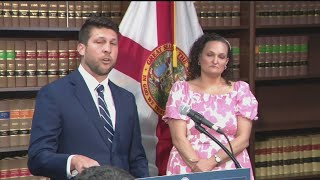
The headline news is that Florida sued OpenAI. The actual legal innovation is the second defendant. Florida AG James Uthmeier's 83-page complaint [1]names Sam Altman individually alongside five OpenAI corporate entities [2], asking the court to hold him personally on the hook for civil penalties, disgorgement, and injunctive relief. The legal theory Uthmeier is testing is that Altman is 'personally liable for the harm he has caused Floridians through his reckless and willful conduct as founder and CEO of OpenAI, including his utter disregard for the risk to human life caused by his firms' conduct' [3].
That language is doing specific work. In most corporate litigation, the CEO is shielded by the corporate veil — plaintiffs win money from the company, not the executive's bank account. To pierce that veil under Florida's Deceptive and Unfair Trade Practices Act, the state has to show the executive personally directed or recklessly enabled the deceptive conduct. Uthmeier is alleging exactly that: that Altman knew about safety warnings from inside and outside the company and chose growth anyway [4]. If a Florida court agrees, the precedent reverberates well beyond OpenAI — every frontier-lab CEO becomes a discoverable, deposable, individually-liable defendant the next time a state AG decides their model contributed to a harm. That is a structurally different risk surface than the one AI executives have priced into their job description so far.
It is also why the suit can't be read as just another consumer-protection action. Civil penalties capped at $10,000 per violation [5]against a company reportedly valued north of $850 billion [6]are not, on their own, an existential threat. The personal-liability theory is.