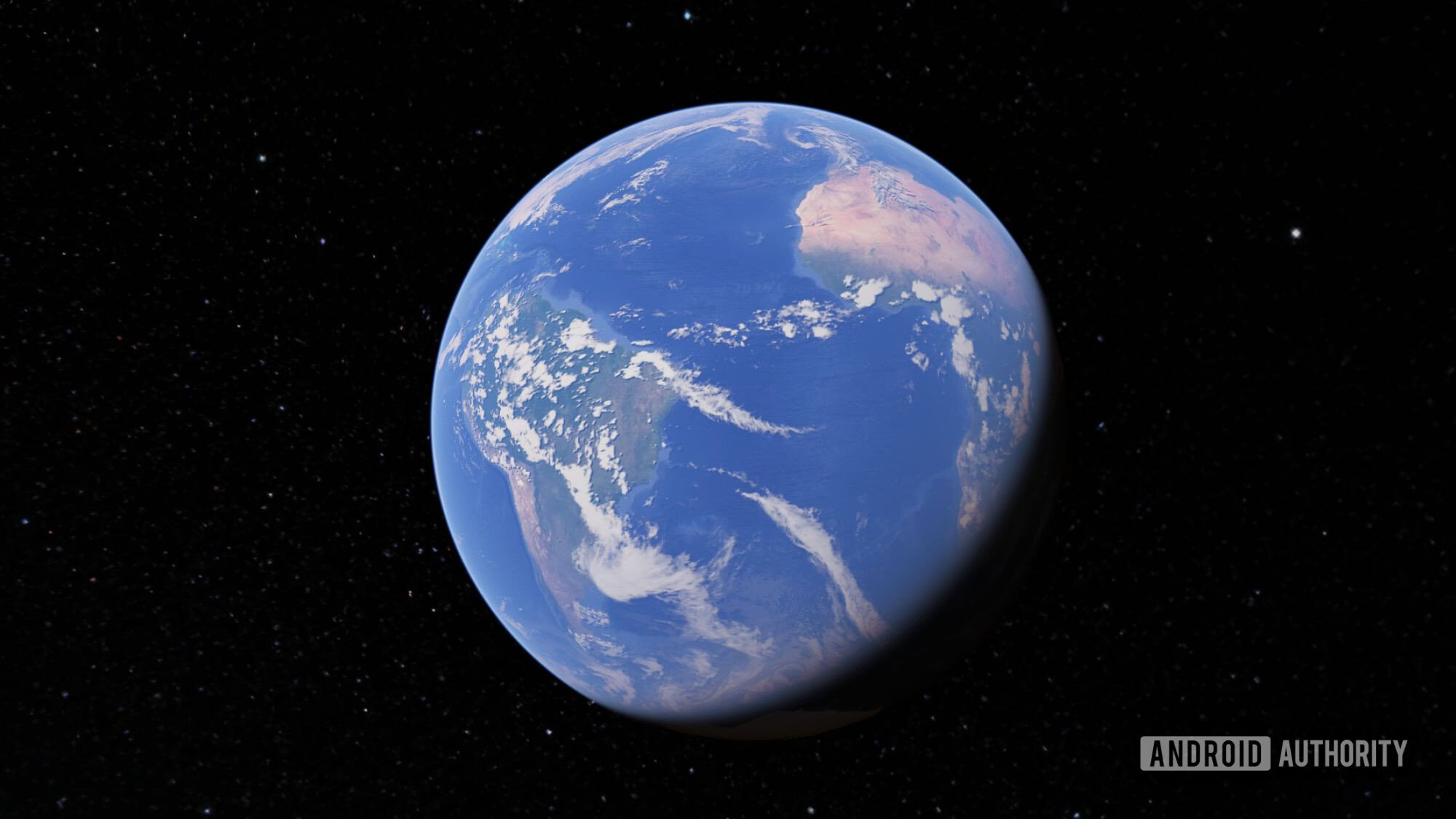
Google pulls Google Earth AI image-generation feature over misinformation concerns
TECH

Google pulls Google Earth AI image-generation feature over misinformation concerns

40+
Signals

Strategic Overview

  • 01.
    Google launched an AI image-generation feature in Google Earth on July 30, 2026, powered by its Nano Banana 2 model, letting users type a text prompt to generate a photorealistic image grounded in real satellite, aerial, and 3D terrain data for any location on the globe.
  • 02.
    Less than 24 hours later, on July 31, Google rolled the feature back after researchers and journalists showed it could fabricate convincing disaster, conflict, and protest imagery superimposed on real coordinates, saying it is implementing stronger guardrails ahead of a future relaunch.
  • 03.
    Demonstrations included fabricated refugee camps at the US-Mexico border and a nuclear plant in Iran from OSINT researcher Henk van Ess, and a fake blast crater in Los Angeles plus fabricated protesters outside Google's own campus from 404 Media journalist Joseph Cox.
  • 04.
    Google's stated safeguard, an invisible SynthID watermark, covered less than 25 percent of the generated image area in tested examples, and a popular third-party AI detector rated one fabricated, screen-recorded image as just 0.8 percent likely to be AI-generated.

Deep Analysis

Borrowed Credibility: Why This Fake Looked Like Evidence

Nano Banana 2 doesn't generate images from nothing - it uses real satellite, aerial, and 3D terrain data as a structural anchor, then lets a text prompt fill in whatever the user wants to see happening at that location [1]. That grounding is exactly what made the misuse so effective. OSINT researcher Henk van Ess placed fabricated refugees near the US-Mexico border and planted a nuclear plant in Iran with a single prompt [2], while 404 Media journalist Joseph Cox generated a fake blast crater in Los Angeles and fabricated protesters just outside Google's own Mountain View campus [3]. Because the fake content sits on real coordinates and real topography, it doesn't read as an AI illustration - it reads as evidence. As van Ess put it: 'Google spent 20 years building the reference the world checks against. Today it added a button that makes things up.' [3]
The Watermark That Wasn't: SynthID's Coverage Gap

Google's primary safeguard wasn't prompt-blocking, it was after-the-fact labeling: every Nano Banana image in Google Earth carries an invisible SynthID watermark, and Google said it blocks generation on 'harmful topics.' In practice, the harmful prompts above weren't refused at all, and the watermark itself covered less than 25 percent of the image area in tested examples [2]. That gap matters because disinformation doesn't spread as a live, watermark-checkable file, it spreads as a screenshot - a popular third-party AI detector rated one screen-recorded fabricated image as just 0.8 percent likely to be AI-generated [2]. Joseph Cox called Google's reliance on the watermark 'completely braindead as to how misinformation works' [3].

A Pattern, Not an Accident: Google's Second AI-Image Rollback in Two Years

The launch-to-rollback window was about 24 hours. Google shipped the feature globally at no extra cost [1], web-only despite Google Earth's 500 million-plus Play Store installs, and capped generation at a few images per day [4]. By July 31 it was gone [5], with Google saying: 'We know that people uniquely trust Google Earth for a reliable view of the world...So we're rolling back this feature in Google Earth while we work on implementing stronger guardrails.' [6]This wasn't Google's first stumble with AI-image trust - in March 2024 it paused the Gemini image generator after it produced historically inaccurate results [7]. Nor is it an isolated industry incident: Meta discontinued its own 'Muse Image' Instagram-photo generator earlier the same month after privacy criticism [8], part of a broader pattern of generative-AI features shipping fast and getting pulled just as fast once misuse surfaces publicly.

Stated Purpose vs. Actual Use: A Planning Tool Turned Disaster Generator

Google framed the tool around legitimate use cases - visualizing history, mocking up real-estate plans, and similar tasks [4], language echoed on Google's own product announcement [9]. Testers immediately demonstrated the opposite. Beyond van Ess's border and Iran fabrications and Cox's Los Angeles blast crater, other circulating prompts generated a plane hitting a Manhattan skyscraper and a bombing in Moscow - a spread of violent, geopolitically charged imagery with no relationship to property planning or historical visualization. The gap between Google's pitch and how the tool was actually used within its first day is itself the clearest evidence that 'harmful topics' were not meaningfully blocked at launch: a feature built for visualizing real estate and history should not have been capable of rendering disaster and conflict scenes at all.

Historical Context

2023
Google introduced SynthID, its invisible AI-image watermarking system, later applied to Nano Banana outputs in Google Earth.
2024-03-01
Google previously paused its Gemini AI image generator after it produced historically inaccurate images, a separate but related controversy over AI image-generation trustworthiness.
2026-07
Meta discontinued its 'Muse Image' AI feature, which generated images using public Instagram accounts, earlier the same month after privacy criticism - a parallel pattern of an AI feature launched then rolled back under public pressure.
2026-07-30
Nano Banana 2 image-generation launched in Google Earth on the web, described by Google as letting users visualize history, create real estate plans, and more.
2026-07-31
Feature rolled back roughly 24 hours after launch following 404 Media's reporting and widespread researcher and journalist demonstrations of misuse.

Power Map

Key Players
Subject

Google pulls Google Earth AI image-generation feature over misinformation concerns

GO

Google / Alphabet

Developer and publisher of the Google Earth AI image-generation feature and the underlying Nano Banana 2 / Gemini model; issued the rollback statement

40

404 Media (Joseph Cox)

Investigative outlet/journalist that first published demonstrations of the tool generating fabricated bomb craters and protest imagery, prompting Google's public response

HE

Henk van Ess

OSINT/digital investigations researcher who publicly demonstrated fabricated refugee camps at the US-Mexico border and a nuclear plant in Iran; his critical post reached 2.4 million views on X

CE

Centre for Information Resilience (Ross Burley)

Disinformation research organization; co-founder warned the launch was irresponsible and risked damaging trust in satellite imagery

AM

American Enterprise Institute (Brady Africk)

Satellite-imagery research analyst who warned the tool made it easier to spread convincing fake satellite imagery and complicate journalists' and researchers' work

BB

BBC / BBC Verify

Media organization that independently tested and reported on the feature's ability to produce convincing fake imagery of bombed hospitals and military incursions

Fact Check

9 cited
  1. [1] Google Earth Now Lets You Generate AI Images From Satellite Imagery
  2. [2] Google Earth Controversy Over AI Image Feature
  3. [3] Google Pulls Google Earth AI Tool That Faked Satellite Scenes
  4. [4] Google Earth Gets AI Image Generator Grounded in Satellite Data, Web Only
  5. [5] Google Nixes Its Earth AI Feature One Day After Launch Amid Criticism It Would Spread Misinformation
  6. [6] Google Rolls Back the 'Needless' AI Generation Tools It Added to Google Earth
  7. [7] Google Pauses Gemini AI Image Generator After Backlash Over Historical Inaccuracies
  8. [8] Google Paused AI Image Generation in Google Earth
  9. [9] Nano Banana Comes to Google Earth

Source Articles

Top 5

THE SIGNAL.

Analysts

Argued the fabricated imagery borrows credibility from the authentic map data it's overlaid on, and accused Google of undermining two decades of trust it built in satellite mapping.

Henk van Ess
Digital investigations / OSINT researcher

Called the launch irresponsible, warning of long-term erosion of trust in satellite imagery as a verification tool.

Ross Burley
Co-founder, Centre for Information Resilience

Warned the tool lowers the barrier for producing convincing fake satellite imagery that spreads online and complicates verification work for journalists and researchers.

Brady Africk
Research analyst, American Enterprise Institute (satellite imagery analysis)

Argued Google's reliance on the SynthID watermark as a safeguard misunderstands how misinformation actually spreads, since screenshots strip out context and watermark visibility.

Joseph Cox
Journalist, 404 Media
The Crowd

Google has announced that it is suspending the rollout of its AI image generation feature in Google Earth after major backlash from experts on potential abuse.

@@Osinttechnical11007

Tonight I typed just one sentence into Google Earth and put refugees near the Mexican border. Then I planted a nuclear plant in Iran. What on earth is Google doing? Check my latest post here: https://t.co/N0h6CVECqS https://t.co/WSjdcEXWJx

@@henkvaness6893

BREAKING: Google is pulling Nano Banana image generation from Google Earth a day after launch. Users created prompts to generate images showing a plane hitting a Manhattan skyscraper, a bombing in Moscow, a nuclear plant in Iran, refugees at the US–Mexico border and a bomb

@@IntCyberDigest3047

Google Earth's New AI Lets Anyone Fabricate Completely Bullshit Satellite Images

@u/404mediaco466
Broadcast
New Google Earth AI Tool Risks Misinformation: How Fake Images Spread

New Google Earth AI Tool Risks Misinformation: How Fake Images Spread

Google Earth's AI Deepfake Tool SHUT DOWN After Just One Day! What Happened?

Google Earth's AI Deepfake Tool SHUT DOWN After Just One Day! What Happened?

Google Earth's AI Tool: A Misinformation Threat?

Google Earth's AI Tool: A Misinformation Threat?

Google pulls Google Earth AI image-generation feature over misinformation concerns — AI News | Agentic Brew