Trump-Xi Summit AI Governance Talks
TECH

Trump-Xi Summit AI Governance Talks

38+
Signals

Strategic Overview

  • 01.
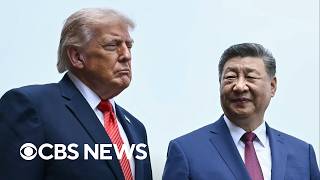
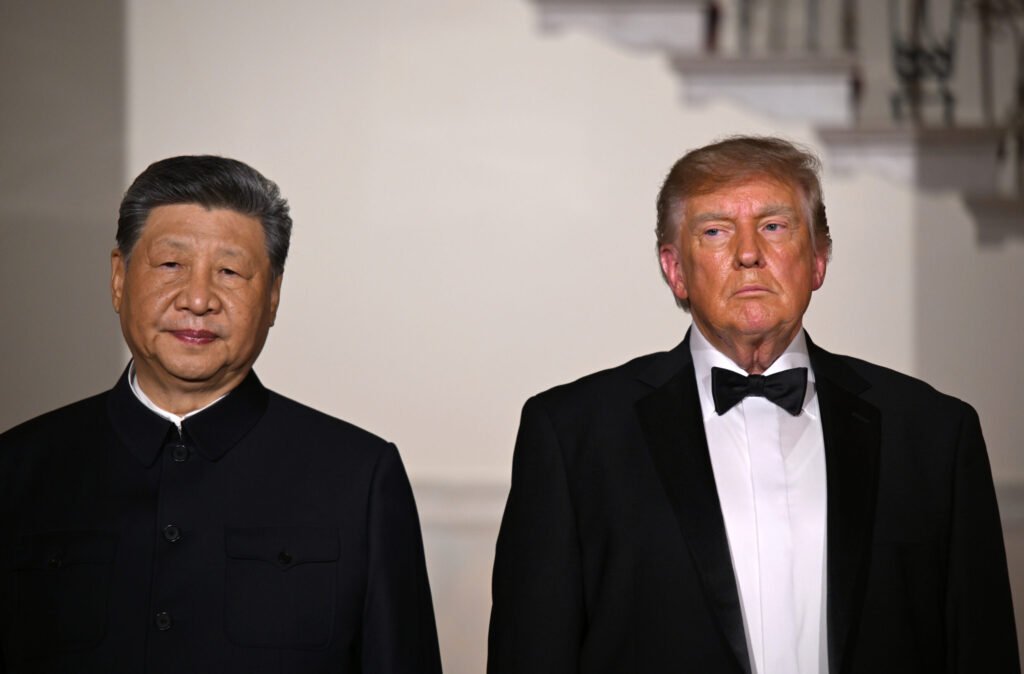
    Trump hosted Xi in Washington on September 24 for a state dinner and bilateral summit where AI governance was a central agenda item, but the meeting produced no binding AI agreement or joint statement.
  • 02.
    Days before the summit, Treasury Secretary Scott Bessent and Chinese Vice Premier He Lifeng set up a bilateral AI Dialogue meant to give both sides a channel for flagging AI incidents and reducing opacity.
  • 03.
    Xi called for AI to stay 'under human control,' while Commerce Secretary Howard Lutnick made clear semiconductor export controls remain off the table in the AI safety talks.
  • 04.
    Atlantic Council analysts concluded the summit produced no agreed safety mechanisms and left China diplomatically better positioned; Rep. Ro Khanna is separately pushing Congress toward a binding US-China AI treaty.
  • 05.
    A follow-up AI safety summit is planned for Shenzhen roughly two months out, timed to coincide with the November APEC meeting.

Deep Analysis

A Hotline, Not a Treaty

The headline result of the Trump-Xi summit was procedural, not substantive: Treasury officials floated an AI incident hotline, but the summit produced no deal, no oversight, and no joint statement, just two governments agreeing to let the race run unregulated[1]. That channel was already in motion before the two leaders sat down - Treasury Secretary Scott Bessent and Chinese Vice Premier He Lifeng stood up a bilateral AI Dialogue in New York three days earlier, explicitly framed around moving 'from opacity to more transparency between the number one and the number two AI powers in the world'[2]. Bessent was candid that the goal is narrow: agreeing on which dangers - 'uncontrollable agents,' non-state cyber or bioweapons actors - even count as AI dangers worth flagging to each other, and he acknowledged China's own incidents will likely stay hidden given 'the lack of transparency in their system'[2]. Commerce Secretary Howard Lutnick drew the clearest boundary of the whole summit: semiconductor export controls remain explicitly excluded from the AI safety conversation[3], keeping the two governments' hardest point of leverage off the table entirely.
Betting on a Hotline With a Bad Track Record

Whether the new AI Dialogue actually works in a crisis is a separate question from whether it exists, and the precedent is not encouraging. The existing US-China Defense Telephone Link already requires 48 hours' advance notice to use, which defeats the purpose of an emergency channel[3]. Actual crises have exposed the gap before: after the 1999 Belgrade embassy bombing the line sat unreachable for hours, and after the 2001 Hainan Island collision American calls went unanswered for twelve hours; the hotline was suspended outright in 2022 after then-Speaker Pelosi's Taiwan visit[3]. Carnegie Endowment's Lucy Luo argues the new channel should learn from that history by defaulting to text over live calls - it 'creates a record, removes tone as a source of misunderstanding, eliminates live translation pressure'[3]- a design fix for a problem the two governments have now had three prior chances to solve and didn't.

Diplomats' Verdict: No Mechanism, and China Wins the Framing

Atlantic Council analysts reviewing the summit converged on a harder conclusion than 'no deal yet': the talks 'produced no announced agreement on specific safety mechanisms, including incident notification or frontier-model evaluations, or constraints on advanced AI development,' according to Kenton Thibaut[4]- notable given that an incident-notification channel was precisely what Bessent and He Lifeng had just built. Melanie Hart, a former State Department advisor now at the Council, was blunter about who benefits from the ambiguity: 'the Chinese delegation is going home happy'[4]. Josh Lipsky flagged a subtler cost - the summit's optics reinforced a 'G2' framing of the US and China as AI's only two relevant powers, 'the kind of comparison China...has wanted for years,' sidelining every US ally with a stake in how AI governance gets written[4]. That vacuum is exactly what Rep. Ro Khanna is trying to fill from Congress: in a letter to Secretary of State Rubio, he argued 'our President should pursue a binding agreement with China to keep humans in control, which must be enforceable and verifiable'[5], warning that 'winning an AI war is like winning a nuclear war. It is catastrophic for civilization'[5]and singling out recursive self-improvement - 'when AI develops AI' - as 'the clearest path to humans losing control of this technology'[5]. Axios covers Khanna's proposal as an alternative playbook to the administration's approach[6].

The Gap Between the Stage and the Street

Officially, both leaders spoke in careful, cooperative language: Xi told the room the two countries 'have both the capability and responsibility to develop and manage AI for good, and ensure that the development of AI is always under human control and serves the well-being of the people'[7]. That framing landed very differently once it hit social platforms. A reporter's on-camera question to Trump about guardrails on AI went unanswered as he walked away, and the clip became the most widely shared moment to come out of the summit on X - a stark contrast with the measured language both governments put on the record. Around the dinner, Trump separately claimed - in comments that circulated mainly on social media rather than through official channels - that Xi was receptive to rebranding AI as 'Super Intelligence'; that characterization is Trump's own and was not corroborated by any statement from the Chinese side. It revived a controversy Trump had started days earlier at the UN, where he announced AI would be renamed 'Super Intelligence' in US documents - that original announcement was, by a wide margin, the single most-discussed thread of the whole social conversation touching this summit, drawing heavy mockery rather than engagement with the substance. Reddit's reaction to Xi's human-control language was similarly split - some found it more coherent than Trump's own remarks, others dismissed it as hypocritical state messaging, with one popular comment noting China has no AI regulations of its own to point to. A second thread of dinner-table color, describing Trump digressing into an unrelated ballroom renovation rather than AI policy, drew a telling response: commenters said they would rather he ramble about renovations 'than something that might actually have a serious impact on relations with China or AI policy' - a preference for distraction over engagement that says as much about public trust in the summit as anything said on stage.

Industry in the Room, and One Conspicuous Absence

The summit's AI agenda played out as much around the dinner table as in the bilateral meeting: the black-tie state dinner in the White House East Room brought together more than 130 guests, including Elon Musk, Jeff Bezos, Nvidia's Jensen Huang, Meta's Mark Zuckerberg, OpenAI's Sam Altman and Greg Brockman, Microsoft's Satya Nadella, and Google's Sundar Pichai[8]. Trump and Xi both kept their table remarks notably warm and vague - Trump saying 'we've never gotten along better,' Xi calling the two countries' goals 'ambitious and...mutually reinforcing'[9]- language that reads more like a trade-relationship toast than a safety commitment. One absence stood out against that guest list: Anthropic, the maker of Claude and one of OpenAI's largest US rivals, sent no representative to the dinner at all[8], leaving the frontier lab most associated with AI-safety advocacy outside the room where safety was nominally being discussed. The optics carried extra weight given the occasion itself - this was Xi's second formal state visit to the US and his first since 2015[10], meaning the AI industry's access to this specific stage is a once-a-decade event, not a routine one.

Historical Context

1999
During the 1999 Belgrade embassy bombing, the existing US-China hotline went unreachable for hours.
2001
After the 2001 Hainan Island collision, American calls on the hotline went unanswered for twelve hours.
2022
China suspended the military hotline after then-Speaker Pelosi's Taiwan visit, and the link still requires 48 hours' advance notice to use.
2015-09
Xi's prior formal state visit to the US, making the 2026 visit his first since 2015 and only his second ever.

Power Map

Key Players
Subject

Trump-Xi Summit AI Governance Talks

DO

Donald Trump

US President - hosted the state dinner and bilateral summit, describing the US-China relationship in warm, general terms rather than committing to specific AI safety mechanisms.

XI

Xi Jinping

President of China - called for AI to remain under human control, and described US and Chinese AI ambitions as potentially 'mutually reinforcing.'

SC

Scott Bessent

US Treasury Secretary - architect of the new US-China AI Dialogue and incident-notification channel, and the summit's most candid voice on the limits of what that channel can actually verify.

HE

He Lifeng

Chinese Vice Premier - Bessent's direct counterpart in New York in setting up the AI Dialogue and incident-notification hotline ahead of the summit.

HO

Howard Lutnick

US Commerce Secretary - drew the summit's clearest boundary by explicitly excluding semiconductor export controls from the AI safety conversation.

RO

Ro Khanna

US Representative, Ranking Member, House Select Committee on the CCP - pushed for a binding, enforceable, and verifiable US-China AI safety treaty as an alternative to the summit's looser dialogue-based approach.

TE

Tech executives (Huang, Altman, Brockman, Zuckerberg, Nadella, Pichai, Musk, Bezos)

AI and technology industry leaders - more than 130 guests attended the White House state dinner, including the heads of Nvidia, OpenAI, Meta, Microsoft, Google, Tesla/SpaceX, and Amazon; Anthropic sent no representative.

Fact Check

10 cited
  1. [1] No AI Deal From Trump and Xi's Summit - Because Neither Side Wants Rules
  2. [2] US and China Open Hotline to Rein In Runaway AI
  3. [3] US-China AI Hotline Needs Text, Tiers, Technicians as Trump-Xi Summit Opens
  4. [4] What Did - and Didn't - Happen at the Trump-Xi Summit?
  5. [5] Transcript: Ranking Member Ro Khanna's Remarks at Asia Society on US-China AI
  6. [6] Ro Khanna's Alternative US-China AI Playbook
  7. [7] Trump Greets Xi at White House for High-Stakes State Visit
  8. [8] Trump-Xi Dinner Puts AI and Tech Giants in the Spotlight: Elon Musk, Sam Altman, Jensen Huang in Attendance
  9. [9] Donald Trump, Xi Jinping Talk AI and Trade at Dinner With Sam Altman, Jensen Huang
  10. [10] 2026 state visit by Donald Trump to China

Source Articles

Top 5

THE SIGNAL.

Analysts

“"Produced no announced agreement on specific safety mechanisms, including incident notification or frontier-model evaluations, or constraints on advanced AI development" - assessed the summit's concrete AI-governance output as effectively empty despite the surrounding diplomatic language.”

Kenton Thibaut
Atlantic Council

“"The Chinese delegation is going home happy" - read the summit's ambiguity and lack of binding commitments as a net diplomatic win for Beijing.”

Melanie Hart
Atlantic Council; former US State Department advisor

“"The kind of comparison China...has wanted for years" - argued the summit's optics reinforced a 'G2' framing of the US and China as AI's only two relevant powers, sidelining allies from the governance conversation.”

Josh Lipsky
Atlantic Council

“"Text creates a record, removes tone as a source of misunderstanding, eliminates live translation pressure" - argued the new AI hotline should default to text-based communication given the failures of prior US-China crisis channels.”

Lucy Luo
Carnegie Endowment for International Peace

“"Winning an AI war is like winning a nuclear war. It is catastrophic for civilization" - called for a binding, verifiable US-China AI safety treaty and warned that recursive self-improvement - 'when AI develops AI' - is the clearest path to humans losing control of the technology.”

Ro Khanna
US House of Representatives
The Crowd

“Q: Mr President, did you call on President Xi to stop buying oil from Iran? TRUMP: ... Q: What about guardrails on AI? TRUMP: ... Q: Why are you banning media outlets? TRUMP: ... Q: Should US taxpayers pay for ads about you? TRUMP: *walks away*”

@@atrupar4077

“Very productive meeting with President Xi for both the U.S.A. and China. Tremendous things will be happening. Like almost everyone else, he seemed to like calling the poorly and inaccurately named Artificial Intelligence to a far more accurate and important name, SUPER [INTELLIGENCE]”

@@TrumpTruthOnX659

“As the top Democrat on the China Committee, I'm convening an unprecedented hearing today on what it will take to reach an international AI safety agreement with China. Trump and Xi Jinping must reach an agreement on AI safety standards at their meeting tomorrow.”

@@RepRoKhanna211

“Xi says China, US have ‘responsibility’ to keep AI under human control”

@u/unconventionalbook686
Broadcast
Trump-Xi summit: Face-off over Iran and Taiwan? | DW News

Trump-Xi summit: Face-off over Iran and Taiwan? | DW News

Trump-Xi summit live: Trade, AI, Iran and Taiwan top US-China talks

Trump-Xi summit live: Trade, AI, Iran and Taiwan top US-China talks

What to expect from upcoming Trump-Xi summit amid AI safety concerns

What to expect from upcoming Trump-Xi summit amid AI safety concerns

Trump-Xi Summit AI Governance Talks — AI News | Agentic Brew