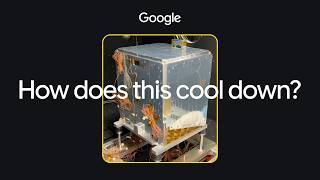
Cooling, Not Radiation, Is the Real Bottleneck
Google spent years worrying about radiation - and for good reason, since the TPUs flying on this mission are standard commercial Trillium (TPU v6e) chips, not radiation-hardened silicon. But once the prototype reached orbit, the harder problem turned out to be heat. There is no air or water in space to carry waste heat away from a chip, so the satellite's only cooling option is thermal radiation into the vacuum. That physical limit forces the TPUs to run AI inference on Gemini and Gemma models in bursts of roughly 15 minutes before shutting down so the satellite's radiators can shed the heat that built up [1]. It is a workable workaround for a four-chip prototype, but the same 15-minute duty cycle becomes the defining engineering question the moment Google scales toward the dozens-of-chips-per-satellite designs it envisions for the future [2].