The Legal Gray Zone: Why 'Distillation' Isn't the Same as 'Theft'
Treasury Secretary Scott Bessent's own language reveals the fault line at the center of this dispute: the U.S. will investigate 'if' theft can be established, and only then would sanctions follow [1]. That conditional framing matters because Bessent has also said officials are finding 'watermarks of our U.S. large language models' embedded in Chinese models [2]- a claim that, according to technical observers debating the issue online, conflates two very different things: pure logit-level distillation, which would require access to a teacher model's raw output probabilities that a closed commercial API doesn't expose, versus fine-tuning on synthetic data harvested from ordinary API completions, a technique critics argue sits in much murkier legal territory. That distinction remains contested rather than officially settled, but it highlights how imprecise the government's own language has been so far. President Trump's own comments have done little to sharpen it - asked directly whether China is stealing American AI IP, he deflected rather than confirming or denying the theft claim, saying only 'we're leading China substantially,' a hedge that echoes Bessent's conditional framing rather than resolving it.
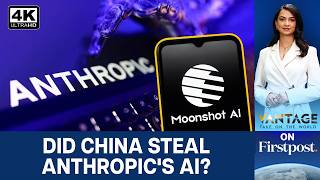
That distinction is exactly why AI researchers pushed back hard on the highest-profile individual case, Moonshot AI's Kimi K3. Braden Hancock of the Laude Institute argued the model's capability jump doesn't square with 'strictly distillation' given how little time elapsed, and Nathan Lambert of the Allen Institute for AI went further, arguing distillation's marginal value keeps shrinking as Chinese models close in on the frontier [4]. Beijing's Ministry of Commerce, for its part, has simply asserted the accusations have 'no legal basis' without engaging the technical distinction at all [3].