The CUDA Playbook, One Layer Up
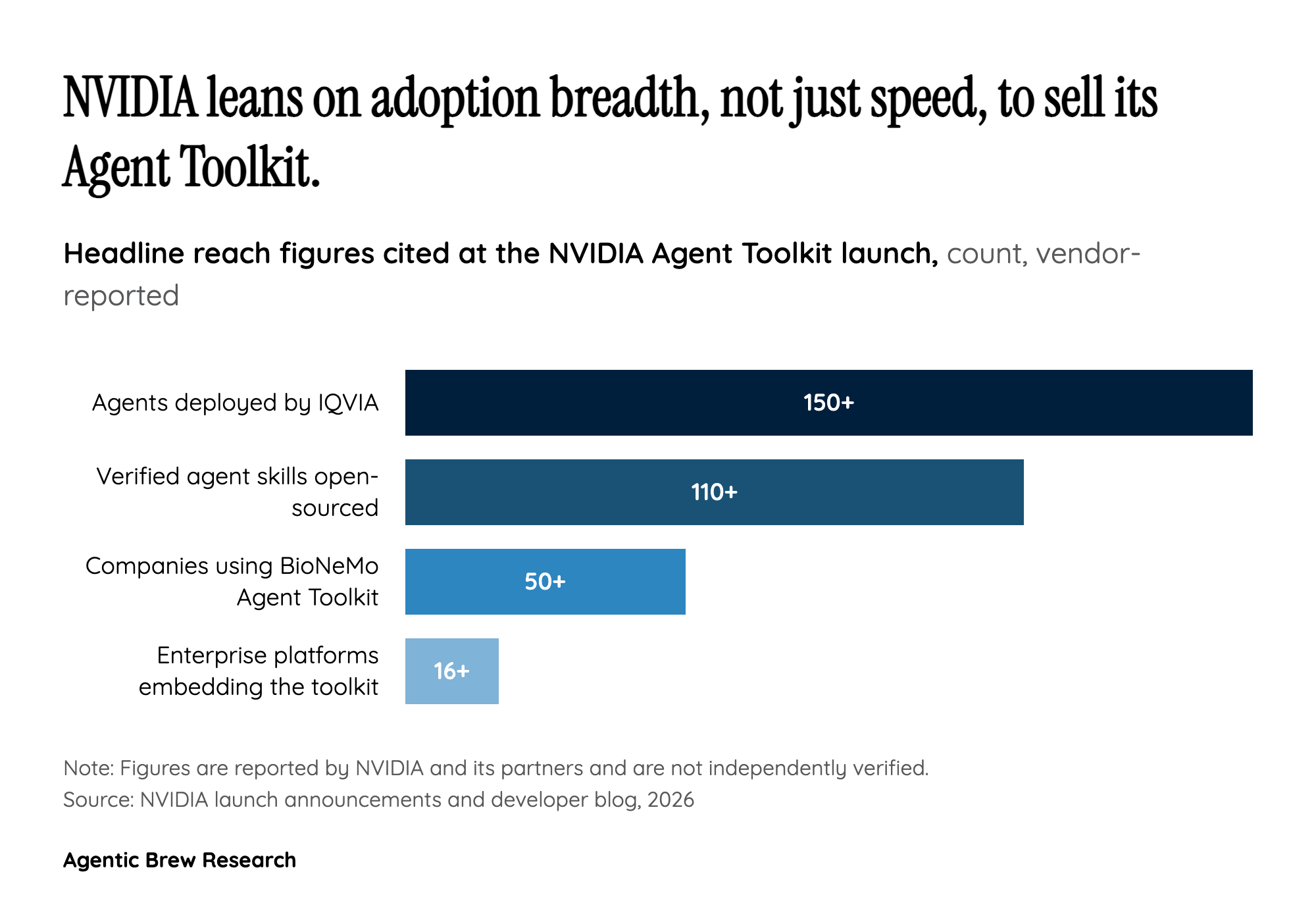
Strip away the model names and the strategy looks familiar. For two decades NVIDIA gave away CUDA — the software that lets developers program its GPUs — and the free framework quietly made the hardware indispensable. The Agent Toolkit runs the same move one abstraction layer higher. NVIDIA open-sources the orchestration framework, the Nemotron models, and the OpenShell runtime, then ensures the whole stack runs fastest and cheapest on NVIDIA silicon. The company's own figures put Nemotron 3 Ultra at roughly 5x faster inference and up to 30% lower cost on agentic tasks [2], and AI-Q's hybrid architecture at more than 50% cheaper queries [1]. Those gains are the lock-in: enterprises adopt an open, chip-agnostic framework, but the economics only fully pay off on NVIDIA GPUs.
This is exactly the read circulating among skeptical developers. The cynical-but-coherent framing is that NVIDIA will embrace whatever software sells more hardware, and that NemoClaw and Nemotron are a moat play dressed as generosity — open the framework, keep the performance edge, and let enterprises standardize themselves into dependence. It is open in the way that matters for adoption (you can run it anywhere) and closed in the way that matters for margins (you won't want to).