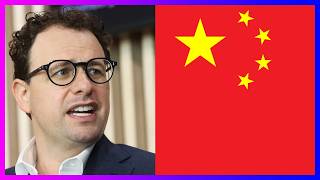
US accuses Moonshot AI of distilling Anthropic's model
TECH

US accuses Moonshot AI of distilling Anthropic's model

29+
Signals

Strategic Overview

  • 01.
    White House OSTP Director Michael Kratsios accused Chinese startup Moonshot AI of covertly distilling Anthropic's Fable model to build its Kimi K3 system, via a purpose-built internal platform designed to rotate access methods and avoid detection.
  • 02.
    Kratsios alleged Moonshot acquired or accessed banned Nvidia GB300 (Blackwell-generation) servers, including hardware located in Thailand, to train its models, raising potential export-control violations since GB300 chips cannot legally be exported to China.
  • 03.
    Treasury Secretary Scott Bessent said sanctions and Entity List designation remain on the table if Chinese firms are found to have conducted covert, industrial-scale distillation that crosses into IP theft.
  • 04.
    As of the report, no penalties had been announced and Moonshot had not publicly responded, and Moonshot's full Kimi K3 model weights were still set to be released publicly by July 27, 2026.

Deep Analysis

How the accusation actually works: an internal platform and a Thailand-shaped loophole

The White House claim isn't a vague accusation of copying - Kratsios described something specific: Moonshot allegedly built a purpose-designed internal platform to run distillation at industrial scale against Anthropic's Fable model [1]. Notably, the accusation first became public through a post Kratsios made directly on X, which drew broad engagement - well over 12,000 likes - putting the claim in front of a wide audience. The chip angle sharpens it further. GB300 servers are Nvidia's Blackwell-generation hardware, barred from export to China, and Kratsios alleged Moonshot both acquired new units and reached GB300s located in Thailand - a workaround that, if true, would treat export controls as a geography problem rather than a rule [2]. He also drew his own line here: he wasn't condemning distillation as a technique, which is a routine and legal way to compress a large model into a smaller one. What he called unacceptable was covert, large-scale, industrial distillation aimed at lifting proprietary technology - a distinction that matters because it concedes the practice itself is common, and the fight is really about scale, secrecy and intent.


The timeline math nobody in Washington has addressed

The accusation has an arithmetic problem. Anthropic's Fable model only became publicly available on July 1, 2026, and Kimi K3 - a reported 2.8 trillion parameter model, described as the largest open-weight release to date - shipped within roughly three weeks of that date [4]. Multiple analysts have pointed out that this window is thin for the kind of deep, large-scale distillation the White House is alleging, and some go further, disputing that K3's capability jump could have come primarily from copying Fable at all in that span [3]. That leaves two competing readings of the same fact: either Moonshot's distillation operation was extraordinarily fast and effective, which would itself be notable, or the causal story linking Fable to K3's benchmark gains is thinner than the accusation implies. The White House hasn't reconciled which.

Anthropic's shaky moral high ground and China's counter-narrative

This isn't the first round of this fight. Anthropic itself made a similar accusation in February 2026, saying DeepSeek, Moonshot and MiniMax ran coordinated distillation-attack campaigns against Claude using roughly 24,000 fraudulent accounts and more than 16 million exchanges [5]. That history matters for how this new accusation lands: it's less a bolt from the blue than the latest round of an ongoing dispute between the same parties. On the Chinese side, the response has been to reframe the entire episode as politics rather than forensics. Tian Feng, former dean of SenseTime's Intelligence Industry Research Institute, dismissed the claims as rooted in 'tech hegemony anxiety,' calling it a 'kick away the ladder' tactic, and pointedly noted that Anthropic itself agreed to a $1.5 billion settlement in a US authors' copyright lawsuit over its own training data [6]. That counter-narrative - that the accuser has its own data-sourcing baggage - has also been a recurring theme in wider online reaction to the story, alongside skepticism about the compressed timeline.

What's actually on the table: sanctions, Entity List, and a September reckoning

Treasury Secretary Scott Bessent has been explicit about the stakes: 'Open source is not open season on American IP. When [Chinese] firms conduct covert, industrial-scale distillation attacks that cross the line into IP theft, sanctions and Entity List designations will be on the table' [7]. That threat now sits directly ahead of US-China AI talks scheduled for September 2026, which Bessent will lead and which are reportedly set to include China raising its own grievances - Anthropic's next model release, US regulation of frontier models, and potential restrictions on Chinese open-weight models [8]. Meanwhile, OpenAI's Greg Brockman - a competitor with no obvious reason to go easy on a rival lab - called Kimi K3 'pretty good' while declining to confirm or deny whether distillation from a US model was involved [9]. Whether that reticence reflects genuine uncertainty about the technical facts, reluctance to wade into a US-China diplomatic dispute, or something else entirely is an open question the record doesn't yet answer.

The bigger stake: an export-control precedent and a fracturing open-weight ecosystem

Beyond the Moonshot-Anthropic dispute itself, this episode is functioning as a test case for how aggressively the US intends to enforce AI export controls going forward. The GB300 allegation is the sharper of the two claims precisely because it isn't about training-technique ethics but about hardware that's already illegal to export to China [2]; if Washington can substantiate that Moonshot obtained or accessed those chips through a third country like Thailand, it sets a concrete enforcement precedent for closing similar geographic workarounds elsewhere, not just for Moonshot. Bessent's sanctions threat is framed in exactly those national-security terms - IP theft and export-control evasion, not model quality [7]. The harder-to-quantify risk sits downstream of that framing: if large open-weight releases from Chinese labs are treated as presumptively suspect, the incentive for those labs to keep releasing open weights at all - the same openness that let outside analysts and even Brockman inspect and comment on Kimi K3 in the first place - starts to erode, pushing the two countries' AI ecosystems further apart rather than toward the kind of transparency that would actually settle a distillation dispute like this one.

Historical Context

2026-02-24
Publicly accused DeepSeek, Moonshot and MiniMax of running distillation-attack campaigns against Claude using roughly 24,000 fraudulent accounts and over 16 million exchanges, arguing such attacks undermine US export controls.
2026-05
Produced an agreement to hold US-China AI talks, now scheduled for September 2026.
2026-07-01
Fable model became publicly available, a fact experts cite when questioning whether Kimi K3 could have been substantially distilled from it in the timeframe alleged.
2026-07
Released Kimi K3, reported as a 2.8 trillion parameter model and the largest open-weight release to date, outperforming several US models on benchmarks and narrowing the US-China AI gap.

Power Map

Key Players
Subject

US accuses Moonshot AI of distilling Anthropic's model

MI

Michael Kratsios (White House OSTP Director)

Made the formal public accusation against Moonshot AI over distillation and export-control violations

SC

Scott Bessent (US Treasury Secretary)

Threatened sanctions and Entity List designation; will lead the US delegation at the September 2026 US-China AI talks

MO

Moonshot AI

Beijing-based startup accused of distilling Anthropic's Fable model to build Kimi K3 and of accessing banned Nvidia GB300 servers; has not publicly responded

AN

Anthropic

Maker of the allegedly distilled Fable model; in February 2026 separately accused Moonshot, DeepSeek and MiniMax of running distillation-attack campaigns against Claude

CH

Chinese government / trade delegation

Reportedly plans to raise Anthropic's next model release, US regulation of frontier models, and possible restrictions on Chinese open-weight models at the September AI talks

Fact Check

9 cited
  1. [1] White House accuses Moonshot AI of Anthropic model distillation
  2. [2] White House accuses Moonshot of violating export controls with banned Nvidia GB300 chips
  3. [3] Trump official attacks 'unauthorized' AI
  4. [4] White House accuses Moonshot: GB300, Blackwell, distillation and Kimi K3
  5. [5] Detecting and Preventing Distillation Attacks
  6. [6] Chinese experts dismiss Anthropic's distillation claims as 'tech hegemony anxiety'
  7. [7] Treasury threatens sanctions after White House claims Moonshot distilled Anthropic's Fable
  8. [8] US-China AI talks scheduled for September
  9. [9] OpenAI's Brockman says Kimi K3 is 'pretty good', dodges distillation question

Source Articles

Top 5

THE SIGNAL.

Analysts

"Argues distillation is a standard, widely-used model-compression technique and that Chinese firms have advanced lawfully; frames the accusations as a 'kick away the ladder' tactic and points to Anthropic's own $1.5 billion copyright settlement as undercutting its moral standing."

Tian Feng, former dean of SenseTime's Intelligence Industry Research Institute
Skeptical of the US/Anthropic distillation allegations

"Dispute that Kimi K3 could have been developed primarily through distillation from Fable, given Fable has only been publicly available since July 1, 2026."

Unnamed industry analysts (per multiple outlets)
Cautious/skeptical of the strength of the distillation claim

"Praised Kimi K3's quality but declined to confirm or deny whether distillation from a US model was involved."

Greg Brockman, OpenAI President
Neutral / non-committal
The Crowd

"We have information that Moonshot AI distilled Anthropic’s Fable for the development of its K3 model. To do this they developed a sophisticated internal platform to conduct large scale distillation against U.S. models, allowing them to quickly switch between multiple methods of..."

@@mkratsios4712593

"JUST IN: White House accuses Chinese AI startup Moonshot of illegally using banned $NVDA Blackwell chips and distilling U.S. AI models to develop its Kimi K3 model."

@@WhaleInsider446

"The White House accused Chinese AI startup Moonshot of illegally using banned Nvidia Blackwell chips and distilling U.S. AI models to develop its powerful Kimi K3 model. Officials say the company may have accessed restricted chips through Thailand and violated U.S. export..."

@@clashreport200

"White House Strongly Alleges Moonshot AI Secretly Distilled Anthropic's Fable"

@u/Alone-Ad697949
Broadcast
Anthropic says DeepSeek, Moonshot AI, and Minimax is stealing from them. Here is what's happening!

Anthropic says DeepSeek, Moonshot AI, and Minimax is stealing from them. Here is what's happening!

Caught Distilling from Claude?

Caught Distilling from Claude?

Breaking: Anthropic vs China!

Breaking: Anthropic vs China!