TikTok AI Likeness Detection Tool
TECH

TikTok AI Likeness Detection Tool

24+
Signals

Strategic Overview

  • 01.
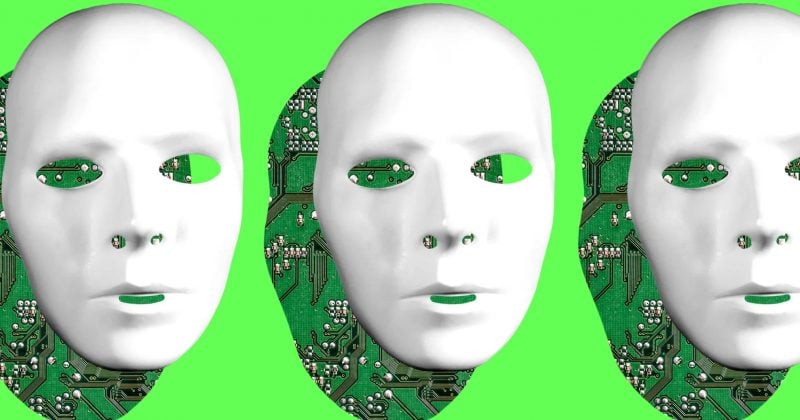
    TikTok is testing an opt-in AI likeness detection tool that lets a small group of US creators identify AI-generated content using their face.
  • 02.
    To enroll, creators must verify their identity through Jumio via a real-time selfie and a government ID check before TikTok's system scans for AI content that may use their likeness.
  • 03.
    TikTok says it does not retain ID documents, and that facial data is used solely to match a creator's likeness against suspected AI-generated impersonations.
  • 04.
    The pilot follows YouTube's already-expanded likeness detection tool and contrasts with Meta's Muse Image feature, which was pulled from Instagram after backlash over its default opt-in design.

Deep Analysis

Consent as the Dividing Line: TikTok's Answer to Meta's Backlash

TikTok's decision to make its AI likeness detection tool strictly opt-in follows on the heels of a very public rival misstep. TikTok is testing an opt-in tool that lets a small group of US creators identify AI-generated content using their face [2]. Creators who want in must first verify their identity through Jumio, submitting a real-time selfie and a government ID before the system starts scanning [1]. That opt-in-only design stands in sharp contrast to Meta's Muse Image feature, which launched with automatic opt-in for all public Instagram accounts and was pulled just days later after backlash over consent [4]. SAG-AFTRA called Meta's default opt-in design an "utter miscalculation of public sentiment," while CAA praised Meta's reversal for putting "individual rights and consent at the forefront" [4]. TikTok's choice to require explicit consent before any scanning happens appears designed to sidestep that exact controversy before it starts.
What Verification Actually Costs Users: Lessons from YouTube's More Mature Rollout

TikTok's tool is new, but YouTube has already run a similar system long enough to expose its friction points. YouTube's version, now expanded to all users over 18, works through a one-time facial scan submitted much like a selfie, after which the platform's systems continuously check new uploads for matches and flag them for the user to review [3]. Hands-on testing of YouTube's tool found the verification process isn't frictionless: it pairs an ID check with a video-selfie capture handed off to a mobile device via a QR code, and confirmation can take days and sometimes has to be retried after a failed attempt. YouTube's own privacy language discloses that it retains face data for up to three years, and the company had to walk back suggestions that this data could be used to train AI models. The tool also only tracks visual likeness, not voice - voice-based impersonation falls outside its scope. TikTok has so far said only that it does not keep ID documents and uses facial data solely for likeness matching, without detailing a retention window [1]. If the pattern holds, creators signing up for TikTok's pilot should expect a similarly multi-step, occasionally frustrating verification process to the one YouTube users have already encountered.

Detection Tech Still Lags the Threat

Even a well-built likeness-detection system faces a technology gap that identity verification alone can't close. In the Deepfake Detection Challenge, the winning model was only 65% accurate on a 4,000-video holdout set, while an MIT study found humans caught deepfakes at just 69-72% accuracy on a much smaller sample [6]. Other estimates put general detector accuracy lower still, missing 55-65% of unlabeled deepfakes, with average human detection accuracy around 55.54% [7]. Deepfake scams are already estimated to cause roughly $12 billion in fraud losses globally [6]. Even a well-designed reporting flow like TikTok's opt-in tool ultimately depends on platform moderators reviewing and acting on flagged content fast enough to matter, and that response speed - not the detection algorithm alone - is often where these systems break down [6].

TikTok's Likeness Tool Is Part of a Bigger Labeling Push

The likeness-detection pilot doesn't exist in isolation - it's TikTok's latest addition to a much larger effort to label AI-generated content on the platform. TikTok reported having automatically labeled more than 3 billion AI-generated videos as of July 10, 2026 [5]. Against that backdrop, the new likeness tool targets a narrower and more personal harm: not just flagging that content is AI-generated, but letting individual creators check whether their own face has been used without permission. It follows the same trajectory as YouTube, whose likeness-detection tool started as a limited test for creators and public figures before expanding to all adult users, with removal requests in earlier testing phases staying "very small" in number [3]. TikTok's rollout, for now, remains confined to a small group of US creators, with a TikTok spokesperson confirming to The Verge that the test is currently limited in scope [1]. Whether it follows YouTube's path toward a broader rollout will depend on how the pilot performs.

Early Reception: Informational, Not Yet Controversial

So far the story has moved through tech and social channels as straightforward reporting rather than controversy. The lone social post spotted so far describing TikTok's opt-in likeness detection tool has stuck to the facts - what it does and who can access it - without the kind of visible backlash that met Meta's opt-out approach to Muse Image [4]. Coverage tracking the story has followed the same pattern, treating the TikTok test as one line item within the broader AI news cycle rather than a story in its own right. That muted reception may simply reflect timing, since this is breaking news, but it also suggests that leading with consent, rather than retrofitting it after backlash, is proving to be the less controversial path so far.

Historical Context

2026-07
Expanded its AI deepfake detection tool - originally tested only with creators and public figures - to all adult users, using a one-time facial scan that continuously checks new uploads for matches.
2026-07
Said removal requests during earlier testing phases of its likeness-detection tool had been "very small" in number.
2026-07
Launched Muse Image, its first image model from Meta Superintelligence Labs, with automatic opt-in for all public Instagram accounts, then pulled it days later after backlash over consent.
2026-07-10
Reported having automatically labeled over 3 billion AI-generated videos, as part of its broader AI-content disclosure efforts.

Power Map

Key Players
Subject

TikTok AI Likeness Detection Tool

TI

TikTok

Product/policy owner of the likeness detection pilot.

JU

Jumio

Third-party identity verification vendor handling selfie and ID checks for creator enrollment.

US

US TikTok creators

A small group currently eligible for the opt-in pilot.

YO

YouTube/Google

Runs a comparable likeness-detection program already expanded to all adult users.

ME

Meta

Whose Muse Image feature launched with default opt-in and was pulled from Instagram after backlash - cited as a contrasting approach.

SA

SAG-AFTRA and CAA

Industry and talent groups that publicly criticized Meta's default opt-in approach and praised its reversal.

Fact Check

7 cited
  1. [1] After YouTube, TikTok Is Testing Its Own AI Likeness Detection Tool
  2. [2] TikTok Tests an Opt-In Tool That Scans for AI Deepfakes of Creators' Likenesses and Lets Them Report Unauthorized Uses
  3. [3] YouTube Is Expanding Its AI Deepfake Detection Tool to All Adult Users
  4. [4] Meta Pulls Opt-Out AI Tool After Hollywood Outrage
  5. [5] TikTok AI Likeness Detection and Digital Identity
  6. [6] Deepfakes Are Taking Over TikTok - Here's How to Spot Them
  7. [7] TikTok Tests AI Likeness Detection Tool to Strengthen Creator Protection Against AI-Generated Content

Source Articles

Top 3

THE SIGNAL.

Analysts

""Anything other than a clear and conspicuous OPT-IN for these types of uses of Instagram users' images is unacceptable, and an utter miscalculation of public sentiment regarding the obvious dangers and harms inherent in such use.""

SAG-AFTRA
Labor union representing performers

""We commend Meta for its swift decision to remove the Muse Image feature. Putting individual rights and consent at the forefront is essential to building responsible technology.""

CAA
Talent agency
The Crowd

"TikTok is testing AI likeness detection for creators @tiktok_us is testing an opt-in Likeness Detection tool with some US creators. It surfaces AI-generated content that may use a creator's face without consent."

@@MattNavarra8
Broadcast
AI News today - July 18th - TikTok is testing an AI likeness detection tool...

AI News today - July 18th - TikTok is testing an AI likeness detection tool...

GPT-5.6 Deleted User Files. Netflix Doubles Speed Halves Cost. Patreon Blocks AI Scrapers. TikTok Tests Likeness Detector.

GPT-5.6 Deleted User Files. Netflix Doubles Speed Halves Cost. Patreon Blocks AI Scrapers. TikTok Tests Likeness Detector.

I Tested YouTube's New AI Likeness Detection—Here's What Happened

I Tested YouTube's New AI Likeness Detection—Here's What Happened