Meta launches Muse Code AI coding agent
TECH

Meta launches Muse Code AI coding agent

42+
Signals

Strategic Overview

  • 01.
    Meta launched Muse Code, a terminal-based AI coding agent, in public beta for macOS and Linux on August 5, 2026, alongside its new Muse Spark 1.2 model.
  • 02.
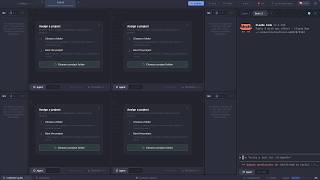
    Muse Code launches parallel sub-agents in isolated worktrees for large projects, protecting the user's working copy from being touched directly.
  • 03.
    Muse Code maintains a local, append-only event log recording every model call, tool run, approval, and edit, making the runtime replay-exact and restart-safe after crashes.
  • 04.
    Muse Code ships with three bundled default skills: /plan (creates an approval-gated plan), /grill (stress-tests the plan), and /goal (drives the task to completion).
  • 05.
    Muse Spark 1.2 is a coding-focused update to Muse Spark 1.1 that was co-trained with the Muse Code harness using rejection-sampled trajectories and self-improvement loops, and carries a roughly 1-million-token (1,048,576) context window.
  • 06.
    Muse Code is installed via a single terminal command.
  • 07.
    In Meta's kernel-optimization case study, Muse Spark 1.2 ran over 1,000 tool calls across up to 24 hours to iteratively optimize GPU kernels on NVIDIA Hopper hardware.

Pricing Undercuts the Incumbents, But So Does the Score

Meta positions Muse Code's cost as its headline differentiator rather than its benchmark performance. Standard usage is billed at $1.25 per million input tokens and $4.25 per million output tokens, but developers who opt in to sharing usage data to help improve the model qualify for a 'contributor tier' priced at just $0.10 per million input tokens and $0.20 per million output tokens [1]- more than 10 times cheaper than the standard rate, and far below rivals such as Anthropic's Sonnet 5 at $3/$15 per million tokens [2]. That price gap matters because Muse Spark 1.2 does not lead on published coding benchmarks: it scores 82.9% on Terminal-Bench 2.1 versus Claude Opus 5's 86.7%, and 59.3% on DeepSWE 1.1 versus Opus 5's 65.0% [3]. On Meta's own internal coding benchmark, Muse Spark 1.2 posts 70.6%, ahead of GPT-5.6 Terra's 65.4% and Gemini 3.6 Flash's 63.9%, but still behind Claude Opus 5's 79.4% [3]. Chief AI officer Alexandr Wang has leaned into that framing directly, telling reporters, "We think that for a lot of workflows and a lot of use cases, this can be an incredibly good option, especially from a cost perspective." [4]rather than claiming outright superiority.

Inside the Architecture: Worktrees, Event Logs, and Skills

Muse Code's technical design centers on isolating risk. For large projects, it launches parallel sub-agents inside isolated worktrees rather than editing the user's working copy directly. As Mark Zuckerberg put it, "Your working copy is never touched. In testing we had it build six features for a game simultaneously with no collisions." [4]The agent also keeps a local, append-only event log recording every model call, tool run, approval, and edit [5], which Meta says makes the runtime replay-exact and lets it resume cleanly after a crash. On top of that runtime sit three bundled default skills: /plan, which turns a task into an approval-gated plan; /grill, which stress-tests that plan until it holds up; and /goal, which drives the task to completion [5]. In Meta's own kernel-optimization case study, Muse Spark 1.2 ran more than 1,000 tool calls over up to 24 hours to iteratively optimize GPU kernels on NVIDIA Hopper hardware [6], an example Meta uses to show the harness can sustain long, autonomous sessions. Coverage comparing Muse Code directly to Claude Code has also flagged two limits Meta has been upfront about: the harness itself is not open-sourced, by Zuckerberg's own statement, and Muse Code currently lacks a built-in voice mode that Claude Code already offers - trade-offs set against its dramatically lower price.

The Data Trade-off and a Trust Gap

The contributor-tier discount is not free: qualifying for it means opting in to sharing usage data so Meta can improve the model, though Meta has said it offers a no-data-retention option for companies wary of exposing proprietary codebases [7]. That trade-off, paired with the benchmark gap versus Claude Opus 5, has shaped how outside commentary frames the launch. BeInCrypto's analysis argued the product's real edge is architectural rather than pure capability: "Meta has built a solid second-best coder and priced it like a budget option." [3]Community reaction on Reddit and X has been more split than that assessment. In Reddit discussion, some commenters cited Meta's history of benchmark-gaming criticism around Llama 4 as a reason to discount the published scores, while others in the same threads debated whether real-world token efficiency matches the numbers Meta published - a point raised in community discussion, not an established finding. A single skeptical post on X dismissed the launch as marketing that would struggle on legacy codebases, though that post drew minimal engagement and does not represent a broader practitioner consensus. Other commenters pushed back on the data-sharing objection itself, noting that most paid coding-agent APIs already claim not to train on customer data by default, which they argued makes the 'don't give Meta your data' objection somewhat inconsistent.

A Second Act for Meta's AI Strategy

Muse Code caps roughly fourteen months of rebuilding at Meta's AI division. In June 2025, Meta invested roughly $14 billion in Scale AI and brought its CEO, Alexandr Wang, in-house to lead a new unit, Meta Superintelligence Labs, amid an industry-wide race for AI talent [8]. Meta debuted the original Muse Spark model in April 2026 as a ground-up replacement for the Llama line [9], then released Muse Spark 1.1 in July 2026 as its first real entry into the crowded AI coding contest [10]. Muse Code and its co-trained Muse Spark 1.2 model, launched August 5, 2026, mark Meta's first dedicated coding agent and its most direct challenge yet to Anthropic's Claude Code and OpenAI's Codex [5][8].

Historical Context

2025-06
Meta invested roughly $14 billion in Scale AI and brought Alexandr Wang in-house to lead a rebuilt AI unit (Meta Superintelligence Labs) amid a costly AI talent war.
2026-04-08
Meta debuted the original Muse Spark model, its first proprietary model family from Meta Superintelligence Labs, replacing Llama as the flagship model line.
2026-07-09
Meta released Muse Spark 1.1, a multimodal reasoning model with gains in tool use, computer use, and coding, marking its first entry into the crowded AI coding battle.
2026-08-05
Meta launched Muse Code in public beta together with Muse Spark 1.2, its first dedicated coding agent, directly challenging Anthropic's Claude Code and OpenAI's Codex.

Power Map

Key Players
Subject

Meta launches Muse Code AI coding agent

ME

Meta / Meta Superintelligence Labs (MSL)

Developer and publisher of Muse Code and Muse Spark 1.2; positions the low-cost agent as its entry into the competitive AI coding market against incumbents.

AL

Alexandr Wang

Meta's chief AI officer, leads Meta Superintelligence Labs and oversaw Muse Code's development; publicly frames cost as the product's core differentiator versus Anthropic and OpenAI.

MA

Mark Zuckerberg

Meta CEO; announced the Muse Code launch publicly and described its parallel sub-agent testing results.

AN

Anthropic (Claude Code / Claude Opus 5)

Incumbent competitor whose Claude Code currently leads Muse Code on published benchmarks: Terminal-Bench 2.1 (86.7% vs 82.9%), DeepSWE 1.1 (65.0% vs 59.3%), and Meta's internal coding benchmark (79.4% vs 70.6%).

OP

OpenAI (Codex / GPT-5.6 Terra)

Incumbent competitor; Muse Spark 1.2 outperforms GPT-5.6 Terra 70.6% to 65.4% on Meta's internal benchmark, but trails GPT-5.6 Terra 59.3% to 64.8% on DeepSWE 1.1.

Fact Check

10 cited
  1. [1] Meta Ships Muse Code Coding Agent With Co-Trained Muse Spark 1.2 Model
  2. [2] Meta introduces Muse Code, its take on a coding agent
  3. [3] Zuckerberg's Muse Code vs Anthropic benchmarks
  4. [4] Meta launches Muse Code, an AI agent for large code bases
  5. [5] Introducing Muse Code and Muse Spark 1.2
  6. [6] Meta AI Releases Muse Code (Beta): A Terminal Coding Agent Powered by the New Muse Spark 1.2 Model
  7. [7] Meta Muse Code: AI Vibe Coding Agent
  8. [8] Meta debuts Muse Code to take on Anthropic and OpenAI
  9. [9] Meta debuts the Muse Spark model in a ground-up overhaul of its AI
  10. [10] Meta enters the crowded AI coding battle with Muse Spark 1.1

Source Articles

Top 5

THE SIGNAL.

Analysts

Frames Muse Code's contributor-tier pricing as the key selling point for cost-sensitive developer workflows, telling reporters it can be a strong option especially from a cost perspective.

Alexandr Wang
Chief AI Officer, Meta (leads Meta Superintelligence Labs)

Highlighted the parallel sub-agent/worktree isolation design as preventing collisions during multi-feature builds.

Mark Zuckerberg
CEO, Meta

Argues Muse Code's real edge is architectural (crash-safe runtime, sub-agent isolation) rather than raw benchmark performance, since it trails Claude Opus 5 across major coding benchmarks.

BeInCrypto analysis
Industry commentary (BeInCrypto)
The Crowd

Releasing Muse Code in beta today. It's a terminal coding agent that takes on complete software engineering tasks across large repos: planning changes, writing code, validating the results. Powered by Muse Spark 1.2, a coding-focused model update.

@@finkd9904

Meta just launched its own AI coding agent. > powered by Muse Spark 1.2 > runs directly in your terminal > launches parallel AI sub-agents for bigger tasks > background agents build context throughout your session > can work for 24+ hours on a single task. It made 1,000+

@@fanofaliens5

Meta launches Muse Code claiming it handles complex tasks in large code bases. Hot take from someone shipping real production AI daily: it's marketing vapor. These agents die screaming on legacy code & actual constraints. We've seen this movie. Your 500k LOC repo isn't impress...

@@Ghostaisystems1

Meta releases Muse Code in beta

@u/troll_khan150
Broadcast
Facebook Just Launched... Claude Code?!

Facebook Just Launched... Claude Code?!

Muse Code with Muse Spark 1.2: Fan-Out Coding Agent with Vision

Muse Code with Muse Spark 1.2: Fan-Out Coding Agent with Vision

Vibe Coding with Muse Code (Meta)

Vibe Coding with Muse Code (Meta)