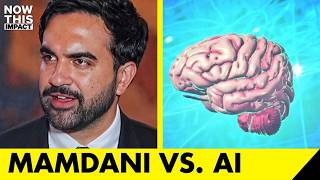
NYC bans generative AI in elementary and middle schools
TECH

NYC bans generative AI in elementary and middle schools

22+
Signals

Strategic Overview

  • 01.
    NYC's one-year moratorium on student-facing generative AI covers pre-K through 8th grade, effective with the September 10 start of the 2026-27 school year, and is described as the most expansive such prohibition in the country.
  • 02.
    The restrictions reach roughly 600,000 students, about two-thirds of the city's public school enrollment, making it the largest such ban by any U.S. school district.
  • 03.
    Companion chatbots are barred at every grade level, including high school, and generative-AI functions on 38 ed-tech products used across NYC classrooms will be disabled districtwide.
  • 04.
    The policy pairs the AI ban with new screen-time rules: no personal devices in class for pre-K through 2nd grade, a 30-minute daily cap for grades 3-5, and up to 45 minutes for middle schoolers.
  • 05.
    High schools keep a narrow lane for AI: twice-yearly critical-thinking modules plus pilots capped at about 50,000 students across five vetted programs, while exceptions remain for assistive technology, English-language learners, and teacher lesson planning.

Deep Analysis

What Gets Switched Off, and What Doesn't

The ban is narrower and more surgical than the headline suggests. Districtwide, 38 ed-tech products will have their generative-AI functions disabled[3], while five programs - Quill, Edia, Brisk Teaching, Playlab, and Intel AI-Ready Schools - remain approved for capped high-school pilots reaching roughly 50,000 students, about 5 percent of enrollment.[1]Companion chatbots are prohibited outright at every grade level, including high school, a stricter line than the pre-K-8 cutoff applied to general generative-AI tools.[3]The policy takes effect with the September 10 start of the 2026-27 school year.[2]Carve-outs remain for assistive technology used by students with disabilities, support for multilingual and English-language learners, computer-based reading and math assessments, and for teachers themselves, who can still use generative AI for lesson planning and administrative work as long as the tools meet public-school safety standards.[4]That last exception is easy to miss in the "AI ban" framing: adults in the building keep access that students lose.
The Equity Counter-Narrative

The strongest pushback isn't about whether AI belongs in classrooms - it's about who gets left out if it doesn't. Jean-Claude Brizard, CEO of Digital Promise, warned that children of middle- and upper-income parents will get AI exposure and literacy regardless of what schools do, while lower-income students who depend on school access will simply fall behind without a sensible in-school approach.[5]That argument cuts against the ban's protective framing: instead of shielding kids equally, a blanket prohibition may just shift where AI fluency gets learned - onto family resources rather than public education. It's a genuine tension the policy doesn't resolve, and one the city's own review process will have to confront if the ban is reconsidered.

An Onion, a Stove, and a Profit Motive

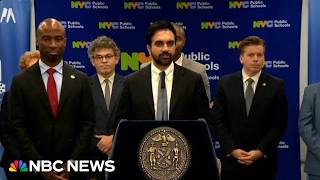
Mamdani has leaned on a maturity analogy to justify the age cutoff: a six-year-old is too young to slice an onion, fry an egg, or use a stove safely, but by 16 that same knowledge becomes appropriate to teach - and he argues AI should follow the same logic. He has also framed the policy as resistance to profit-driven ed-tech, saying it doesn't matter how profitable a product is if it doesn't help students learn and grow. Critics counter that the execution, not the principle, is the problem. UFT president Michael Mulgrew said the policy leaves individual schools to figure out after the fact whether tools they already rely on comply, while Robin Hood Foundation's Richard Buery argued a blanket ban without exceptions will disrupt classroom uses of AI that were already working.[6]Both sides agree AI needs guardrails in schools; they disagree on whether an outright prohibition or a more calibrated policy gets there.

A One-Year Experiment, Not a Permanent Law

Unlike a typical regulatory ban, this one has a built-in expiration date. The city will convene a Technology in Schools Coalition of students, educators, parents, officials, and outside experts throughout the 2026-27 school year, tasked with publishing recommendations for future years before the moratorium is reassessed at year's end.[1]That structure matters given the scale involved - roughly 600,000 students, two-thirds of NYC's public-school enrollment, are affected for at least this one school year.[7]It signals the administration is treating this as a controlled pause rather than a permanent verdict on AI in education, leaving room to loosen, tighten, or extend the policy based on what the coalition finds.

NYC as Bellwether, Rewriting Its Own History

This isn't the city's first swing at student AI access, and its own track record is a cautionary tale about reversals. NYC banned ChatGPT on school networks in January 2023 over fears it would erode critical thinking, then reversed course four months later, concluding it had overlooked the technology's potential to support students and teachers.[8][9]The new policy is a much larger, more structured version of that same instinct - and its scale as the nation's largest public school system has coverage asking whether other districts will follow NYC's lead again.[5]Community discussion beyond the policy specifics also touched on child-safety concerns tied to AI tools in schools, though those concerns were raised as commentary rather than as findings verified in this reporting.

Historical Context

2023-01-03
NYC schools banned ChatGPT on school devices and networks, citing concerns it would harm students' critical-thinking and problem-solving development.
2023-05-18
NYC reversed its ChatGPT ban, saying the earlier fear had overlooked the technology's potential to support students and teachers, and pivoted toward AI literacy resources.
2026-04
More than 250 education experts called for a five-year moratorium on generative AI in schools, months ahead of the one-year ban ultimately announced in September.
2026-09-02
Announced the one-year generative AI moratorium for pre-K through 8th grade plus new screen-time limits, effective with the September 10 school start.

Power Map

Key Players
Subject

NYC bans generative AI in elementary and middle schools

MA

Mayor Zohran Mamdani

NYC Mayor; announced and championed the ban, framing it as protecting critical thinking and human connection over tech-industry inevitability claims

SC

Schools Chancellor Kamar Samuels

NYC Schools Chancellor; co-announced the policy and oversees implementation, including disabling AI functions across affected ed-tech products

UN

United Federation of Teachers (Michael Mulgrew)

Teachers union president; praised the screen-time limits but criticized the ambiguity, arguing schools are left to determine compliance after the fact and that vendors should be held to stronger safeguards

RI

Richard Buery (Robin Hood Foundation CEO, former NYC deputy mayor)

Critic of the blanket ban's lack of exceptions, arguing it will disrupt existing classroom uses of AI that were already working

FA

Fairplay (David Monahan)

Child-advocacy group that pushed for a two-year moratorium; calls the one-year policy a step in the right direction but insufficient

AF

Affected ed-tech vendors (Amira, Houghton Mifflin Harcourt, Quill, Edia, Brisk Teaching, Playlab, Intel AI-Ready Schools)

Products directly hit by the policy - some must strip AI features (Amira, HMH's Into Reading), while five others remain approved for limited high-school pilots

Fact Check

9 cited
  1. [1] Mayor Mamdani and Chancellor Samuels Put Students First With New AI and Technology Policies
  2. [2] NYC, the Nation's Largest School District, Bans AI for Students Through 8th Grade
  3. [3] NYC, the Nation's Largest School District, Bans AI for Students Through 8th Grade
  4. [4] NYC, the Nation's Largest School District, Bans AI for Students Through 8th Grade
  5. [5] New York Restricts AI in Elementary and Middle Schools. Will Other Districts Follow?
  6. [6] What to Know About NYC Public Schools' Generative AI Ban and Screen-Time Limits
  7. [7] NYC Public Schools Announce Generative AI Moratorium
  8. [8] NYC Schools Ban ChatGPT on School Devices and Networks
  9. [9] New York City Public Schools Drop Ban on ChatGPT

Source Articles

Top 1

THE SIGNAL.

Analysts

Warns the ban could widen inequities, since wealthier families' children will gain AI literacy at home regardless, while lower-income students lose access without a sensible in-school approach

Jean-Claude Brizard
CEO, Digital Promise

Says the policy's practical guidance does not meaningfully change conditions for kids in NYC schools

Kelly Clancy
Parents for AI Caution in Educational Spaces

Criticizes the process, saying parents were promised meaningful input but received a finished policy after the fact

Keri Rodrigues
President, National Parent Union

Argues there is no proof of educational benefit from AI at young ages and that the tech industry's framing of inevitability should be resisted

Zohran Mamdani
NYC Mayor
The Crowd

New York City is banning the use of generative artificial intelligence for public school students from 2K through 8th grade, part of a larger move to restrict classroom technology in the nation's largest school district. cnn.it/4dic238

@@CNN1209

Mamdani imposes one-year ban on AI for most NYC students reut.rs/4iJKqHK

@@Reuters65

New York City Mayor Zohran Mamdani announced a one-year moratorium on AI use for elementary and middle school students on Wednesday. Kids "need to wrestle with tough problems on their own," New York's mayor said Wednesday.

@@MotherJones93

No AI until high school: NYC schools announce major classroom technology overhaul

@u/habichuelacondulce26000
Broadcast
Mamdani announces ban on AI for young students in NYC public schools

Mamdani announces ban on AI for young students in NYC public schools

NYC bans generative AI in schools through eighth grade

NYC bans generative AI in schools through eighth grade

Mamdani will restrict AI in schools to protect student learning

Mamdani will restrict AI in schools to protect student learning