The Efficiency Paradox: Cheaper Per Token, Pricier Per Task
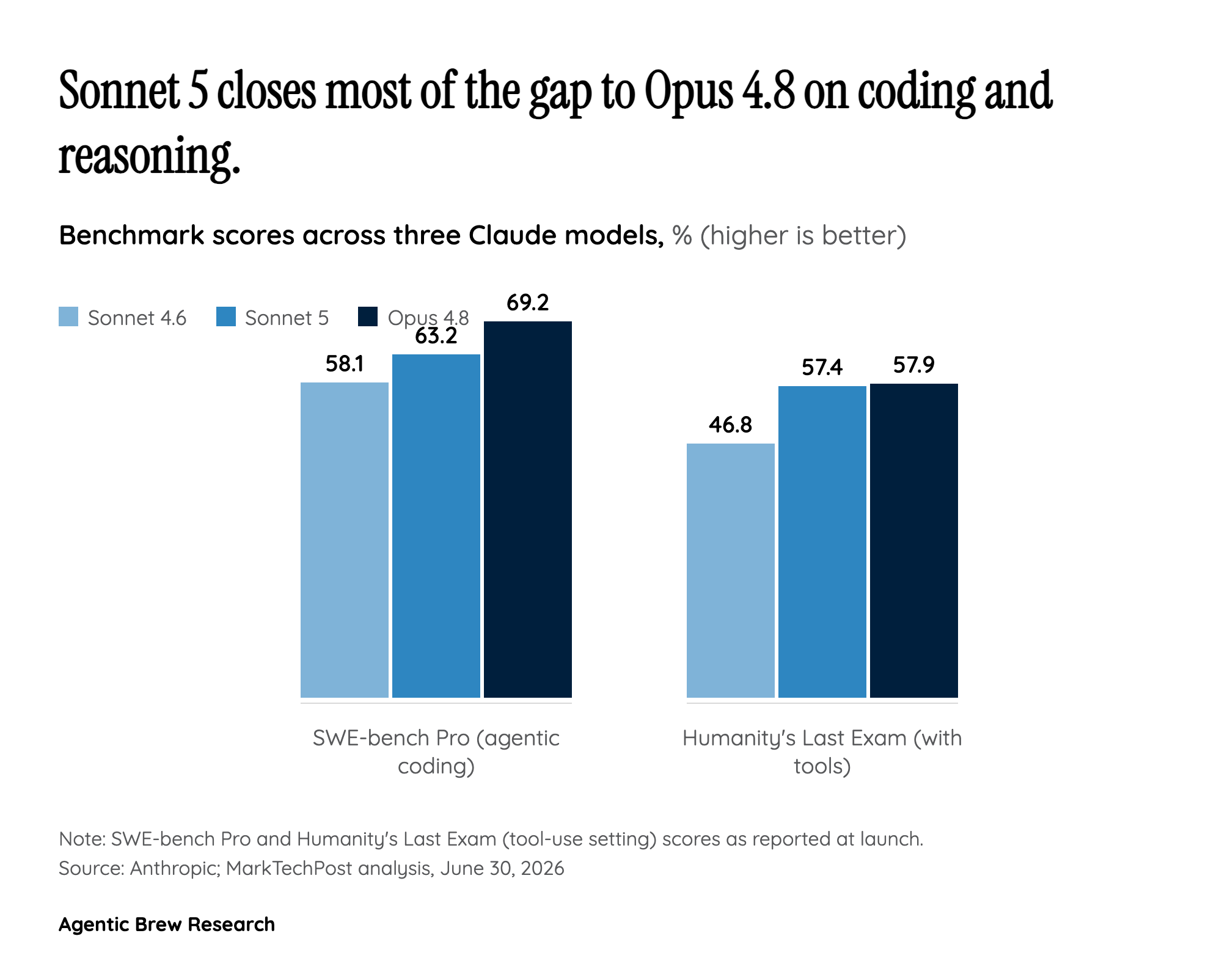
The number everyone quoted at launch was the price - $2 per million input tokens and $10 per million output, dropping to $3 and $15 after August 31. But per-token price is only half of what an agent actually costs. Cost per task is price multiplied by how many tokens the model burns to finish the job, and this is where Sonnet 5 gets counterintuitive. Independent testing placed it at 53 on the Artificial Analysis Intelligence Index [3], yet MarkTechPost's cost-performance analysis found that at high effort levels Sonnet 5 can cost more than Opus 4.8 to reach comparable quality, because it generates substantially more tokens per task [2].
The practical implication is that a buyer who compares only the sticker prices will misjudge their agent bill. The savings are real, but they concentrate at low and medium effort, on simpler and repetitive workloads where the token overhead stays contained [2]. That subtlety is exactly what the loudest skeptics in developer communities seized on, framing the release as a lateral move rather than a genuine step up - a reading that the promotional pricing conveniently softens until it expires.