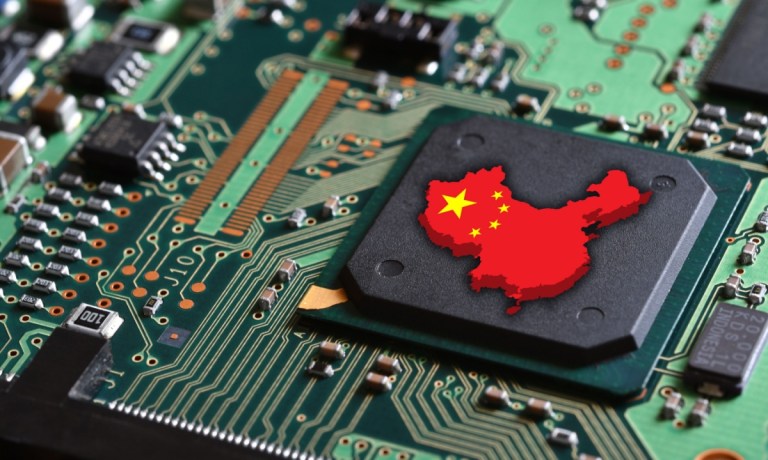
China weighs restricting overseas access to its top AI models
TECH

China weighs restricting overseas access to its top AI models

26+
Signals

Strategic Overview

  • 01.
    Chinese authorities reportedly held meetings with top tech firms over the past month about potentially restricting overseas access to the country's most advanced AI models, including unreleased future systems.
  • 02.
    The proposed curbs would reach past a simple export ban and also capture open-weight models, not just closed-source systems.
  • 03.
    Officials discussed making the leak or theft of proprietary AI technology an offense under China's national security law and floated new limits on who can fund domestic AI startups.
  • 04.
    Nothing has been decided; the scope is still under discussion, any curbs might apply only to future models, and there is no timeline for whether they take effect.

Deep Analysis

Open-Source When You're Second, Lock the Door When You're First

The tell in this story is the timing. For the last two years China gave its best models away for free. DeepSeek's R1 launch in January 2025 kicked off an open-source race that Chinese labs went on to dominate [4], and by year's end nearly every notable Chinese model shipped with open weights [4]. Premier Li Qiang used the World Economic Forum stage in mid-2025 to brand China as the open, open-source alternative to a locked-down American AI stack [5]. That was the posture of a challenger: when you are behind, open weights are a wedge - they win developer mindshare, undercut US pricing, and make your ecosystem the default.

Now that Chinese frontier models like Z.ai's GLM-5.2 reportedly come close to leading US systems at a fraction of the cost [2], the incentive flips. The same report describes a proposed tiered framework: a light filing for basic open-source tools, security reviews for stronger ones, and a domestic-only lockdown for the most sensitive frontier models [2]. Read the arc plainly - you open-source to catch up, and you restrict once you are ahead and have something worth protecting. The interesting part is that this mirrors, almost move for move, the export-control logic the US has been applying to its own frontier labs. Beijing is now reportedly treating cutting-edge AI as a critical national asset that needs controls [1], which is the exact framing Washington uses.

Who Actually Gets Hurt - And Why You Can't Un-Download a Model

The people most exposed here are not Chinese firms; they are the global developers, including a lot of European builders, who quietly standardized on cheap Chinese open weights as an escape valve from expensive American systems [2]. Curbing the supply of Qwen, Doubao and GLM would thin that availability and push their costs back up [2]. For a startup that rebuilt its inference stack around a free open-weight model, a policy change in Beijing is a line-item shock, not an abstraction.

But there is a hard technical wall in the way of enforcement, and the developer community was quick to name it. Open weights, once released and downloaded, cannot be revoked - the files are already on other people's disks, and a future restriction only affects models not yet published. Practitioners' immediate reaction was blunt and self-protective: archive every open weight now, because the models already out are the floor, not the ceiling. That is why the proposed curbs are carefully scoped to future models rather than existing ones [1]; the past is unrecoverable. It is also why any credible restriction has to lean on the harder levers - the national-security-law penalties and startup-funding controls - rather than on clawing back files that have already left the country.

The Community Thinks the Scoop Is Half Wrong

This is where the story gets uncomfortable, because the loudest technical community reading is that the headline overshoots the facts. The dominant sentiment among open-model developers was not alarm but skepticism: the argument circulating was that the Ministry of Commerce meetings were really about controlling foreign acquisitions, inbound investment, and talent and technology outflow - not about blocking foreigners from using Chinese models at all. In that reading, a scoop about 'curbing overseas access' quietly conflates 'who can buy or fund our labs' with 'who can download our models,' and the two are very different policies. One community voice even flagged that over-regulating open weights would be a self-inflicted wound, surrendering the very soft-power advantage China spent a year building.

Treat that as community opinion, not established fact - nothing here has been confirmed by a second independent source, and the underlying report is a single-origin exclusive attributed to unnamed people familiar with the talks [1]. But the skepticism is itself the signal. The same crowd also pointed out the symmetry that makes the outrage feel hollow: the US already restricts access to its own frontier models, so a Chinese version of the same policy is less a betrayal of openness than a convergence toward it. Whether the meetings were about usage or acquisition, the community's instinct - screenshot the framing, archive the weights, and wait for confirmation - is the correct posture for an unverified geopolitical scoop.

The Enforcement Machinery: From Filings to Passports

Strip away the debate over intent and look at the mechanisms actually on the table, because they reveal how serious the underlying direction is regardless of this one report's framing. The centerpiece is the tiered classification system that Chinese legal scholars proposed at a May roundtable, summarized in a Supreme People's Court journal: basic open-source tools get a simple filing, more advanced technologies face security reviews, and the most sensitive frontier models are barred from public release or restricted to domestic use [1]. That is a graduated regime, not a blanket ban - which is why officials stress nothing is decided and any rules may apply only to future models [2].

Two harder levers sit alongside it. First, officials discussed making the leak or theft of proprietary AI technology a crime under China's national security law [3], converting what would be a commercial-IP dispute into a state-security matter with far heavier penalties. Second, new restrictions were floated on who can fund domestic AI startups [1], which would choke foreign capital access to the sector. The motivation reportedly runs both ways: Beijing worries adversaries could exploit vulnerabilities in Chinese models and that Washington might turn those models against Chinese interests [1]. Taken together, the machinery treats AI less like software and more like a controlled strategic technology - the same category the community kept comparing to semiconductor fabs and nuclear expertise.

Historical Context

2025-01-20
DeepSeek released its R1 model, cementing its reputation as China's top frontier AI lab and launching an open-source race dominated by Chinese models.
2025-07
At the World Economic Forum in summer 2025, Li Qiang declared China's innovation open and open-source, promoting China as a global provider of open AI development.
2025-12-31
Nearly every notable model released by Chinese companies in 2025 was open source, framing China as the global leader in open AI.

Power Map

Key Players
Subject

China weighs restricting overseas access to its top AI models

CH

China's Ministry of Commerce

Led the roundtable meetings with tech firms over the past month to review the proposed overseas-access restrictions, making it the body that would set and enforce any curbs.

NA

National Development and Reform Commission

Attended the meetings alongside the Ministry of Commerce, signaling that industrial-policy planners, not just trade regulators, are shaping the rules.

AL

Alibaba (Qwen) and ByteDance (Doubao)

Major participants whose Qwen and Doubao families are among the most widely used Chinese models; as open-weight systems they would be directly affected by any release restrictions.

Z.

Z.ai (GLM-5.2)

Startup participant whose GLM-5.2 open-weight model is named as an affected system that comes close to leading US offerings at a fraction of the cost.

OV

Overseas and European developers

Downstream users who have leaned on cheap Chinese open weights as an alternative to pricier US systems; they would face thinned supply and higher costs if curbs land.

Fact Check

5 cited
  1. [1] Exclusive: Beijing is looking at curbing overseas access to China's top AI models, sources say
  2. [2] China is reportedly curbing overseas access to its top AI models
  3. [3] China Weighs Blocking Foreign Access to Top AI Models
  4. [4] China AI in 2025, Wrapped
  5. [5] Beyond DeepSeek: China's Diverse Open-Weight AI Ecosystem and Policy Implications

Source Articles

Top 5

THE SIGNAL.

Analysts

"Proposed a tiered classification system: a simple filing for basic open-source tools, security reviews for more advanced technologies, and a domestic-only restriction or bar on public release for the most sensitive frontier models."

Chinese legal experts (May roundtable)
Legal scholars, per a Supreme People's Court journal summary
The Crowd

"CHINA CONSIDERS RESTRICTING OVERSEAS ACCESS TO CUTTING-EDGE AI MODELS China's Ministry of Commerce has led meetings over the past month with major AI companies, including Alibaba, ByteDance, and Z.ai, to discuss measures that would restrict overseas access to China's most advanced AI models."

@@jukan052825

"Chinese authorities have recently met with top tech firms about potentially restricting overseas access to China's most advanced AI models, including those yet to be released, three people familiar with the discussions said"

@@Reuters102

"Chinese authorities have held meetings with top tech firms over the past month about potentially restricting overseas access to China's AI models, per Reuters"

@@unusual_whales441

"Beijing IS NOT looking at curbing overseas access to China's top AI models (Debunking the Reuters report)"

@u/Stannis_Loyalist722
Broadcast
Limiting access to top AI models in the U.S. could hand China an opening as capability gap narrows

Limiting access to top AI models in the U.S. could hand China an opening as capability gap narrows

China's AI Panic? Beijing Restricts Travel for Top AI Talent: Report | Vantage on Firstpost | 4K

China's AI Panic? Beijing Restricts Travel for Top AI Talent: Report | Vantage on Firstpost | 4K

Beijing looks at curbing overseas access to its top AI models, sources say

Beijing looks at curbing overseas access to its top AI models, sources say