OpenCode Console Breach via Distillation Attack
TECH

OpenCode Console Breach via Distillation Attack

29+
Signals

Strategic Overview

  • 01.
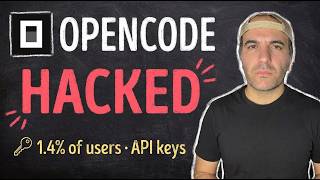
    OpenCode, the coding-agent platform built by Anomaly Innovations, disclosed on October 17, 2026 that it had identified unauthorized access to a legacy Console system that was already being decommissioned, exposing third-party API keys saved in affected users' workspaces.
  • 02.
    The breach affected roughly 1.4% of OpenCode Console users who had linked external providers; OpenCode emailed every affected account and said anyone who didn't receive that email was not impacted.
  • 03.
    OpenCode attributed the breach to a large-scale distillation attack and said it is working with Anthropic, OpenAI, and Google on remediation.
  • 04.
    OpenCode's local CLI users were not affected, since the CLI stores provider keys locally in configuration files that never reach OpenCode's servers; only the hosted Console product needed remediation.

A Legacy System Nobody Finished Deleting

OpenCode, the coding-agent platform built by Anomaly Innovations, disclosed on October 17, 2026 that it had identified unauthorized access to a legacy Console system that was already in the process of being decommissioned [1]. The intrusion exposed third-party provider keys - OpenAI, Anthropic, and Google credentials - that users had saved inside their Console workspaces to connect external models [3]. OpenCode said the breach affected roughly 1.4% of Console users who had linked outside providers, and that it had emailed every affected account; anyone who didn't receive that email, the company said, was not impacted [2].

What makes the incident unusual is what the attackers were actually after. According to reporting on the breach, "the stolen asset was not stored user information. It was the ability to make large volumes of queries" against frontier models [4]. In other words, this wasn't a conventional data-theft breach where the prize is personal records - it was a credential-theft breach where the prize is compute access, billed to someone else's account. OpenCode's own statement, notably, never explained how the attackers got into the legacy system, how long they had access, or how many keys were actually taken [1]- leaving the scope and duration of the exposure an open question even as remediation moves forward.


The Real Prize Was Query Volume, Not Data

OpenCode has attributed the breach to what it calls a "large scale distillation attack" [1]. Distillation, in AI terms, is the practice of training a cheaper model to mimic a more expensive one by feeding it huge volumes of the expensive model's outputs. Stolen OpenAI, Anthropic, and Google keys give an attacker exactly that: a way to run massive numbers of queries against frontier models under someone else's billing and rate limits, harvesting high-quality responses without paying for compute or doing original research [4]. As one security research team put it, "anyone holding a stolen provider key can run workloads on your account and run up your bill. Depending on how the key is scoped, they can also reach the files, prompts and fine-tuned models tied to it" [5].

This isn't the first time something like this has surfaced. Anthropic had already documented similar distillation methods used by other actors back in February 2026 [4], and a separate campaign reported in September 2026 reportedly saw China-based AI labs pull roughly 190 million exchanges out of Claude to help train competing models [5]. Analysts covering the OpenCode breach note that stolen keys belonging to established, high-spend customers are worth more on this market than freshly created accounts, because new accounts increasingly run into anti-abuse restrictions that older, trusted accounts don't [6]. A compromised OpenCode Console key, in that sense, wasn't just a backdoor - it was a pre-vetted, high-limit pass into GPT, Claude, and Gemini.

Coding Agents Are Built to Hold Everyone's Keys at Once

Security researchers have framed the OpenCode breach as a symptom of something structural, not incidental: "coding agents are credential magnets by design. They talk to several model vendors, drive your toolchain, spawn MCP child processes and load skills and plugins that update themselves" [6]. A tool like OpenCode routes requests to OpenAI, Anthropic, and Google through a single hosted gateway - convenient for developers juggling multiple models, but it also means one compromised system can expose several vendors' credentials in a single hit, rather than forcing an attacker to breach each provider separately [7].

Notably, this risk was specific to OpenCode's hosted Console product, not its local CLI. The CLI stores provider keys locally in the user's own configuration files, so those credentials never reach OpenCode's servers at all [7]- which is why the company could say with confidence that CLI-only users were never exposed. Analysts have also placed this breach alongside a string of other 2025-2026 incidents that targeted credentials sitting near developer tooling, including the Nx postinstall compromise, Amazon Q's CodeBuild token leak, the Shai-Hulud npm worm, and slopsquatting package hallucinations [6]- a pattern suggesting that as AI coding tools accumulate more vendor integrations, they become a preferred target precisely because of how much they're trusted with.

A Breach That Split Into a Fight Over Money and a Fight Over Words

The financial fallout was immediate and uneven. Reported unauthorized charges on exposed keys ranged from around $400 on Anthropic accounts to more than $1,700 overnight on combined OpenAI/Anthropic usage, with one user reporting roughly €200 in unauthorized Google charges that triggered an account suspension for abuse [2][8]. Anthropic moved quickly on its side: engineer Lydia Hallie said the company had "been working with OpenCode on yesterday's breach and have revoked Claude API keys we believe were affected," while still urging cautious users to rotate keys on their own [2].

But alongside the money fight, a second argument broke out over OpenCode's own framing. On X, AI researcher Nathan Lambert publicly questioned why a credential-theft incident was being described using the "distillation" label normally reserved for a model-training technique, calling it odd that volume this high was being looped under the same term as model-transfer concerns. That skepticism echoed loudly on Reddit, where much of the reaction treated "distillation attack" as framing that deflected from what many users saw as a more basic security failure - a deprecated system that still held live credentials. OpenCode's statement that its investigation had "to date" found no evidence other data had leaked [1]did little to settle that argument, since it left open exactly how much the company still didn't know about its own breach.

Historical Context

2026-02
Had previously documented similar distillation methods used by other actors to harvest model outputs, describing the general technique later invoked to explain the OpenCode breach.
2026-09
A prior campaign reportedly saw China-based AI labs pull roughly 190 million exchanges from Claude to train competing models, partly via illegally harvested API keys.
2025-2026
The OpenCode breach is grouped with other 2025-2026 supply-chain-adjacent attacks targeting credentials near developer tooling, including the Nx postinstall compromise, Amazon Q's CodeBuild token leak, the Shai-Hulud npm worm, and slopsquatting package hallucinations.

Power Map

Key Players
Subject

OpenCode Console Breach via Distillation Attack

OP

OpenCode / Anomaly Innovations

The coding-agent platform whose Console product was breached; disclosed the incident, emailed affected users, and is coordinating remediation with the three model providers.

AN

Anthropic

Model provider whose Claude API keys were among those exposed; proactively revoked suspected-compromised keys and worked directly with OpenCode on the response.

OP

OpenAI

Model provider whose API keys were exposed; coordinating with OpenCode on remediation after users reported unauthorized charges on compromised keys.

GO

Google

Model provider whose API keys were exposed; at least one affected user reported roughly €200 in unauthorized Google usage charges and an account suspension for abuse.

AF

Affected Console users (~1.4%)

End users who linked external provider keys in OpenCode Console workspaces; several reported unauthorized charges ranging from roughly $400 to over $1,700 before keys were revoked.

Fact Check

8 cited
  1. [1] OpenCode Security Breach Exposes Third-Party API Keys of its Console Users
  2. [2] Anomaly Innovations, behind coding agent OpenCode, says a breach hit ~1.4% of OpenCode Console users and their API keys, in a "large scale distillation attack"
  3. [3] OpenCode Discloses Security Breach, Says Attackers May Have Accessed Users' OpenAI, Anthropic And Google API Keys
  4. [4] OpenCode Discloses Distillation Attack That Exposed User API Keys
  5. [5] OpenCode Breach: What Happened and How to Rotate Exposed AI API Keys
  6. [6] After the OpenCode Breach: Why Coding Agents Became Credential Magnets
  7. [7] OpenCode Console Breach: What Security Teams Need To Know
  8. [8] OpenCode discloses security breach, says attackers may have accessed users' OpenAI, Anthropic and Google API keys

Source Articles

Top 5

THE SIGNAL.

Analysts

“Stolen provider keys let an attacker run workloads on a victim's account and inflate their bill, and depending on scope can also reach the files, prompts, and fine-tuned models tied to that key.”

Cyera security research team
Cyera

“Coding agents are structurally credential magnets because they talk to multiple model vendors, drive toolchains, and spawn self-updating plugins and MCP processes - and a stolen key from an established, high-spend customer is worth more to a distiller/reseller than a fresh account, which now faces tighter anti-abuse restrictions.”

Unnamed author
redreamality.com (security/industry blog)

“Anthropic worked with OpenCode on the breach and preemptively revoked Claude API keys believed to be affected, while still recommending extra-cautious users rotate their keys.”

Lydia Hallie
Anthropic
The Crowd

“We had a security breach last night related to a large scale distillation attack that impacted 1.4% of OpenCode Console users We have notified them all this morning via email. If you did not get an email you were not impacted, it was a subset of users who had external providers”

@@opencode10724

“OpenCode published an official statement regarding a recent distillation attack. > Earlier today, OpenAI, Anthropic and Google balances of some OpenCode users got drained. > Reportedly, only 1.4% of users were affected and these users were notified via an email.”

@@testingcatalog452

“There's something very odd going on with "distillation" if a cyber attack to steal api keys is looped under the same term. Same goes with looping together the model transfer stations to China. It's not clear why the volume is so high and how it's related to model training.”

@@natolambert297

“Opencode breached, rotate keys to be safe.”

@u/chemist_slime441
Broadcast
OpenCode Got Hacked BADLY ( Explained! )

OpenCode Got Hacked BADLY ( Explained! )

OpenCode Got Hacked, and the Stolen Keys Went Into a Distillation Attack

OpenCode Got Hacked, and the Stolen Keys Went Into a Distillation Attack

OpenCode Got Hacked: What Happened to Users' API Keys

OpenCode Got Hacked: What Happened to Users' API Keys

OpenCode Console Breach via Distillation Attack — AI News | Agentic Brew