Why Huang says the 40-year PC era is over
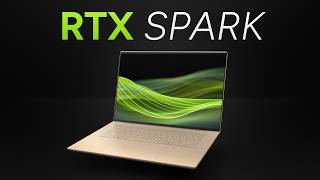
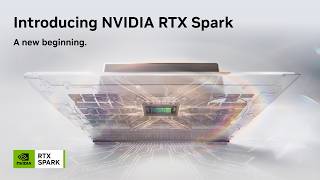
NVIDIA's framing of RTX Spark is not that it is a faster laptop chip - it is that the laptop chip is now the wrong abstraction. The superchip welds a 20-core Grace ARM CPU to a Blackwell RTX GPU over NVLink-C2C, exposes 128GB of unified memory across both, and reaches 1 petaflop of FP4 compute (with sparsity) in a 14mm chassis [1]. That topology is closer to a miniature data-center node than to a traditional Wintel laptop, and it lets RTX Spark systems run 120B-parameter LLMs with up to 1M token context, edit 12K 4:2:2 video, and still play AAA titles at 1440p above 100fps [1]. Jensen Huang's keynote line - 'For forty years, you launched apps. Click. Type. With RTX Spark and Microsoft Windows, you ask - and the PC does the work' - is the marketing veneer over a hardware argument: agentic workloads need the CPU and GPU sharing one memory pool because the model, the planner, and the tools all read and write the same context [1]. The Register notes that NVIDIA explicitly recast the same GB10 silicon used in DGX Spark as a high-end PC play, with MediaTek co-designing the ARM half - giving NVIDIA its first credible Windows-on-Arm processor and aiming directly at Intel, AMD, and Qualcomm's Snapdragon X [2]. Tom's Hardware reads it the same way, calling Spark a platform that 'promises to turn Windows into an agentic AI OS' [3]. Whether or not the era is actually over, NVIDIA has committed the silicon, the OEM roster, and the OS partner to acting as if it is.